March 2023

For the last five years, Waring “Buck” Trible has been having the same dream. He’s in the lab using CRISPR to tweak the genes of a wild worker ant. And poof! Like a Formicidae fairy tale, the lowly laborer becomes a queen — or queen-like, at least.

“And I start crying,” Trible said, “out of joy.”

Trible’s dream may not be reality — yet. But he and a team of researchers from Harvard and The Rockefeller University recently discovered a huge clue to the century-old mystery of why some ants become workers — the tireless minions that feed, house, and care for their colony — while others become queens — the winged, egg-laying members of a leisure class who enjoy the fruits of all that labor. The answer to this mystery may offer some insight into another seemingly unrelated one involving human development.

The clue researchers found involves a more elusive ant type: the social parasite, or a queen with no workers to exploit, which must seek out and parasitize other species to survive. In a recent paper published in Current Biology, the team reports the discovery of a queen-like mutant in a colony of clonal raider ants, a queen-free species. This spontaneous birth of a queen-like mutant contradicts former theories about how parasitic queens evolved and has wider implications.

“The way an ant becomes a worker or a queen, it’s really the same way that you get differences in tissue growth in humans between small-bodied individuals and large-bodied individuals,” said Trible, a John Harvard Distinguished Science Fellow and lead author on the paper. During adolescence, humans sprout into adult-sized bodies, and each body part, from heart to toes, somehow grows to the appropriate size. And if something goes wrong, that scaling error could cause disease or dysfunction.

“It’s a gnarly problem,” said Trible. “We really don’t know how organ size scales with body size. It’s a huge mystery.”

The queen-like mutants offered a rare opportunity to explore this mystery.

“The first mutant that breaks something can be a really powerful tool,” said Trible. If a biological process breaks, the resulting mutation is like a signpost, pointing to the tissues, cells, genes, and proteins behind it.
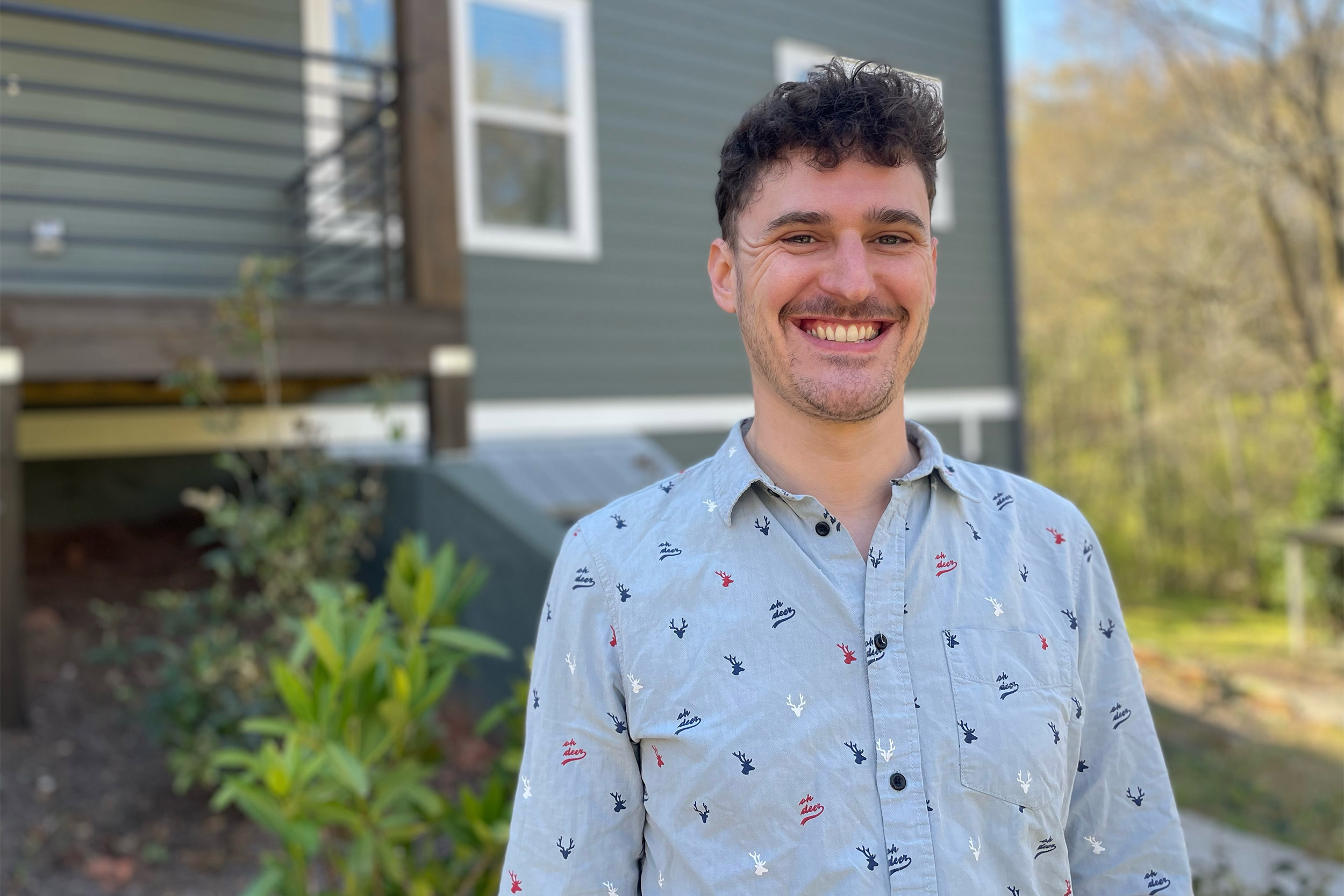
Buck Trible .
“Something has broken where they’re supposed to be a worker, but they’re becoming a miniature queen because they can’t help it, because something isn’t working right,” said Buck Trible of the ant mutations discovered.

Back in 2015, the first queen-like mutants popped up in the lab of Professor Daniel Kronauer at Rockefeller. At first, Trible, then a graduate student in the group, and his fellow lab mates weren’t sure what they were — and, more importantly, how they got there. No one, Trible said, has ever reported seeing a queen or winged female clonal-raider ant. And yet, these odd-looking creatures had an especially revealing feature: wings or scars where their mutant wings fell off.

A few of Trible’s peers proposed these mutants resulted from some kind of environmental shock — overfeeding, perhaps, or hot temperatures. Trible had another guess: These mutants had wings and queen-like traits, but the body size of a worker.

“Something has broken where they’re supposed to be a worker, but they’re becoming a miniature queen because they can’t help it, because something isn’t working right,” he said.

Previously, biological heavyweights like Charles Darwin, William Morton Wheeler, and Harvard’s own Edward O. Wilson theorized that parasitic queen ants evolved into queen-like worker-sized ants one individual trait at a time.

A colony could get separated or divided by a river, for example. That isolation could, the biologists speculated, allow one colony to evolve those parasitic traits, passing them down to their offspring. Later, if the queens re-encountered the workers, a few could infiltrate the colony and reap the evolutionary benefits.

And yet, no one has ever found a colony full of queens — or even ants with some but not all parasitic traits — which is not surprising. Parasites cannot survive on their own. They don’t forage for food, build tunnels to protect themselves, or care for their young. If a queen-like mutant were spontaneously born into a colony of worker ants, she would have two choices, Trible said: die and go extinct, or parasitize her own kind. And Trible’s spontaneous mutants didn’t forage either; they mooched.

Trible found 14 more queen-like mutants in the lab’s colony of 10,000 ants. To prove they arose from a genetic anomaly — and not environmental stress — he bred them. All their daughters had wings, too. “That was the moment that everybody really stood up straight and took this seriously,” Trible said.

The mutants could not birth a worker ant; and if a worker reared a mutant’s egg, it, too, came out winged and queen-like. Clearly, the templates for these two castes came from their genes — or rather, their supergenes.

A supergene, like a queen starter kit, is a collection of genes inherited all at once. Using whole-genome sequencing, the researchers discovered the mutants had a mutation in one of their chromosomes — a chromosome that appears to contain a supergene. In the case of the queen-like mutants, the starter kit includes physical instructions for how to grow their odd bodies and wings as well as behavioral instructions.

The queen-like mutant’s starter kit contains about 200 genes, many of which have to do with hormones, more specifically the ant version of estrogen. Just one mutation in those genes (which encode the cytochrome p450 enzymes) can affect the ant’s shape, egg production (queens tend to lay more eggs) and parasitic behavior, said Kronauer in a Rockefeller University press release. “It can all shift in a single mutational step.”

This suggests that, instead of evolving individual traits in isolation, a queen could pop up in her host colony in one generation, fully prepared to be a parasite.

“They’re all coordinated under the same umbrella,” said Trible. That means a queen’s wings, eyes, and ovaries may grow to the appropriate queen-like size because of one set of instructions rather than separate signals. “And that’s a big deal,” Trible continued, “because that means that maybe there’s a hormone for this, maybe even in humans.”

Of course, just because queens can be born this way doesn’t mean that’s how parasites are birthed in the wild. Next, the team plans to research whether wild ant species have supergenes and if their parasitic queens are spontaneously born from larvae that would typically produce workers. In the meantime, Trible will keep dreaming that, one day, he will understand the mutant’s genetic origins well enough to recreate them in his lab.

“The big thing is just that this mutant exists at all,” Trible said. “No one has ever seen a mutant. It’s totally unprecedented.”
For Steven Wofsy, the satellite is worth sticking around for.

Wofsy, an atmospheric scientist who spent decades investigating climate change, could be enjoying retired life at age 76, but he still has an active lab. Admittedly most projects there are winding down, with one exception: MethaneSAT, which could prove to be something of a game changer.

“The reason I’m not retired is that this is obviously way too important — and way too much fun,” said Wofsy, Harvard’s Abbott Lawrence Rotch Professor of Atmospheric and Environmental Science. “I’m not taking students in other areas, even though there are some things still going on. This is the focus, and it’s extremely challenging, but in a good way.”

More precise than other methane-sensing satellites that came before, MethaneSAT will allow scientists to track emissions to their sources and provide key data for reduction efforts. It’s important because it could buy the world critical time in the climate change battle. And, most hopefully, it appears particularly do-able in part because saving wasted methane provides a financial incentive for timely corporate cooperation in halting leaks.

MethaneSAT is scheduled to launch early next year, and Wofsy is its principal investigator. The project is the result of a unique collaboration led by the nonprofit Environmental Defense Fund and involves academic scientists, environmental activists, the private space industry, and philanthropic pockets deep enough to fund the design, construction, and launch of a satellite, which is traditionally the reserve of government and big business.

Wofsy and EDF chief scientist Steven Hamburg said the project was born partly out of frustration with years of government inaction on climate but also from a growing realization that curbing methane emissions can have important short-term effects on climate change. In fact, it has the potential to provide a decades-long bridge, slowing the near-term rate of warming and reducing the damage as the world transitions to the low-carbon energy sources that are a longer-term solution.

And perhaps the most important part: It appears actually do-able as it includes an incentive for timely corporate cooperation.

Methane is a potent greenhouse gas — 84 times as powerful as carbon dioxide on a 20-year time scale — but has been in CO2’s shadow for two reasons. Carbon dioxide is emitted in much greater quantities and hangs around until removed by natural processes that can take centuries to millennia. That means the effects of the gas emitted today pile on top of those released over the last century, and the emissions of decades to come will only make the pile higher. Without steps to remove it, CO2’s cumulative effect will drive warming upward inexorably and, on a human time frame, irreversibly.

While methane drives just about 30 percent of the warming occurring today, what’s gotten everyone’s attention is its lifetime in the atmosphere: decades rather than centuries. Ironically, that brief lifespan is part of the reason why it has been overlooked. The year 2100 emerged early on as a climate-change milepost, a common marker by which to gauge progress toward solving the problem. But when impacts are considered over a century, short-lived methane and its impacts come and go while effects from the buildup of carbon dioxide grow larger and larger.

“Methane is a short-lived climate pollutant,” Hamburg said. “If you look at a pulse of emissions of something that doesn’t last very long, at its impacts over 100 years, you’re going to have a lower number. But if you ask what’s its impact over 20 years, you’re going to have a much higher number.”

With stronger storms, hotter heat waves, longer droughts, and other climate-related impacts already growing apparent, Hamburg said there’s a growing appreciation that what’s important is not just how much the world warms, but also how fast. An abrupt heating over 20 or 30 years will have impacts very different from those of a long slow warmup over 70 or 80, even if they ultimately reach the same temperature. The rapid increase allows little time for either nature or human societies to adapt. And methane, with its potent warming power and short lifetime, has the potential to act as a toggle between the two futures, Hamburg said.

“If we don’t do anything for 50 years and then radically reduce our methane, the amount of warming in 2100 won’t be different, but the rate of warming will be much higher if you delay, which will have big impacts — and even feedbacks — on the climate,” Hamburg said.

A landmark study

 Wofsy has been keeping an eye on methane for decades. He has used everything from airplanes to balloons to a tower among Harvard Forest trees to better understand how greenhouse gases are changing the atmosphere. He has driven methane-sensing equipment around Boston searching for leaks in the area’s aging natural gas infrastructure, mounted instruments on rooftops and flown them from balloons to measure gases in the atmosphere.

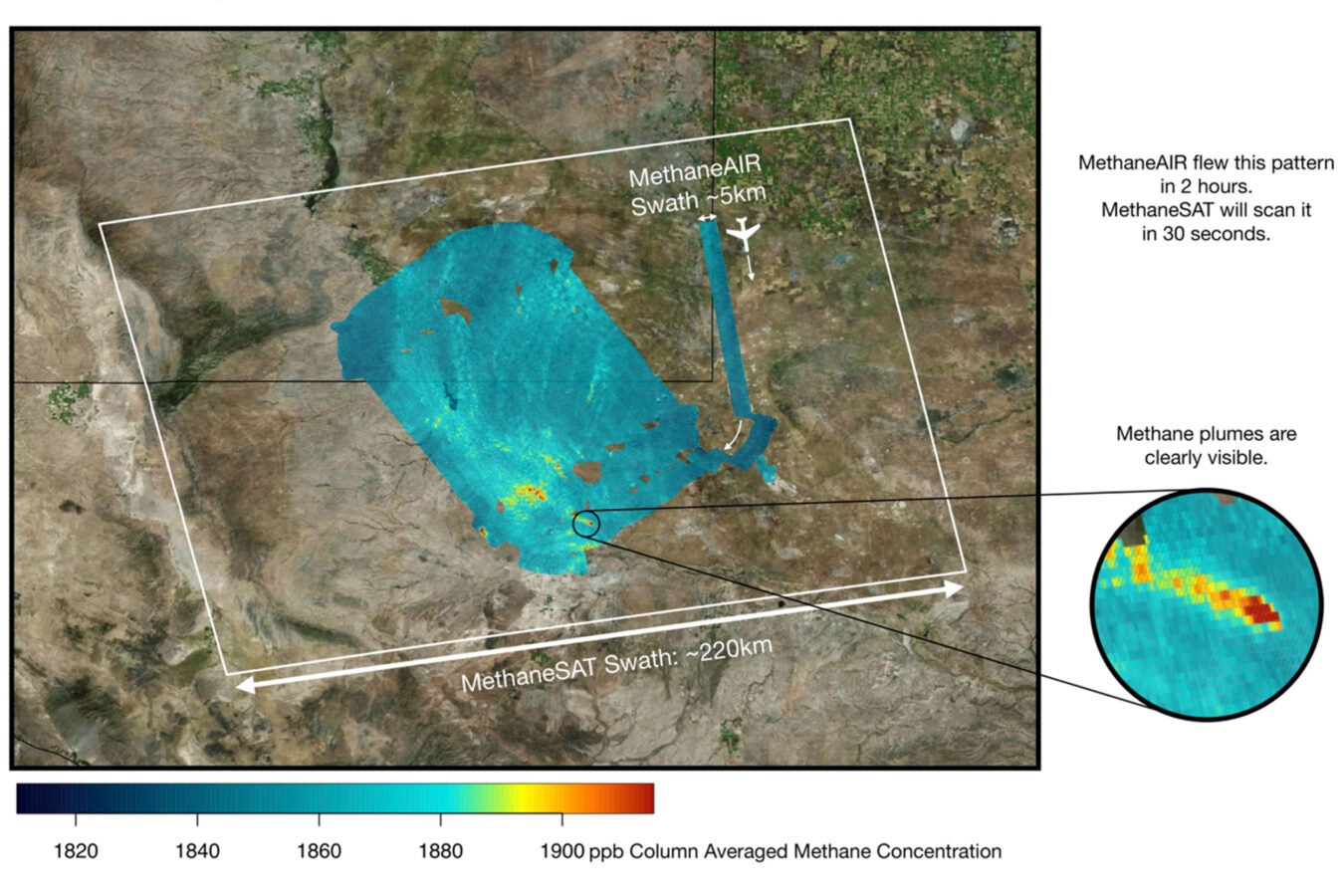
Methane SAT and Methane Air graphic.

More precise than other methane-sensing satellites, MethaneSAT will allow scientists to track emissions to their sources and provide key data for reduction efforts. It is scheduled to launch early next year.

Courtesy of Steven Wofsy

Wofsy also participated in a nationwide study supported by EDF that had researchers across the country measuring methane concentrations near oil and gas facilities. The work, published in the journal Science in 2018, showed that when it came to methane, federal regulators didn’t really know what they were talking about. The amount of emissions found in the study was about 60 percent higher than EPA estimates. That’s enough that the warming caused by the excess methane, over 20 years, is roughly equal to that produced by burning natural gas for heating and cooking each year.

Wofsy became involved in MethaneSAT in 2015, when he got a call from a friend at EDF. The nonprofit wanted to expand its exploration of methane emissions to cover the globe and was considering using a satellite. It wanted Wofsy’s thoughts on the best way to do that and a cost estimate. Wofsy reached out to Kelly Chance, a senior physicist at the Center for Astrophysics | Harvard & Smithsonian, and together they produced a report that put the price tag at tens of millions of dollars.

“We brought that back to EDF, and we assumed that that was the end of it,” Wofsy said. “But they went ahead and raised enough in private philanthropy to fund this thing.”

Wofsy signed on to oversee the mission’s science aspects. He brought with him Chance and other scientists from the Smithsonian Astrophysical Observatory, the Smithsonian arm of the CfA’s Harvard & Smithsonian partnership. Among them was Xiong Liu, a CfA research scientist who became the SAO’s MethaneSAT lead. Liu and those working with him are seeking ways to determine methane abundances from the data, a crucial initial step before sources can be identified.

MethaneSAT’s main scientific instrument is a spectrometer, which breaks white light into a spectrum that bears the telltale fingerprints of molecules in the air through which the light passes. Harvard and SAO scientists provided specifications for the instrument, which was built by contractor Ball Aerospace. The instrument is currently being installed in the spacecraft that will carry it to orbit, Liu said. The satellite’s launch is planned for January 2024 from Cape Canaveral aboard a Falcon 9 rocket from SpaceX, whose founder and chief executive is billionaire Elon Musk.

The power of information

The MethaneSAT project has an ambitious policy goal: reduce global methane emissions from oil and gas facilities by 45 percent by 2025 and 70 percent by 2030. If achieved, it would have a similar impact on the climate over 20 years as closing one-third of the world’s coal plants, EDF said.

“What’s exciting about the MethaneSAT mission is it’s not simply collecting data, we’re putting data into action,” Liu said. “I think that’s the fastest way to slow down global warming. It’s exciting to be part of this project.”

While several satellites, both in orbit and in planning, are designed to detect methane, Wofsy said MethaneSAT will do so at a higher resolution than any other. It will allow researchers to determine methane concentrations, trace them to their sources, and track changes over time.

EDF plans to make the data publicly available — in near real time — to researchers, lobbyists, regulators, and others. In fact, Harvard’s Salata Institute for Climate and Sustainability recently awarded a grant to a multidisciplinary project, headed by the Harvard Kennedy School’s Robert Stavins, that involves 17 faculty members from six Harvard Schools and seeks to leverage publicly available data on methane — including from MethaneSAT — to affect policies and cut emissions.

“We used to think about climate change as something for the distant future — the year 2100 or 2050. But now, as a result of events that have been taking place with the climate, whether it’s floods in Pakistan or fires in California, people have begun to give attention to climate change now,” said Stavins, the A.J. Meyer Professor of Energy and Economic Development, director of the Harvard Environmental Economics Program, and founder of the Harvard Project on Climate Agreements. “And when you do that, the relative importance of methane increases tremendously.”

The satellite will cover about 80 percent of oil and gas companies’ global production, and Hamburg expects the data it gathers to drive action. Some companies, he said, will recognize that the public nature of the data makes them hard to ignore and will begin to focus on emissions. Others will need an additional nudge, whether by the public, stockholders, or regulators. Still others may need their hand forced.

Helping the cause, Hamburg said, is that momentum toward plugging methane leaks and reducing emissions has been growing. The 2021 climate summit in Glasgow saw adoption of a global pledge to reduce methane emissions 30 percent by 2030, with 150 nations signing on as of November. Last year, the U.S. approved its most sweeping climate change action to date in the Inflation Reduction Act, which includes provisions for a Methane Emissions Reduction Program.

Hamburg and Wofsy said they’re optimistic that corporations will respond relatively quickly because the fixes aren’t technically difficult, involving things such as tightening pipelines and improving wasteful processes. In addition, the methane saved can be sold as natural gas, so any remediation will at least partly pay for itself.

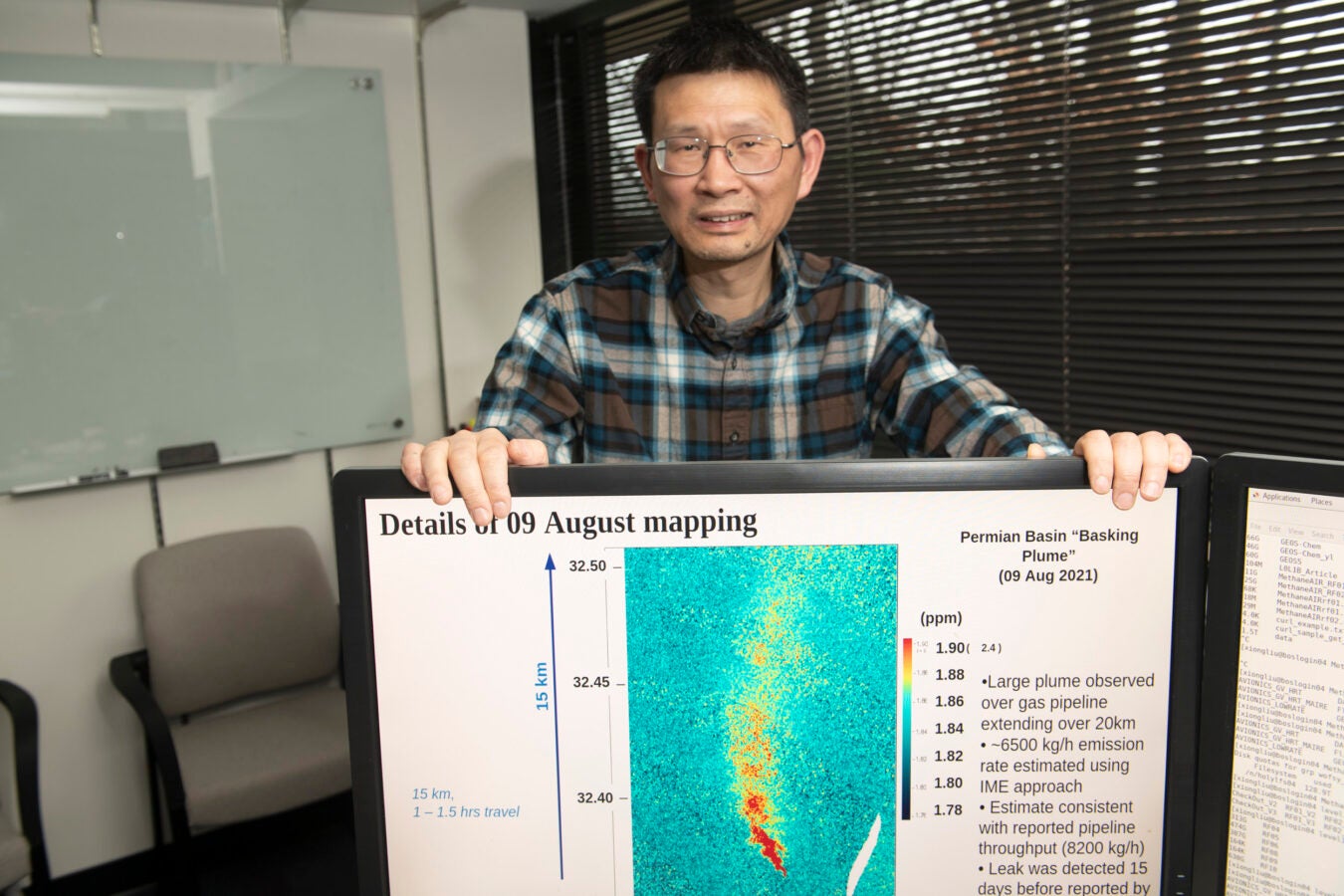
Xiong Liu.

“What’s exciting about the MethaneSAT mission is it’s not simply collecting data, we’re putting data into action,” said Xiong Liu, a CfA research scientist who is also the Smithsonian Astrophysical Observatory’s MethaneSAT lead.

While oil and gas installations are MethaneSAT’s initial focus, reducing those emissions alone won’t solve the problem. They are something of a low-hanging fruit, Hamburg said. Beyond that the problem becomes more complex. That’s because methane is produced in many different ways — both natural and anthropogenic — and emissions stem not just from fossil-fuel production, but also from cities, landfills, and livestock feedlots, each of which will demand a different approach to reduction.

Back in the lab

In Wofsy’s lab and at the Center for Astrophysics, scientists, doctoral students, and postdoctoral fellows signed on due to interest in MethaneSAT’s scientific and technological challenges, but they also say they believe in the mission.

“What we’re trying to do is very attractive,” said Jonathan Franklin, a senior project scientist in Wofsy’s lab who has been with MethaneSAT since its 2015 start. “This is, obviously, the key issue of our time, and this is a way that we can make meaningful change. You need data to have success.”

MethaneSAT’s instrument works by gathering sunlight that bounces off the Earth and reflects back to the satellite’s sensors. As the light moves through the atmosphere, different molecules absorb different wavelengths. By examining the light’s spectrum, scientists can tell how much methane is present. Much of the work at Harvard and the CfA involves devising and testing an algorithm that takes that raw data, accounts for variables that might affect the readings, comes up with a value for the amount of methane present, and then uses that value to determine the methane’s source location and emission rate.

Jonas Wilzewski, a postdoctoral fellow in the Wofsy lab, said the work involves adjusting for things like different reflectivity of the ground in different places, the presence of clouds, or of aerosols in the atmosphere that might scatter the light, and dealing with local meteorological conditions.

“There are many things going on in the atmosphere, and our job is to figure out what was the actual concentration of methane in the entire column of air below the satellite,” Wilzewski said. “This algorithm starts from the signal of photons that get collected, and then goes through how much methane was in the air. Then it goes to where we see an enhancement and then calculates how much methane per time was emitted from that location, so you can say, ‘Oh, look there’s a pipeline that has a defect.’”

Wofsy said interest in MethaneSAT endures even when he tells applicants that it is not a typical scientific endeavor and likely will not result in many scientific publications. Ju Chulakadabba, a Ph.D. student, is working on methods to determine point sources of emissions from the data, and said she was drawn to it for the chance to make a difference.

Last fall, Chulakadabba flew aboard a Gulfstream V research plane from the National Science Foundation equipped with instruments similar to those that will be aboard MethaneSAT, part of a sister project called MethaneAIR. Chulakadabba and others are using MethaneAIR data to develop and test the MethaneSAT algorithm. The jet has been taking test flights out of Colorado. Soon a Lear 35A, leased and modified by EDF, will start crisscrossing the U.S. looking for methane emissions in work that will complement that of MethaneSAT.

If methane emissions fall rapidly enough to buy time for renewables to grow, it will be time that is almost certainly needed, Wofsy said. Renewables are growing faster than many projected even a few years ago, but they’re still just a fraction of global energy capacity, while signs that the globe is warming around us mount.

“We cannot electrify the entire country, transportation-wise, and go all wind and solar, in the next 10 years,” Wofsy said. “We might aspire to that, but that’s not something you can do in such a short time.”


Paula Rodríguez-Flores has always been obsessed with invertebrates. “Like really, really obsessed,” said the biodiversity postdoctoral fellow, who works in Harvard’s Museum of Comparative Zoology.

As a youngster in her native Madrid, Rodríguez-Flores captured beetles in jars and brought her finds to bed with her. By college, she had turned her attention to seabound invertebrates such as sea sponges, urchins, shrimp, and squat lobster, Rodríguez-Flores’ specialty. In a new study published in Invertebrate Systematics, she and a team of researchers identified five new species of deep-sea squat lobsters in the Munidopsidae family. There are more than a thousand known species of squat lobster — which are closer to hermit crabs than the Maine lobster — and dozens more new species are discovered every year, which suggests their true diversity is still poorly understood.

Now, with this latest discovery of new species (one of which is called Munidopsis girguisi in honor of Peter Girguis, a professor of organismic and evolutionary biology at Harvard), the study’s authors call for a reclassification of all squat lobster species to better capture their geographic distribution and evolutionary history. This change is important for more than just the squat lobster: Many of the creatures lurking in the ocean’s depths remain a mystery, and new human activities, like ocean floor mining, could soon threaten their very existence. All of which adds urgency to scientists’ desire to discover and study these animals before it’s too late.

“Deep-sea diversity is really, really unknown,” said Rodríguez-Flores. “We know maybe 10 percent, or even less, of the marine fauna. It’s the most unexplored habitat in the world.”

With industries eager to explore the economic potential of this area, the deep-sea knowledge gap could come with a price: “People want to explore the deep ocean without knowing what is in this area,” Rodríguez-Flores said. “If we don’t research this, maybe some species will go extinct when this exploitation starts.”

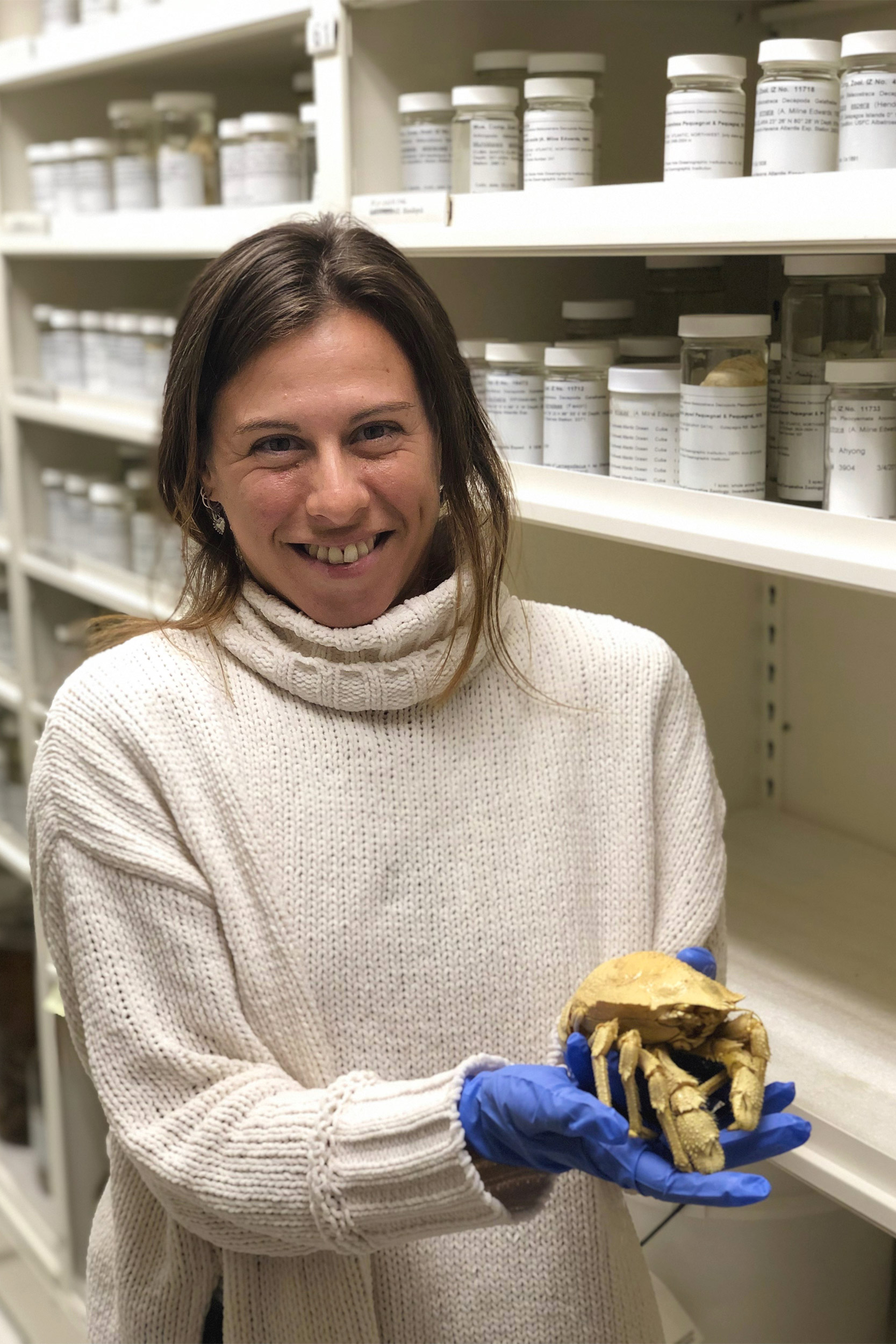
Paula Rodríguez-Flores
For her research, Paula Rodríguez-Flores utilized the collections found at Harvard’s Museum of Comparative Zoology.

Her study, which was a collaboration between Gonzalo Giribet, a professor of organismic and evolutionary biology and director of the Museum of Comparative Zoology, and the Scripps Institution of Oceanography, represents a welcome contribution to the limited body of knowledge, resulting in part from hurdles to doing research at extreme ocean depths.

The squat lobsters Rodríguez-Flores and her team identified live about 2,000 to 5,000 kilometers, or about 3 miles, below the ocean’s surface. “It’s really cold, really deep, a lot of pressure, and scattered food,” Rodríguez-Flores said, making it a challenge for any creature (as well as deep-sea exploration technologies) to survive.

Four of the new species — which are, like many deep-sea creatures, ghost-white and near-blind — were found using remotely operated vehicles and a human-occupied vehicle called Alvin, which explored hydrothermal vents, cold seeps, and other seafloor habitats in the Galapagos, Costa Rica, and California over the last decade.

But the fifth was a surprise.

When Rodríguez-Flores joined the MCZ, she studied the museum’s collection of squat lobster specimens, focusing on those in the family Munidopsidae. That group lives almost exclusively in deep-sea continental shelves, slopes, and in the abyssal zone — the area 3,000 meters or more below the ocean’s surface.

Squat lobsters can live almost anywhere — in shallow waters, coral reefs, deep-sea hydrothermal vents — and come in a whole rainbow of colors, some of them kind of psychedelic. One species, for example, is fuchsia with purple polka dots; another is lemon-yellow with a white racing stripe along its back.

But the comparatively humdrum deep-sea Munidopsidae family is hard to study because scientists have only been able to collect a small number of specimens, and these are scattered across the world. Rodríguez-Flores could only learn so much from Harvard’s collection.

Luckily, the Smithsonian and Scripps Institutions had what she needed. And at Scripps, Rodríguez-Flores not only gathered more data on the species, but also found that one specimen, collected in 1990, was an entirely new one. Using both DNA sequencing and micro-CT scans, she and her collaborators then studied how these new species related to the many other squat lobster families living worldwide.

“To understand the evolutionary history of squat lobsters, we have to compare, genetically and morphologically, all the species that we know,” said Rodríguez-Flores. “And we have found that the current taxonomic classification does not reflect the evolutionary history, so we have to revise the classification.”

The findings included the possibilities that deep-sea squat lobsters might include fewer species than previously thought and colonized a wider geographic region within the seemingly barren abyssal zone.

Such a big taxonomic overhaul takes time, travel, and money. Rodríguez-Flores has spent years visiting collections all over the world to examine as many specimens as she can. And yet, that labor is what helped unearth the five new species, which she and the team named after three of their international collaborators, one of the exploration vessels (Nautilus), and Girguis, who helped collect the species that now bears his name.

“He was very excited to collect this species because it’s really special,” said Rodríguez-Flores. “It’s pink and fuzzy. They are so cute.”

They might be cute, but they’re not so tasty, a fact the authors felt compelled to include in their study because, as Rodríguez-Flores said, they get asked all the time. “Everyone asks me if I eat these crustaceans,” she said. “They can be tasty if you use them for soup, but they’re not like lobster. They’re almost all legs.”

Tasty or not, Rodríguez-Flores craves more squat lobster. She’s hoping to publish a new proposed taxonomy within the next year and will continue searching for the expected two-thirds of species that remain in the dark.

“We still do not know how many species live in our world,” she said, speaking of not just her latest invertebrate love, the squat lobster, but all of Earth’s creatures. “Around one million species already face a threat of extinction, and around 40 percent of all species on Earth may be threatened with or driven to extinction by the year 2100. With this current rate of extinction, it is likely that most species are going to go extinct before being discovered.”

Unless, of course, Rodríguez-Flores can get to them first.


Sam Wattrus came to Harvard as an undergraduate thinking he would study chemistry. But he took an introductory course in human developmental and regenerative biology (HDRB) when it was a new interdisciplinary concentration in the Faculty of Arts and Sciences.

Now, 14 years after the concentration’s creation, Wattrus ’16, Ph.D. ’22, finds himself in a full-circle moment — as the first alum to establish an independent lab.

“The Stem Cell and Regenerative Biology (HSCRB) Department [the home for the concentration] does an excellent job of training scientists in the ways that they teach and test material,” he said. “They give you data and a scenario and ask you to design an experiment as you would in the lab. It’s open-ended, so you must understand the concepts and apply them. It’s liberating and teaches students how to actually do science.”

Wattrus credits Bill Anderson, the department’s director of education, for leading him toward his eventual career path. “Before taking [the introductory course] SCRB10 with Bill, I had the impression that stem cell biology was a highly esoteric field,” he said. “But Bill is such a great lecturer — he quickly brought me up to speed and helped me engage with complex subject matter.”

While taking the class, Wattrus started working in the lab of Amy Wagers, Forst Family Professor of Stem Cell and Regenerative Biology. “She’s a spectacular mentor,” said Wattrus. “She gave me a lot of opportunity as someone who had never worked in a lab before.”

These two experiences led Wattrus to declare HDRB as his concentration sophomore year, and he began to envision what a career in lab research could look like. Feeling the need to test the waters a bit, Wattrus spent the summer before his junior year working abroad at the University of Cambridge in the lab of John B. Gurdon, a Nobel Prize-winning developmental biologist.

“When I arrived, John asked me to pick up a project someone else had previously been working on,” Wattrus said. “There wasn’t a particular postdoc or graduate student overseeing my work, which was a little jarring at first because I didn’t know how to do everything. But I said to myself, ‘Think of this problem like SCRB10.’ I put myself back in that framework, and it enabled me to work through things.”

Wattrus went on to complete his thesis in the Wagers lab and received a prestigious Thomas Temple Hoopes Prize before graduating in 2016. He returned to Harvard to join the Developmental and Regenerative Biology (DRB) graduate program, where he could dive further into the formation and regeneration of tissues and organisms.

“I liked other programs too, but DRB still ended up being one of my favorites. There were multiple faculty I was interested in working with, and Boston is an amazing place to do biology. Several factors, plus a gut feeling, led me to the decision to stick around here.”

Wattrus knew he still wanted to work on stem cells and development but was interested in expanding his network beyond the Cambridge campus. He leaned on his mentors, Anderson and Wagers, both of whom recommended reaching out to Len Zon, whose lab is based at Boston Children’s Hospital on Harvard’s Longwood campus.

“Len is a great adviser,” said Wattrus. “My time in the Zon lab gave me the opportunity to work with new people in a new environment while staying within the HSCRB community.”

Wattrus investigated the ways blood stem cells in zebrafish embryos interact with immune cells known as macrophages. Using live imaging and cellular barcoding, Wattrus and a team of researchers discovered that macrophages vet stem cells for quality soon after they’re born. They found that cells showing signs of stress were engulfed and eaten by the macrophages, while healthy stem cells were allowed to live and were selectively amplified. They also observed that the stressed stem cells were labeled by a protein called Calreticulin on their surface that acted as an “eat me” signal. Stem cells lacking Calreticulin, or having just small amounts of it, were not eaten and seemed to be encouraged to expand. This work was published in Science late last year.

“We discovered this very cool decision point where the macrophage is directly eliminating a stem cell or selecting it for amplification,” said Wattrus. “From the basic biology side, it’s very interesting, but it could also have implications for problematic cells that are cancerous or precancerous that have similar elevated stress signals. Typically, cancer cells will put up a secondary signal to block the interaction with a macrophage. You could play with those signals to get rid of the cancerous cell that would lead to leukemia or other blood cancers.”

Wattrus defended his dissertation in November 2022, and earlier this year opened his own lab at Massachusetts General Hospital in the Department of Molecular Biology, where he plans to expand on his dissertation work while helping train the next generation of researchers.

Wattrus credits his HDRB coursework and the HSCRB community for helping him get where he is today. “The department also has a wonderful community of grad students and super-supportive faculty who care deeply about teaching and mentoring. You’re not just another person in the lab, and it makes a world of a difference.”


Mice have long been a central part of neuroscience research, providing a flexible model that scientists can control and study to learn more about the intricate inner workings of the brain. Historically, researchers have favored male mice over female mice in experiments, in part due to concern that the hormone cycle in females causes behavioral variation that could throw off results.

But new research from Harvard Medical School challenges this notion and suggests that for many experiments, the concern may not be justified.

The study results, published March 7 in Current Biology, reveal that female mice, despite ongoing hormonal fluctuations, exhibit exploratory behavior that is more stable than that of their male peers.

Using a strain of mice commonly studied in lab settings, the researchers analyzed how the animals behaved as they freely explored an open space. They found that the hormone cycle had a negligible effect on behavior and that differences in behavior between individual female mice were much greater. Moreover, differences in behavior were even greater for males than for females, both within and between mice.

The results underscore the importance of incorporating both sexes into mouse studies, the research team said.

“I think this is really powerful evidence that if you’re studying naturalistic, spontaneous exploratory behavior, you should include both sexes in your experiments — and it leads to the argument that in this setting,  if you can only pick one sex to work on, you should actually be working on females,” said Sandeep Robert Datta, professor of neurobiology in the Blavatnik Institute at HMS, who co-led the study with Rebecca Shansky of Northeastern University.

From rodents to humans: A history of bias

As neuroscientists strive to better understand the human brain, they routinely turn to the mouse, which Datta considers “the flagship vertebrate model for understanding how the brain works.”

This is because mouse and human brains share a considerable amount of structural organization and genetic information, so scientists can easily manipulate the mouse genome to address specific experimental questions and to build models of human diseases.

“Much of what we understand about the relationship between genes and neural circuits, and between neural activity and behavior, comes from basic research in the mouse, and mouse models are likely going to be really central tools in our fight against a broad array of neurological and psychological diseases,” Datta said.

For more than 50 years, researchers have preferentially used male mice in experiments, and nowhere has this practice been more prominent than in neuroscience. In fact, a 2011 analysis found that there were over five times as many single-sex neuroscience studies of male mice than of female mice. Over time, this practice has resulted in a poorer understanding of the female brain, likely contributing to the misdiagnosis of mental and neurological conditions in women, as well as the development of drugs that have more side effects for women — issues outlined by Shansky in a 2021 perspective in Nature Neuroscience.

The disparity in sex representation common in animal research has also been historically mirrored in research involving human subjects.

“This bias starts in basic science, but the repercussions are rolled into drug development, and lead to bias in drugs being produced, and how drugs are suited for the different sexes,” said lead author Dana Levy, a research fellow in neurobiology at HMS. For example, Levy noted that conditions such as anxiety, depression, and pain are known to manifest differently in female mice and women than in the male mice that are more often used in early-stage drug testing.

To address the problem of sex bias in scientific research, the National Institutes of Health published a policy in 2016 requiring researchers to include male and female subjects and samples in experiments. However, follow-up studies that look across scientific disciplines and examine neuroscience specifically indicate that progress has been slow.

The reasons for such a long-standing bias in neuroscience are complicated, Datta said: “Part of it is just plain old sexism, and part of it is conservatism in the sense that people have studied male mice for so long that they don’t want to make a change.”

Yet perhaps the biggest reason for excluding female mice, Datta said, stems from a widespread assumption that their behavior is broadly affected by cyclic variations in hormones such as estrogen and progesterone — the rodent version of a menstrual cycle, known as the estrous cycle. According to Datta and Levy, estrous status is known to have a strong effect on certain social and sexual behaviors in mice. However, data on the influence of estrous status in other behavioral contexts have been mixed, resulting in what Datta calls “a genuine disagreement in the literature.”

“We wanted to measure how much the estrous cycle seemed to influence basic patterns of exploration,” Datta said. “Our question was whether these ongoing changes in the hormonal state of the mouse affect other neural circuits in a way that’s confusing for researchers.”

“We assumed, like everybody else, that adding females was just going to complicate our experiments,” Levy added, “And so we said, ‘why not test this.’”

Testing assumptions

The researchers studied genetically identical males and females from a common strain of lab mouse in a circular open field — a standard lab setup for behavioral neuroscience experiments. In practice, the test involved placing a mouse in a 5-gallon Home Depot bucket for 20 minutes and using a camera to record the mouse’s movements and behaviors in 3D as it freely explored the space. The researchers swabbed each female mouse to determine its estrous status and repeated the bucket test with the same individual multiple times.

The team analyzed the videos with MoSeq, an artificial intelligence technology previously developed by the lab. The technology uses machine learning algorithms to break down a mouse’s movements into around 50 different “syllables,” or components of body language: short, single motions such as rearing up, pausing, stepping, or turning. With MoSeq, the researchers gathered in-depth, high-resolution data about the structure and pattern of mouse behavior during each session.

The researchers found that estrous status had very little effect on exploratory behavior in female mice. Instead, patterns of behavior tended to vary much more across female mice than they did throughout the estrous cycle.

“If you give me any random video from our pile, I can tell you which mouse it is. That’s how individualized the pattern of behavior is,” Datta said, which suggests that in behavioral studies, “a dominant aspect of variation in the data is the fact that individuals have subtly different life histories.”

When the researchers compared female and male mice, they found something that surprised them: Males also exhibited individuality of behavior, but they had more behavioral variation within a single mouse and between mice than females.

“People have been making this assumption that we can use male mice to reliably make comparisons within and across experiments, but our data suggest that female mice are more stable in terms of behavior despite the fact that they have the estrous cycle,” Datta said.

A case for change

Scientists generally agree that including female mice is important from a fairness perspective, Datta noted, yet some have remained concerned that it could complicate their research. For him, the new findings make a strong scientific case for using female mice in experiments.

“The fact that female behavior is more reliable suggests that including females might actually decrease the overall variability in your data under many circumstances,” Datta said.

Based on their findings, researchers in the Datta lab have already switched from male mice to mixed groups or female mice in their other experiments that involve circular, open-field testing.

Datta cautioned that the study looks at only one mouse strain in one lab setup, and so the results cannot be generalized to other strains and setups without further testing. However, he noted that the strain and setup are commonly used in neuroscience research, including in early-stage drug development to test how a potential drug affects mouse locomotion.

Datta said that the findings “should encourage folks who are interested in drug development in this context to include both sexes in their analysis.”

Now, Datta and Levy are interested in exploring how internal states beyond hormonal status, such as hunger, thirst, pain, and illness, affect exploratory behavior in mice.

“The question is, who wins in this tug-of-war between your current internal state and your individual identity,” Levy explained.

They also want to delve deeper into the neural basis of the individuality of mouse behavior that they saw in the study.

“I was shocked by how much stable variation between individuals we were observing — it’s like these mice really are individuals,” Datta said. “We’re used to thinking of lab mice as interchangeable widgets, but they’re not at all. So, what is controlling these individualized patterns of behavior?”

“We want to understand the mechanisms of individuality: how variability between individuals comes about, how it affects behavior, what can alter it, and what brain regions support it,” Levy added.

To this end, the Datta lab is examining mouse behavior from birth until death to understand how individualized patterns of behavior emerge and crystallize during development, and how they change throughout life.

The researchers also hope that their work will open the door for more rigorous, quantitative research on whether and how the estrous cycle affects mouse behavior in other contexts, such as completing complex tasks.

“This is a very interesting example of how assumptions that affect the way that we conduct and design our science are sometimes just assumptions — and it is important to directly test them, because sometimes they’re not true,” Levy said.

Additional authors include Nigel Hunter, Sherry Lin, Emma Robinson, Winthrop Gillis, Eli Conlin, and Rockwell Anyoha of HMS.

Datta is on the scientific advisory boards of Neumora, Inc., and Gilgamesh Pharmaceuticals, which have licensed the MoSeq technology.

The research was supported by the NIH (U19NS113201; RF1AG073625; R01NS114020), the Brain Research Foundation, the Simons Collaboration on the Global Brain, the Simons Collaboration for Plasticity in the Aging Brain, the Human Frontier Science Program, and the Zuckerman STEM Leadership Program.


As COVID has demonstrated, when pathogens are moving through the population, we adjust, limiting interactions, even isolating, and generally changing the way we associate with one other. Humans are not alone. New research from Harvard scientists provides some insight into how pathogens change animal social behaviors.

“Extreme environmental conditions have a very strong influence on all animals,” said Yun Zhang, a professor in the Department of Organismic and Evolutionary Biology. But while this behavior has been seen in animals from simple fruit flies all the way up to primates, researchers have not understood what happens inside an individual animal’s brain that leads to infection-induced changes in social behavior.

In their new paper, published in Nature, Zhang and colleagues studied the small roundworm C. elegans, which exists in nature with two sexes: hermaphrodites that produce both eggs and sperm, and males. Under normal conditions, the hermaphrodites are loners, preferring to self-reproduce over mating with males. However, Zhang’s team found that the hermaphrodite worms infected by a pathogenic strain of the bacterium Pseudomonas aeruginosa became more interested in one another and increased their mating with males.

“In general, compared with self-reproduction, mating with males is more likely to produce novel genomes via recombination,” added Zhang. “Therefore, pathogen-induced increase in mating strengthens the ability to produce genetic diversity for the adaptation of the host animals.”

What drives this change in mating behavior? A mixture of pheromones — small volatile chemicals that are emitted by individual worms that other worms respond to — plays an important role.

“These pheromones are usually dispersing cues that make the hermaphrodites repel each other,” said Tailhong Wu, a postdoctoral scholar in the Zhang lab and co-first author of the paper. But infected hermaphrodites become less repelled by the pheromones. Sometimes they are even attracted to them.

Specifically, the researchers found that one pair of chemical-sensing neurons in the worm began to respond to the pheromones after infection and that these neurons were needed for the worms to change their behavior.

Next, the researchers isolated messenger RNA from the pair of neurons, examining how they are different post-infection. They discovered that the pheromone receptor STR-44 was significantly upregulated in infected worms. The STR-44 receptor is a G-protein coupled receptor (GPCR), and its expression makes the pair of neurons respond to the pheromone mixture. The team tested many other pheromone receptors that were previously identified in worms, but none appeared to influence pathogen-induced social behavior change, suggesting STR-44’s specific role in this process.

“Normally, expression of the STR-44 pheromone receptor is very low in the worms,” said Minghai Ge, another postdoctoral scholar in the Zhang lab and co-first author of the paper. “But the exposure to the bacterial pathogen strongly induces the expression of this receptor.” The presence of the larger amount of STR-44 pheromone receptor suppressed the repulsion of the hermaphrodite worms and increased their mating rate with males.

Looking beyond worms, Zhang pointed out that many different GPCRs for chemicals are encoded in the genomes of several animals. They are used to assess environmental cues, such as odors, tastes, and pheromones. Regulation of pheromone receptors may be a common strategy for animals to change their social behavior in the presence of a pathogen stress, she said.

“Animals have many GPCRs that can sense chemicals. It is possible that some of them are not normally used,” Zhang said. “It’s like they are usually saved in the bank, only to be used under stressful conditions, such as an infection.”

The team think that the research provides a path for studying behavior change in response to pathogens and parasites in more complex animals. “This simple model animal gave us experimental powers to identify the neuronal and molecular basis for social behavioral plasticity,” Zhang said.

Previous studies not from the Zhang lab have already identified the effects of pathogens on mating behavior of other invertebrate and vertebrate animals. “Perhaps other researchers can look at the pheromone responses important for mating behavior in these animals,” she suggested, potentially explaining how infection affects the nervous system leading to behavioral changes, including those in social interactions.


Researchers know that marine organisms are shifting geographically toward the Earth’s poles in response to climate change. However, predicting the extent to which the species will move as ocean temperatures rise, and whether such changes presage a shift in ecosystems and extinction events, has not been easy to discern.

A new study published in Nature offers some possible insights. By studying the fossil record of one group of organisms, the planktonic foraminifera, researchers found communities made a global shift south to warmer waters during the Late Cenozoic period, likely driven by climatic events, specifically the development of bipolar ice sheets. The study further showed that the movement of the shell-covered, unicellular marine organisms was not tied to a coupling of functional traits and species diversity, but rather the combination of ecological and morphological traits of the organisms.

“In modern ecology we consider species diversity and functional traits synonymous,” said co-lead author Anshuman Swain, a postdoctoral researcher in the Department of Organismic and Evolutionary Biology and a junior fellow of the Society of Fellows. “But, looking back in time we found that this correlation breaks down after 2 million years, so our assumption that we can use that to predict future climate change might be misguided.”

Swain and co-lead author Adam Woodhouse, a postdoc at University of Texas at Austin, examined fossil data of Late Cenozoic planktonic foraminifera (forams), specifically the last 8 million years, to see how their relative distribution changed in response to climatic events. Rather than focus on species diversity though, they classified the data by ecological characteristics of ecogroups (where they live in the water column) and morphogroups (morphological categories of their shells).

Planktonic forams float in the upper reaches of the ocean. This placing is important as the global distributions of many other organisms correlate with forams due to their low placement in the food chain. Many marine organisms (such as predatory fish, squid, krill, sharks, and cetaceans) rely on stable food chains, so how the forams respond to climate change can be a predictor for these and other organisms.

Another bonus of studying these organisms is the incomparable quality of fossil data available. The researchers applied network science methods to Triton, a global dataset of planktonic foraminiferal records with more than 500,000 individual species occurrences. The specimens were collected by the International Ocean Drilling Program from across the Earth’s oceans during more than 50 years of scientific ocean drilling. Each fossil reflects where and when the plankton lived and ocean conditions at the time.

“The fossil record of the planktonic foraminifera represents an incredible biological archive and exhibits a better Cenozoic species-level record than even the best genus-level record of any macroinvertebrate group — making them the perfect solution for our study,” said Woodhouse.

Most studies examine how species are emerging and changing. For this study, the researchers asked how the organisms (17 morphogroups and six ecogroups of forams) responded to climate change and environmental factors ecologically. “Ecogroups and morphogroups are more consistent groups throughout the Cenozoic era,” said Swain, “so they have advantages over species studies, which are inconsistent groups. This makes it easier to make predictions from traits rather than species.”

They gathered a large dataset of traits and plotted biogeographical distribution patterns in the ecogroups and morphogroups during the late Cenozoic (which started about 15 million years ago). Findings showed a global latitudinal shift toward the equator regions within clade-wide communities in both groups, especially during the past 8 million years.

“Once we saw the results, we said, ‘This is wild,’” said Swain. “Before this shift, everything was kind of random, there was no discernible strong pattern. But then, there was a strong shift that coincided with the formation of the ice sheets.”

The study showed dynamic biogeography among planktonic foraminifera, including large-scale spatial rearrangements of biodiversity patterns that appear to be coupled with the emergence of bipolar ice sheets. The expansion of polar ice caps impacted the latitudes where the ecological groups were happiest, causing them to shift due to a number of factors including where oxygen was most available. Surprisingly, this trend was not visible when looking at only species data.

“We don’t know the exact reason for this,” said Swain, “but you can have an equal abundance of species without having a sense of the different ecosystems. What we did see was that ecogroups showed this trend. Meaning this climatic event affected the distribution of foraminifera and in turn the distribution of other organisms. The foram’s correlation with anthropogenically important marine animal groups may lead us to predict more alterations to their ranges and community structure driven by ongoing climate change.”

“Earth’s current biosphere has slowly evolved over millions of years to be adapted to a world of ice ages,” Woodhouse said. “So the trends we document are potentially worrying because if human-driven climate change suddenly switches us to an Earth of 8 million years ago [before glaciation], we may be detrimentally restructuring the marine communities of the entire ocean.”


Everyone knows cheese can smell like stinky feet. But did you know parmesan can smell like pineapple, green teas carry a whiff of seashore, and Belgian beers share an aroma with Band-Aids and horse stables?

“Smell is a really interesting sense, maybe the most interesting sense, because it’s our most intimate and direct contact with the outside world,” said Harold McGee, author of the book “Nose Dive: A Field Guide to the World’s Smells.”

McGee, who has spent decades writing about the science of food and cooking, joined David Weitz, the Mallinckrodt Professor of Physics and of Applied Physics at Harvard, for a virtual Harvard Science Book Talk last week, presented by the University’s Division of Science, Cabot Science Library, and Harvard Book Store. McGee and Weitz have lectured together for 13 years as part of Harvard’s Science and Cooking Lecture Series. But this time, the duo discussed smells that waft way beyond the kitchen — or what McGee dubs the “osmocosm,” the vast universe of scents perfuming swamps, Scottish peat, outer space, oceans, and humans, too.

Smell, McGee said, “gives us such access to the things around us — invisible, inaudible — but we still know something about the world through this particular sense.”

About a decade ago, McGee set out to write a book — not about smell, but about flavor. Back in the 1970s, when McGee was finishing his Ph.D. thesis on “Keats and the Progress of Taste” at Yale, scientists knew little about how flavor worked. Then, in the early 2000s, researchers discovered human olfactory and taste receptors — proteins that bind to particles in food and drink and relay information about those substances to our brains.

“It was time to write a book about flavor,” McGee said. “And that was my initial intention.”

Flavor is essentially taste plus smell, McGee said. But as the self-designated “Curious Cook” (the name of McGee’s old New York Times science and food column) started investigating flavors, he realized that even though the human tongue can register about a dozen different tastes, the nose can take in hundreds of smells. “It’s with smell that we get the tremendous diversity of flavors,” McGee said.

So, McGee set off to explore the osmocosm, discovering that aromas are complex combinations of molecules. The smell humans register as “apple,” for example, is a whole host of molecules small enough to detach from an apple, float through the air, and shimmy up a nostril. Once inside, smell receptors grab onto those molecules to perform some chemical detective work before releasing them back into the world.

But why? McGee wanted to know. And what does that molecular detective work tell us about the nature of the thing we’re smelling? To find an answer, he went all the way back to the Big Bang and the Earth’s first primordial smells, many of which are now floating around in outer space. Radio telescopes, McGee said, can sense these molecules, which include esters (fragrant compounds that can sometimes smell like raspberries), hydrogen sulfide (cooked eggs or decaying vegetation), and ozone (the air after a lightning storm).

Next, McGee examined the explosion of scents that came with life on Earth, including microbes, fungi, plants, and, eventually, animals. “Of them all, by far the best are the plants,” McGee said. These exploit volatile molecules — the bits that can break free of their origins and fly to noses — to repel predators, attract pollinators, and communicate with fellow plants.

Today, humans exploit these molecules, too. But, unlike plants, we often manipulate smells for pleasure, not protection, crafting recipes, perfumes, and incense to titillate our noses. In Japan, McGee said, there’s a practice called The Way of Incense, also known as listening to incense, in which people try to experience the fragrance beyond the nose — akin to mindfully focusing on a sound rather than simply hearing it.

McGee did explain why seemingly disparate elements, like parmesan and pineapple or oysters and cucumbers, can share undertones: Because smells are complex combinations of molecules, some pop up in multiple formulas. But, he said, there’s still much we don’t know about, for example, why scents provoke certain reactions in humans — reactions that can vary from intense pleasure to nausea depending on which human gets a whiff.

In the past, smells might have been more useful, enabling early humans to detect a lion hiding in the grass, for example, but modern humans tend to associate smells with childhood, travel, and family, McGee said. Other animals have their own olfactory universes, which they often use to identify snacks and threats in their surroundings. (Of course, human nostrils can still detect dangers, like smoke, gas leaks, or rotten food.)

Near the end of the talk, Weitz asked McGee whether the human osmocosm is fixed or could be expanding. “Are there smells that we’ve never smelled before?” he asked.

With artificial intelligence, McGee said, scientists can now build molecules that do not yet exist in nature. Computers can even deduce what they might smell like. So, yes, McGee said, “I think the osmocosm will grow.”


MKRdezign

Contact Form

Name

Email *

Message *

Powered by Blogger.
Javascript DisablePlease Enable Javascript To See All Widget