Latest Post

Google’s parent company Alphabet announced that two board members, Eric Schmidt and Diane Green, will not be seeking re-election when their terms expire on June 19.

Schmidt has been on the company’s board since 2001, and also served as CEO for a decade, until April 2011. Alphabet said he will continue to serve as a “technical advisor” to the company.

Greene, meanwhile, was the CEO of Google’s cloud business from 2015 until her departure earlier this year. She’s been on the board since 2012.

Along with the departures, Alphabet is also announcing the appointment of Robin L. Washington to its board. Washington is the executive vice president and chief financial officer of biopharmaceutical company Gilead Sciences. She previously held executive roles at Hyperion Solutions and PeopleSoft.

“Robin’s incredible business and leadership experience will be hugely valuable to our Board and company in the years ahead,” said Board Chairman John Hennessy in a statement.

Updating


FireEye, one of the largest and most prominent security companies on the market, reported its fiscal first quarter earnings after the bell Tuesday.

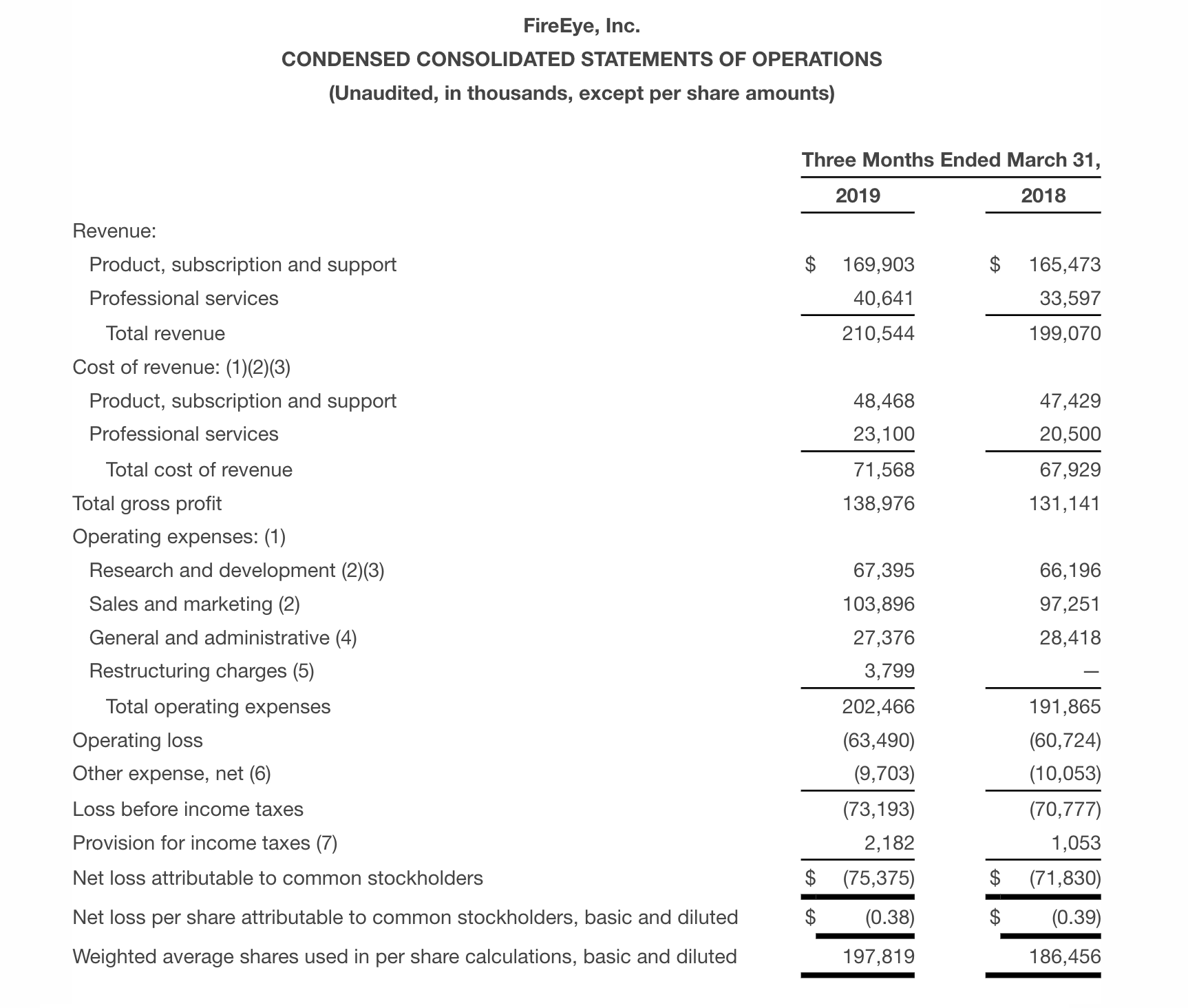
The cybersecurity giant reported first quarter loss of $78.3 million, or 38 cents a share, on revenues of $210 million (statement). FireEye reported a loss of 3 cents per share on an non-GAAP basis, in line with Wall Street expectations

FireEye’s chief executive Kevin Mandia said the company “met or exceeded our guidance ranges for all key financial metrics” for the quarter.

The company had a good quarter news-wise. In March, the company debuted its secure email gateway, released its new Windows virtual machine-based malware analysis platform, and continued to publish groundbreaking new research on prominent threat groups as well as keeping on top of global cyberattack efforts.

And, just after the quarter closed earlier this month, the company revealed a second intrusion from a nation-state backed hacker group it calls Triton.

Looking ahead, FireEye said it expects to report second quarter non-GAAP earnings between 1 cent and 3 cents with revenue between $212 and 216 million. Wall Street was expecting a second quarter outlook of 4 cents per share on revenues of $216 million.

For the full year, FireEye is expecting revenues between $880 million and $890 million.

FireEye closed the day at $16.02, up more than 1 percent. In after-hours trading, the company was trending up.


Jude Gomila, who previously sold his mobile advertising company Heyzap to RNTS Media, is taking on a new challenge — building a “knowledge base” that can fill in Wikipedia’s blind spots, particularly when it comes to emerging technologies and startups.

While Gomila is officially launching Golden today, it’s already full of content about things like the latest batch of Y Combinator startups and morphogenetic engineering. And it’s already raised $5 million from Andreessen Horowitz, Gigafund, Founders Fund, SV Angel, Liquid 2 Ventures/Joe Montana, plus a long list of individual angel investors including Gomila’s Heyzap co-founder Immad Akhund.

To state the obvious: Wikipedia is an incredibly useful website, but Gomila pointed out that notable companies and technologies like SV Angel, Benchling, Lisk and Urbit don’t currently have entries. Part of the problem is what he called Wikipedia’s “arbitrary notability threshold,” where pages are deleted for not being notable enough. (Full disclosure: This is also what happened year ago to the Wikipedia page about yours truly — which I swear I didn’t write myself.)

Perhaps that threshold made sense when Wikipedia was just getting started and the infrastructure costs were higher, but Gomila said it doesn’t make sense now. In determining what should be included in Golden, he said the “more fundamental” question is more about existence: “Does this company exist? Does Anthony Ha exist?” If so, there’s a good chance that it should have a page on Golden, at least eventually.

In his blog post outlining his vision for the site, Gomila wrote:

We live in an age of extreme niches, an age when validation and completeness is more important than notability. Our encyclopedia on Golden doesn’t have limited shelf space — we eventually want to map everything that exists. Special relativity was not notable to the general public the moment Einstein released his seminal paper, but certainly was later on — could this have been the kind of topic to be removed from the world’s canon if it was discovered today?

Golden homepage

Gomila said he’s also bringing some new technologies and fresh approaches to the problem. Some of this is pretty straightforward, like allowing users to embed video, academic appears and other multimedia content onto Golden pages.

At the same time, he’s hoping to make it much easier to write and edit Golden pages. You do so in a WYSIWYG editor that doesn’t require you to know any HTML, and the site will help you with automated suggestions, for example pulling out author and title information when you’re adding a link to another site.

Gomila said that this will allow users to work much more quickly, so that “one hour spent on Golden is effectively 100 hours on other platforms.”

There’s also an emphasis on transparency, which includes features like “high resolution citations” (citations that make it extra clear which statement you’re trying to provide evidence for) and the fact that Golden account names are tied to your real identity — in other words, you’re supposed to edit pages under your own name. Gomila said the site backs this up with bot detection and “various protection mechanisms” designed to ensure that users aren’t pretending to be someone they’re not.

“I’m sure there will always be trolls up their usual tricks, but they will be on the losing side,” he told me.
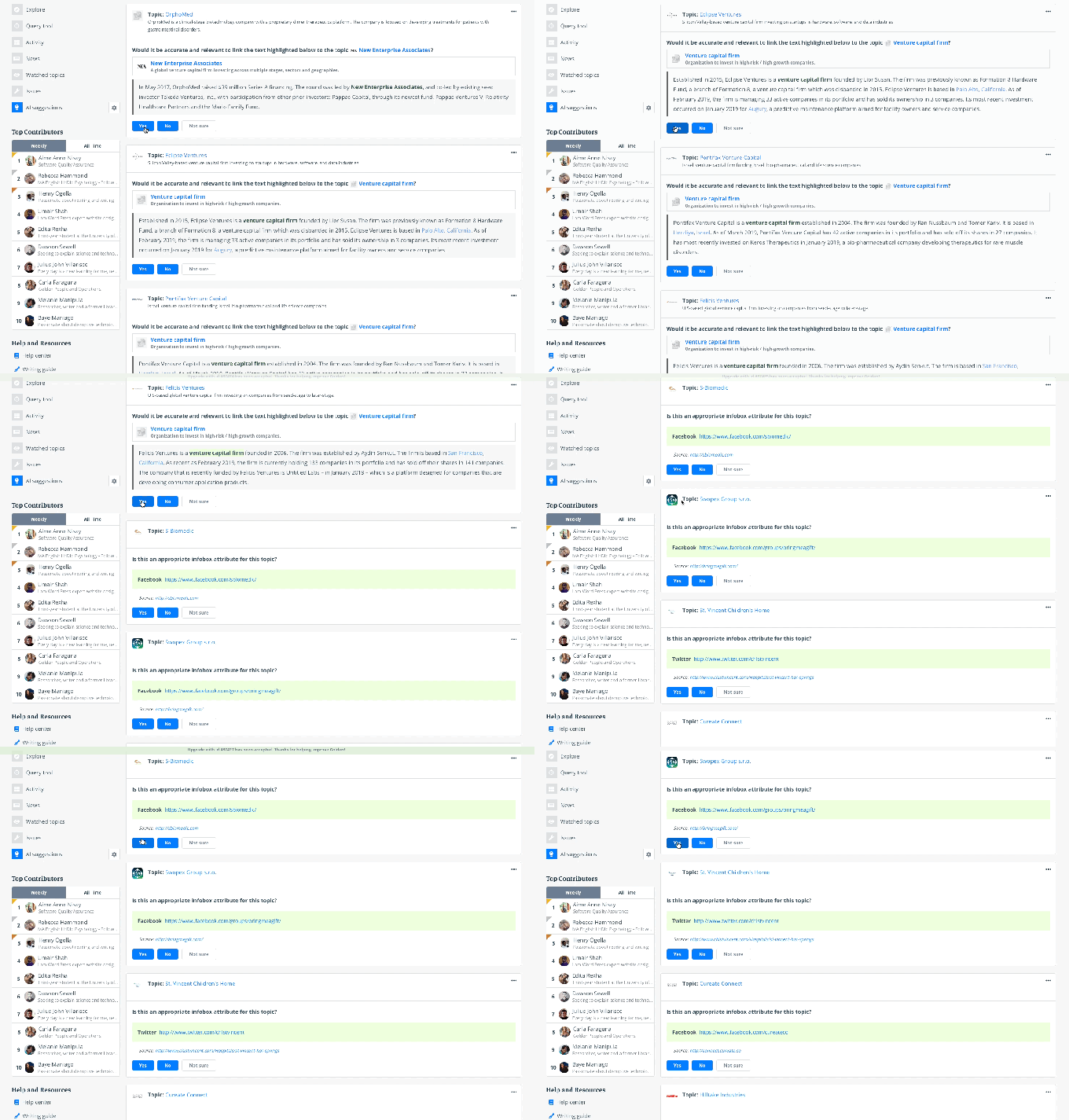
AI Suggestions

If you think someone has added incorrect or misleading information to a page, you can flag it as an issue. Gomila suggested AI could also play a more editorial role by pointing out when someone is using language that’s biased or seems too close to marketing-speak.

“AI can have bias and humans can have bias,” he acknowledged, but he’s hoping that both elements working together can help Golden get closer to the truth. He added that “rather than us editorially changing things, our team will act like normal users” who can edit and flag issues.

Golden is available to users for free, without advertising. Gomila said his initial plan for making money is charging investment funds and large companies for a more sophisticated query tool.


Oculus is getting serious about monetizing VR for enterprise.

The company has previously sold specific business versions of the headsets, but now they’re adding a pricey annual device management subscription.

Oculus Go for business starts at $599 (64 GB) and the enterprise Oculus Quest starts at $999 (128 GB). These fees include the first year of enterprise device management and support which goes for $180 per year per device.

Here’s what that fee gets you:

This includes a dedicated software suite offering device setup and management tools, enterprise-grade service and support, and a new user experience customized for business use cases.

The new Oculus for Business launches in the fall.


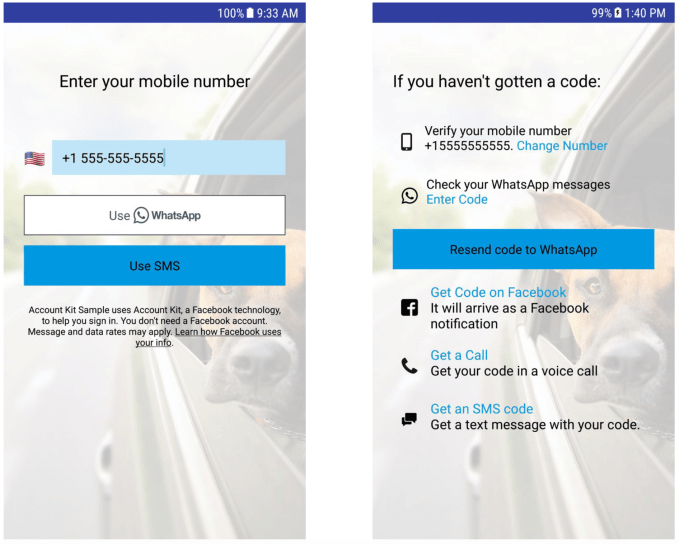
Facebook today released a new SDK that allows mobile app developers to integrate WhatsApp verification into Account Kit for iOS and Android. This will allow developers to build apps where users can opt to receive their verification codes through the WhatsApp app installed on their phone, instead through SMS.

Today, many apps give users the ability to sign up using only a phone number — a now popular alternative to Facebook Login, thanks to the social network’s numerous privacy scandals which led to fewer people choosing to use Facebook with third-party apps. Plus, using phone numbers to sign up is common with a younger generation of users who don’t have Facebook accounts — and sometimes barely use email, except for joining apps and services.

When using a phone number to sign in, the app can confirm the user by sending a verification code over SMS to the number provided. The user then enters that code to create their account. This process can also be used when logging in, as part of a multi-factor verification system where a user’s account information is combined with this extra step for added security.

While this process is straightforward and easy enough to follow, SMS is not everyone’s preferred messaging platform. That’s particularly true in emerging markets like India, where 200 million people are on WhatsApp, for example. In addition, those without an unlimited messaging plan are careful not to overuse texting when it can be avoided.

That’s where the WhatsApp SDK comes in. Once integrated into an iOS or Android app, developers can offer to send users their verification code over WhatsApp instead of text messaging. They can even choose to disable SMS verification, notes Facebook.

This is all a part of WhatsApp’s Account Kit, which is a larger set of developer tools designed to allow people to quickly register and login to apps or websites using only a phone number and email, no password required.

This WhatsApp verification codes option has been available on WhatsApp’s web SDK since late 2018, but hadn’t been available with mobile apps until today.


Google employees are staging a sit-in tomorrow to protest the alleged retaliation at the hands of managers toward employees. The plan is to stage the sit-in tomorrow at 11 a.m.

This comes about six months after 20,000 Google employees walked out following the company’s mishandling of sexual harassment allegations.

Developing…


Hackers gained access to technology giant Citrix’s networks six months before they were discovered, the company has confirmed.

In a letter to California’s attorney general, the virtualization and security software maker said the hackers had “intermittent access” to its internal network from October 13, 2018 until March 8, 2019, two days after the FBI alerted the company to the breach.

Citrix said the hackers “removed files from our systems, which may have included files containing information about our current and former employees and, in limited cases, information about beneficiaries and/or dependents.”

Initially the company said hackers stole business documents. Now it’s saying the stolen information may have included names, Social Security numbers, and financial information.

Citrix said in a later update on April 4 that the attack was likely a result of password spraying, which attackers use to breach accounts by brute-forcing from a list of commonly used passwords that aren’t protected with two-factor authentication.

We asked Citrix how many staff were sent data breach notification letters but a spokesperson did not immediately comment.

Under California law, the authorities must be informed of a breach if more than 500 state residents are involved.

Read more:


MKRdezign

Contact Form

Name

Email *

Message *

Powered by Blogger.
Javascript DisablePlease Enable Javascript To See All Widget