Latest Post

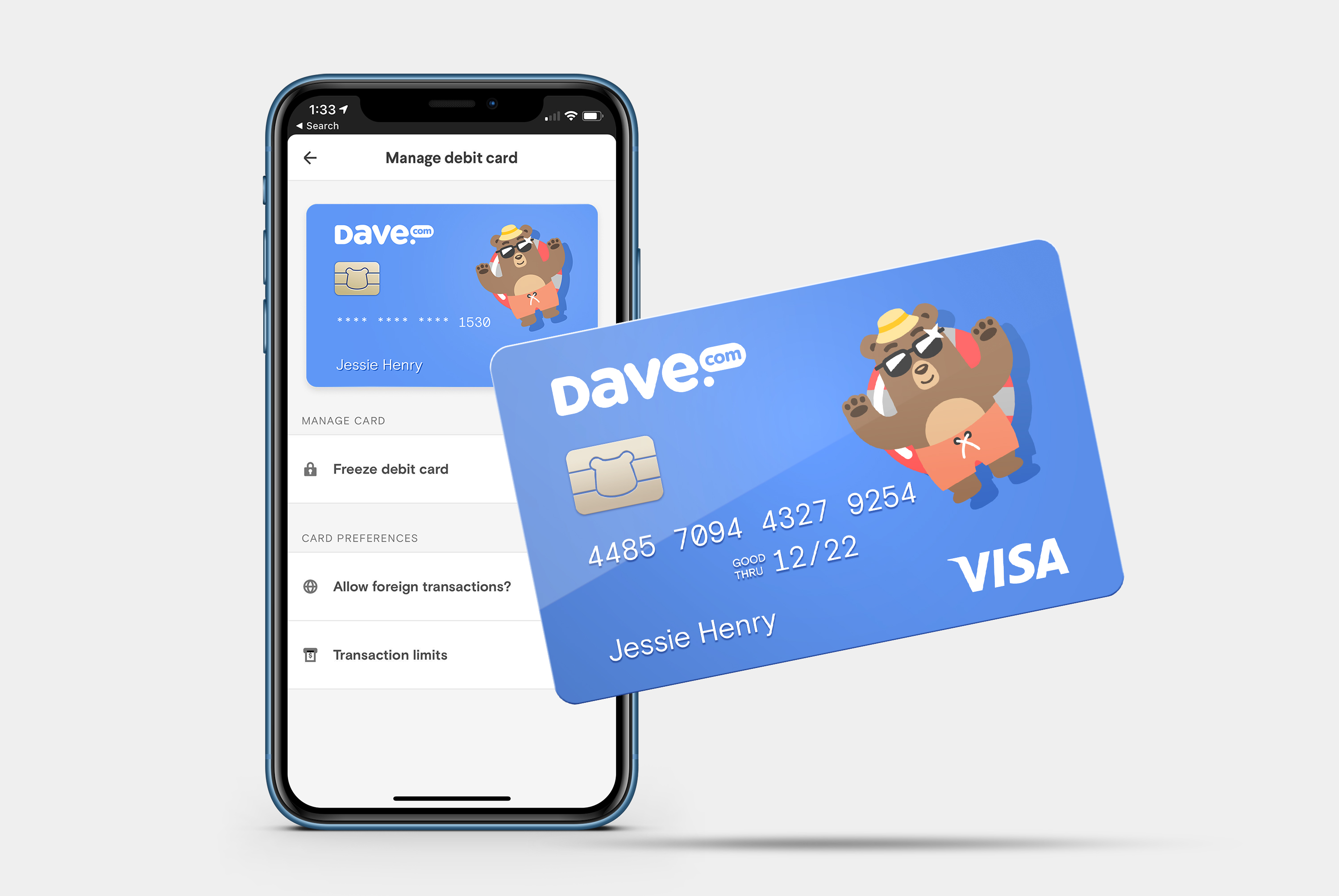
Two years after the Los Angeles-based fintech startup Dave launched with a suite of money management tools to save consumers from overdraft fees, the company is now worth $1 billion thanks to a nascent banking practice that had investors lining up.

The company used its overdraft protection service and money management display to shift customers’ focus away from the total balance that their account would show by giving them a sense of how much was actually left in their accounts once debits were included in their statements.

“What was cool about our financial management product was that we were trying to use Dave as a replacement for their current bank,” says Jason Wilk, Dave’s co-founder and chief executive.

Dave now counts over 4 million users for its financial management app and has roughly 800,000 people on the waiting list to use its banking services, Wilk says.

The company has taken a methodical approach to opening its doors as a digital bank, in part because it wants to have the necessary support infrastructure in place to service the demand that Wilk expects to see for its service.

“It’s one thing to help people with budgeting. It’s another to actually manage their money,” says Wilk.
3 1

Dave will use the $50 million raised from Norwest to significantly expand its product and engineering team within the next 12 months, in order to double down on the core business and ensure the success of the banking product.

“We can prove that Dave can be helpful by showing how we can help you manage your current account, and then Dave banking is the marketing lever from there,” says Wilk.

For now, customers need to have the financial management app installed to be able to access the company’s banking service.  

Dave charges $1 per month for access to its financial management tools and that also gives customers the ability to use a cushion of between $50 to $75 to avoid being hit with overdraft fees from their current bank account. Dave asks for a tip every time a customer uses that cushion to cover expenses — something that Wilk says is still cheaper than having to worry about overdraft fees.

And, to add a bit of environmental spin, for every tip that Dave receives, the company plants a tree. “We plant millions and millions of trees,” says Wilk.

The company is FDIC insured through a partner bank, the Memphis-based Evolve Bank and Trust, which acts as a backstop for the company’s financial management activities.

“We already had a relationship with them for some payment processing stuff,” says Wilk. “We liked the team and liked the terms and went with them.”

Terms between financial services firms can vary, and, Wilk says, Evolve Bank was willing to give the company a good deal on splitting the interchange fee, which is a big source of revenue for upstart banks.

It’s possible that Dave could have received a bigger check at a potentially higher valuation, but Wilk says the startup is trying to stay lean.

“The company is growing so quickly, we didn’t want to get too diluted on this round,” he says. “We think the company is quite a bit more valuable than [$1 billion]. You don’t want to raise too much money too quickly if you really think the valuation is going to climb… Since we signed the term sheet the company has already grown another 40%.”

It was only four months ago that Dave was announcing a $110 million credit financing with Victory Park Capital and the launch of its banking product.

Dave’s products and services have a few advantages for customers that are just getting started on the path to financial security. The company monitors everyday monthly payments and reports them to credit agencies to improve customers’ credit ratings. The company also provides up to $100, interest-free, overdraft protection.

“Banks have failed their customers by building products that put their own interests ahead of the humans who use them. People don’t need predatory fees, they need tools that actually solve their challenges around credit building, finding work and getting access to their own money to cover immediate expenses. Dave is the banking product that works with its customers, not against them,” said Wilk, in a June statement announcing the funding and banking product launch.

While Dave is getting some hefty firepower and a generous valuation from Norwest, it’s also operating in a market where its core services that were a point of differentiation are quickly becoming table stakes.

Earlier in September, the new startup banking company Chime announced that it had hit 5 million banking customers and was offering its own overdraft protection service.

The San Francisco-based bank has also raised a lot more capital for a potential piggy bank to raid if it needs to acquire or spend on engineering talent to build out new products and services. Earlier this year, the company announced a $200 million round and said it had hit roughly 3 million customers. Clearly Chime is adding new banking customers at a torrid pace.

And they’re facing global competition as well. N26, the European startup bank with a $3.6 billion valuation and hundreds of millions in financing launched in the U.S. a few months ago as well.

The company sees a global opportunity to create new digital banking services in a world where large amounts of capital and an elite set of consumers move easily between international markets.

“We have an opportunity that we build a bank that has more than 50 million users around the globe. Today, we only have 3.5 million users but we’re accelerating,” said N26 chief executive, Valentin Self, in an interview with TechCrunch. “From a country perspective, we have agreed already that we go to Brazil. There’s no plan after Brazil yet. Now let’s focus on the U.S., then on Brazil, then next year we’ll find out what’s the feedback from these two markets.”

New Zealand-based launch provider Rocket Lab has announced its next commercial mission, “As The Crow Flies,” taking an Astro Digital satellite to orbit in October. Interestingly, this launch originally had a different payload, but was switched out on fairly short notice — not exactly a common practice in this business.

The launch, scheduled for a two-week window starting October 15, will take a single spacecraft created by Astro to low Earth orbit. Corvus — the genus to which crows and ravens belong — is the name of the series of imaging satellites the company has already put up there; hence the name of the mission.

But this mission wasn’t scheduled to launch for some time yet. October’s launch, the fifth this year from Rocket Lab, was set to be another customer’s, but that customer seems to have needed a bit of extra time to prepare — and simply requested a later launch date.

And because the weather is fine, and one Electron rocket is much like another, Rocket Lab and Astro Digital just decided to use that launch window anyway and head to orbit a bit early.

This kind of thing really isn’t done much in the world of launch services. There are so many moving parts and so much red tape, not to mention weather, labor, and everything else involved, that launch dates are often set years in advance, frequently delayed anyway, and then either lift off or sit on the launchpad until they do. But flexibility is fundamental to the Rocket Lab business model, as founder and CEO Peter Beck has said repeatedly.

“Electron is a launch on demand service – we’re ready when the launch customer is,” he told TechCrunch regarding today’s announcement. “Electron is designed for standardized, rapid production — we don’t build to tail numbers. This ensures we can have launch vehicles on standby, ready to be assigned a payload for launch on demand.”

When the inevitable delays happen, whether for product, funding, or regulatory reasons, both provider and customer have to be ready to work with one another.

“The systems are complex and everything has to be right before launch, so we always want to ensure our customers have the flexibility to make launch timing work for them,” Beck said. “We’re accommodating that reality but allowing our customers to adjust their launch schedule as required, without causing disruption to the other missions on our manifest.”

As the new space economy grows, the old methods and infrastructure are increasingly unable to keep up, necessitating this kind of flexibility. Other launch providers are building towards small scales and adjustable timeframes as well, and there’s a line around the globe of small satellite makers who are waiting to take advantage.

You’ll be able to watch the launch from the Māhia Peninsula complex live whenever weather permits takeoff, sometime after October 14.


AWS has a lot going on, and it’s not always easy for customers to deal with the breadth of its service offerings on its own. Today, the company announced a new service called AWS IQ that is designed to connect customers with certified service providers.

“Today I would like to tell you about AWS IQ, a new service that will help you to engage with AWS Certified third party experts for project work,” AWS’s Jeff Barr wrote in a blog post introducing the new feature. This could involve training, support, managed services, professional services or consulting. All of the companies available to help have received associate, specialty or professional certification from AWS, according to the post.

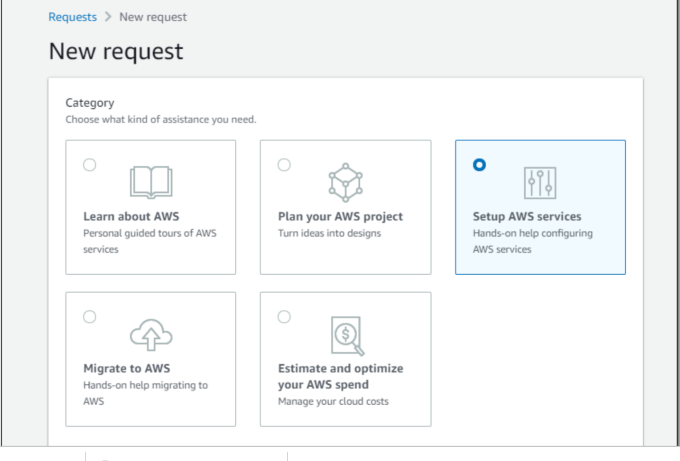
You start by selecting the type of service you are looking for such as training or professional services, then the tool walks you through the process of defining your needs including providing a title, description and what you are willing to pay for these services. The service then connects the requestor with a set of providers that match the requirements. From there, the requestor can review expert profiles and compare the ratings and offerings in a kind of online marketplace.

AWS IQ start screen

You start by selecting the type of service you want to engage.

Swami Sivasubramanian, vice president at AWS says they wanted to offer a way for customers and service providers to get together. “We built AWS IQ to serve as a bridge between our customers and experts, enabling them to get to work on new projects faster and easier, and removing many of the hassles and roadblocks that both groups usually encounter when dealing with project-based work,” he said in a statement.

The company sees this as a particularly valuable tool for small and medium sized vendors, who might lack the expertise to find help with AWS services. The end result is that everyone should win. Customers get direct access to this community of experts, and the experts can more easily connect with potential customers to build their AWS consulting practice.


Project A, the Berlin-based VC, just raised a new $200 million fund (€180 million) to continue backing European startups at Seed and Series A stage.

In addition, the firm — whose investments include WorldRemit, Catawiki, Voi and Uberall — announced it will now have a presence in London and Stockholm in order to put people on the ground in what it says are “two of its favorite ecosystems.”

What better time, therefore, to catch up with the team at Project A, where we talked investment thesis, why Stockholm and London, and the increasing interest in Europe from U.S. LPs and VCs. Other subjects we touched on include diversity in venture, and, of course, Brexit!

TechCrunch: You last raised a fund in 2016, totaling €140 million, what changes have you noticed since then with regards to the types of companies you are seeing and the European ecosystem as a whole?

Uwe Horstmann: Entrepreneurs definitely matured a lot over the last few years. We see more and more of serial founders who combine drive with experience delivering great results. We also noticed an increase in more tech / product-centric and in B2B models.

This doesn’t come as a surprise as the market for consumer-oriented models started developing much earlier and is now reaching its limits after a few years. Many entrepreneurs gained experience in the Old Economy or have been consulting companies for a few years, learned about the struggle with products and processes first-hand and developed solutions specifically tailored to the industry’s needs.

We also notice a rise in professionalism in company setups and a higher ambition level in founding teams. This is probably also due to a more professional angel and micro fund scene that has developed in Europe.

TC: I note that you have U.S. LPs in the new fund, which I think is a first for Project A, and more broadly we are seeing a lot more interest from U.S. VCs in Europe these days. Why do you think that is, and how does this change the competitive landscape for deal-flow and the ambition of European founders?

Thies Sander: Having our first U.S. LPs on board makes us proud. LPs have noticed that European VC returns have really picked up during recent fund cohorts.


Earlier this summer, Microsoft introduced an extra layer of security to its Dropbox competitor, OneDrive. The security features, called OneDrive Personal Vault, allow users to protect their files with two-step verification, like a fingerprint or facial recognition, PIN code, or a one-time code sent through email, SMS or Microsoft Authenticator. At the time of launch, however, the feature was only available to select markets. Today, it’s rolling out worldwide and introducing new features, including expandable storage.

The company said OneDrive Personal Vault would initially be available to Australia, New Zealand and Canada, but would reach all OneDrive users by the end of the year.

With today’s expansion, it’s a little ahead of schedule as it’s just now the end of September.

Personal Vault is available to all OneDrive users, with some limitations.

For those using OneDrive’s free or standalone 100GB storage plan, you’re able to store up to 3 files in Personal Vault. Office 365 subscribers can store as many files as they want, up to their storage limits.

Stronger authentication is the key selling point for Personal Vault, but it also comes with additional security measures. This includes “Scan and Shoot,” which lets you scan documents or shoot photos directly to Personal Vault, bypassing your device storage, like the camera roll. Personal Vault will also automatically lock files after a period of inactivity, restricts sharing on the files saved to prevent accidental shares, and automatically syncs files to a BitLocker-encrypted area of the hard drive on Windows 10 PCs.

ba2d0566 5e67 43ce 998a fa1aa6517dbeIn addition to the global launch of Personal Vault, Microsoft also today introduced new storage options for One Drive, plus new features like PC Folder backup and dark mode.

Starting today, OneDrive users will now be able to add storage to their plans in 200GB increments, starting at $1.99 per month.

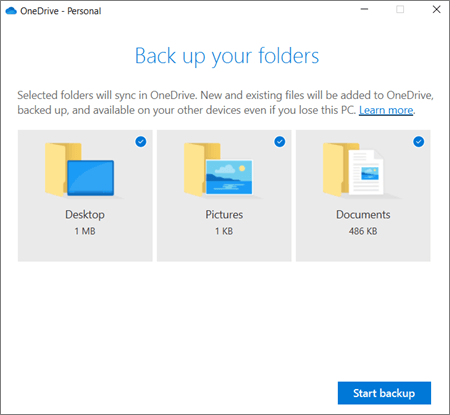
Meanwhile, PC Folder backup will allow OneDrive to back up your desktop, documents and picture folders from your Windows PC to the cloud, similar to rival desktop apps from Dropbox and Google Drive, for example. This option is available to Windows 7, 8 and 10 PCs. On Windows 10, it’s integrated so users can even opt to enable it during Windows setup or updates.

And OneDrive will now support a dark mode on iOS 13.

Personal Vault is live globally, as of today.


The Daily Crunch is TechCrunch’s roundup of our biggest and most important stories. If you’d like to get this delivered to your inbox every day at around 9am Pacific, you can subscribe here.

1. Not all is predictable on Facebook’s social Horizon

Last week, Facebook unveiled Horizon, a massively multiplayer VR world that’s scheduled to launch in 2020. This might seem to play to Facebook’s software strengths, but Lucas Matney argues that the social networking giant may not actually have much of an advantage against smaller game studios.

For example, the team at Against Gravity has already built a network inside VR called Rec Room that’s been maturing over the past few years, with rich environments and toolsets for multiplayer interactions. (Extra Crunch membership required.)

2. Spotify now lets you add podcasts to playlists

Users can create their own custom playlists of their favorite podcasts, or even those that combine music and audio — similar to Spotify’s newly launched playlist “Your Daily Drive.”

3. Kickstarter darling EcoFlow Delta battery generator is not what it seems

The EcoFlow Delta is a new battery generator available on Kickstarter with incredible features claimed. Most are true, some are not.

4. YouTube TV is now available on Fire TV devices

Earlier this year, Google and Amazon reached an agreement to bring their streaming video apps to each other’s platforms. The YouTube app launched on Fire TV in July, and now Google is adding its live TV streaming service.

5. Amboss, the knowledge platform for medical professionals, scores €30M Series B

Launched in 2014 as a study platform for medical students, Amboss has since evolved to offer what it claims is the “most comprehensive and technologically-advanced” knowledge platform for medical professionals.

6. Learn everything you can about mobility at Disrupt SF

We’re bringing some of the industry’s leaders onstage at Disrupt SF — including Bird founder and CEO Travis VanderZanden, Kitty Hawk CEO Sebastian Thrun and Zoox CEO Aicha Evans.

7. This week’s TechCrunch podcasts

The latest episode of Equity kicks off with the reemergence of the much-criticized startup Bodega, which is now known as Stockwell and has raised a total of $45 million in funding. Meanwhile, Original Content reviews “Between Two Ferns: The Movie” on Netflix.


After raising $100 million, virtual reality content startup Jaunt has been in a precarious position for a few years now. It seems like the saga has finally come to a close as the startup announces that Verizon has purchased the company’s technology.

The studio rode the wave of VR hype following Facebook’s acquisition of Oculus, but after years of trying to find a business in immersive entertainment, spanning software and camera hardware, the company has spent its past year trying to sell off its VR assets while pursuing a business focused on augmented reality and what it calls the “distribution of volumetric video of humans.”

A deal with Spinview Global to purchase the company’s VR tech that was reported last year never ended up happening, a spokesperson tells TechCrunch. Verizon is walking away with Jaunt’s technology assets here which is inclusive of their VR tech and their newer AR efforts. It doesn’t sound like any employees are coming onboard as part of the transition, but there will be some Jaunt folks helping bring the tech onboard for a brief period.

The company’s spokesperson opted not to comment when asked whether the startup was winding down following the deal.

Why does Verizon want these assets? Verizon Media (of which TechCrunch is apart of) already has some assets in the VR space including the virtual reality content studio RYOT which has been playing around with 360 content and general AR/VR content. The company’s Envrnmnt arm is basically focusing on making AR and VR apps run more efficiently on mobile, which is something Jaunt has had to be mindful of as they’ve tried to focus on broadcasters that need to deal with bandwidth strains.

We don’t have a price tag on the deal, but the startup raised $100 million from investors including GV and Disney. In October of last year, the company laid off a “significant portion of its employees” and by the end of the year they were auctioning off office furniture.


MKRdezign

Contact Form

Name

Email *

Message *

Powered by Blogger.
Javascript DisablePlease Enable Javascript To See All Widget