Latest Post

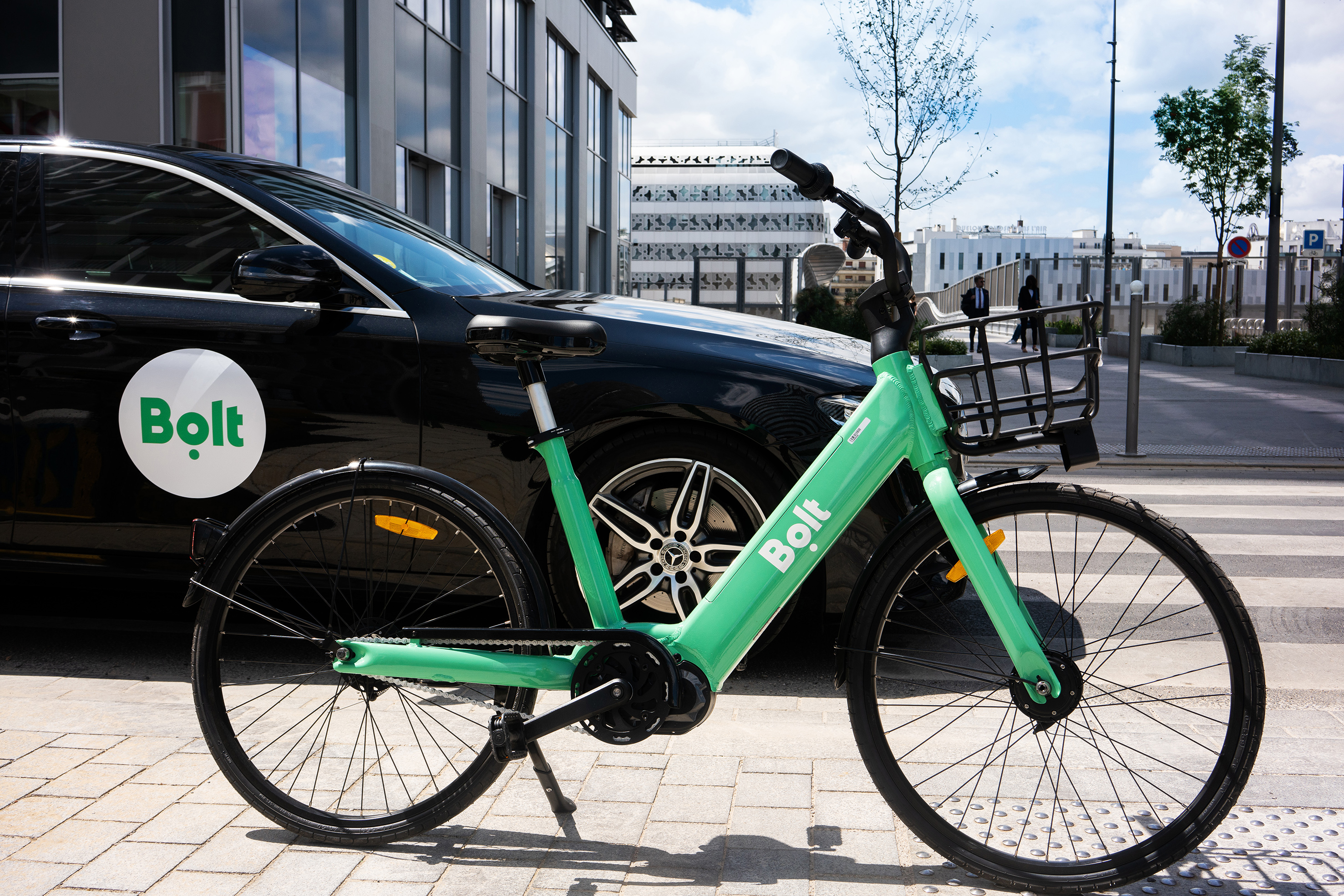
Like other ride-hailing companies, Bolt has been suffering from the coronavirus-related lockdown and economic downturn around the world. But the company is trying to find another revenue stream by launching electric bikes in Paris. Bolt plans to launch a similar service in other European capitals this year.

For the past couple of weeks, the only bike-sharing service that has been operating in Paris is Vélib’, the public bike-sharing service based on docked bikes and electric bikes. Many private companies have tried to compete with Vélib’ but they’ve all failed so far — Gobee.bike, Obike, Ofo, Mobike…

The most recent example is Jump, Uber’s micromobility subsidiary. Following a financial transaction with Lime, Jump has removed all its bikes from the streets of Paris, London, Rome, Brussels and more. Those electric bikes now belong to Lime, but Lime hasn’t relaunched the service yet (if it ever gets relaunched).

But it doesn’t mean bikes aren’t popular. The public bike-sharing service in Paris is even reaching record highs these days. Let’s see if it means that people are willing to give Bolt’s e-bikes a try.

In addition to ride-hailing and scooters, you’ll be able to access the bike-sharing service from the same Bolt app. Like other free-floating vehicles, you can unlock a bike by scanning a QR code.

When it comes to pricing, Bolt is trying to make its service as cheap as possible to attract its first users. There won’t be any unlock fee and it’ll cost €0.10 per minute. It’s still unclear how much it’s going to cost after the launch phase.

Vélib’ still feels more attractive when it comes to pricing. It costs €2 to rent an e-bike for up to 30 minutes, or €8.30 per month to rent as many e-bikes as you want in a given month. With Bolt, you pay €2 for a 20-minute ride — and that’s without any unlock fee.

Bolt has 30 million users in 35 countries. It operates a scooter service in 21 cities around Europe.


Beyond Meat is starting to hit supermarket shelves in China after it first entered the country in April by supplying Starbucks’ plant-based menu. Within weeks, it had also forayed into select KFC, Taco Bell, and Pizza Hut outlets — all under the Yum China empire.

China, the world’s biggest market for meat consumption, has seen a growing demand for plant-based protein. Euromonitor predicted that the country’s “free from meat” market, including plant-based meat substitutes, would be worth almost $12 billion by 2023, up from just under $10 billion in 2018.

The Nasdaq-listed food giant is now bringing its signature Beyond Burgers into Freshippo (“Hema” in Chinese), Alibaba’s supermarket chain with a 30-minute delivery service that recorded a spike in orders during the pandemic as people avoided in-person shopping.

The tie-up will potentially promote the animal-free burgers to customers of Freshippo’s more than 200 stores across China’s Tier 1 and Tier 2 cities. They will first be available in 50 stores in Shanghai and arrive in more locations in September.

“We know that retail will be a critical part of our success in China, and we’re pleased to mark this early milestone within a few months of our market entry,” Ethan Brown, founder and chief executive officer of Beyond Meat, said in a statement.

Plant-based meat has a long history in China, serving the country’s Buddhist communities before the diet emerged as a broader urban lifestyle in more recent times. Amid health concerns, the Chinese government told citizens to cut back on meat consumption in 2016. The middle-class urban dwellers have also been embracing fake meat products as they respond to climate change.

“Regardless of international or local brands, Chinese consumers are now only seeing the first generation of plant-based offerings. Purchases today are mostly limited to forward-thinking experimenters,” Matilda Ho, founder and managing director of Bits x Bites, a venture capital firm targeting the Chinese food-tech industry, told TechCrunch. “The good news is China’s per capita consumption of plant-based protein is amongst the highest in the world.”

“For these offerings to scale to mass consumers or attract repeat purchases from early adopters, there is tremendous opportunity to improve on the mouthfeel, flavor, and how these products fit into the Chinese palate. To appeal to health-conscious flexitarians or vegetarians, there is also plenty of room to improve the nutritional profile in comparison to the conventional tofu or Buddhist mimic meat,” Ho added.

The fake meat market is already rife with competition. Domestic incumbent Qishan Foods has been around since 1993. Hong Kong’s OmniPork and Alpha Foods were quick to capture the new appetite across the border. Nascent startup Zhenmeat is actively seeking funding and touting its understanding of the “Chinese taste.”

Meanwhile, Beyond Meat’s rival back home Impossible Foods may be having a harder time cracking the market, as its genetically-modified soy ingredient could cause concerns among health-conscious Chinese.


When in 2010, former VC Michael Kim set out to raise a fund that he would invest in a spate of micro VC managers, the investors to which he turned didn’t get it. Why pay Kim and his firm, Cendana Capital,  a management fee on top of the management fees that the VC managers themselves charge?

Fast forward to today, and Kim has apparently proven to his backers that he’s worth the extra cost. Three years after raising $260 million across a handful of vehicles whose capital he plugged into up-and-coming venture firms, Kim is now revealing a fresh $278 million in capital commitments, including $218 million for its fourth flagship fund, and $60 million that Cendana will be managing expressly for the University of Texas endowment.

We talked with Kim last week about how he plans to invest the money, which differs slightly from how he has invested in the past.

Rather than stick solely with U.S.-based seed-stage managers who are raising vehicles of $100 million or less, he will split Cendana into three focus areas. One of these will remain seed-stage managers. A smaller area of focus — but one of growing importance, he said — is pre-seed managers who are managing $50 million or less and mostly funding ideas (and getting roughly 15% of the company in exchange for the risk).

A third area of growing interest is in international managers. In fact, Kim says Cendana has already backed small venture firms in Australia (Blackbird Ventures), China (Cherubic Ventures, which is a cross-border investor that is also focused on the U.S.), Israel (Entree Capital), and India (Saama Capital), among other spots.

Altogether, Cendana is now managing around $1.2 billion. For its services, it charges its backers a 1% management fee and 10% of its profits atop the 2.5% management fee and 20% “carried interest” that his fund managers collect.

“To be extremely clear about it and transparent,” said Kim, “that’s a stacked fee that’s on top of what our [VC] fund managers charts. So Cendana LPs are paying 3.5% and 30%.” One “might think that seems pretty egregious,” he continued. “But a number of our LPs are either not staffed to go address this market or are too large to actually write smaller checks to these seed funds. And we provide a pretty interesting value proposition to them.”

That’s particularly true, Kim argues, when contrasting Cendana with other, bigger fund managers.

“A lot of these well-known fund of funds are asset gatherers,” he says. “They’re not charging carried interest. They’re in it for the management fee. They have shiny offices around the world, they have hundreds of people working at them, they’re raising billion-dollar-plus kind of funds, and they’re putting 30 to 50 names into each one, so in a way they become index funds. [But[ I don’t think venture is really an asset class. Unlike an ETF that’s focused on the S&P 500, venture capital is where a handful of fund managers capture most of the alpha. Our differentiation is that we’re taking we’re creating very concentrated portfolios.”

Specifically, Cendana typically holds positions in up to 12 funds, plus makes $1 million bets on another handful of more nascent managers that it will fund further if they prove out their theses.

Some of the managers it has backed has outgrown Cendana from an assets standpoint. It caps its investments in funds that are $100 million or less in size.

But over time, it has backed 22 managers over the years. Among them: 11.2 Capital, Accelerator Ventures, Angular Ventures, Bowery Capital, Collaborative Fund, Forerunner Ventures, Founder Collective, Freestyle Capital, IA Ventures, L2 Ventures, Lerer Hippeau, MHS Capital, Montage Ventures, Moxxie Ventures, Neo, NextView Ventures, Silicon Valley Data Capital, Spider Capital, Susa Ventures, Uncork VC (when it was still SoftTech VC), Wave Capital and XYZ Ventures.

As for its pre-seed fund managers, Cendana is now the anchor investors in 10 funds, including Better Tomorrow Ventures, Bolt VC, Engineering Capital, K9 Ventures, Mucker Capital, Notation Capital, PivotNorth Capital, Rhapsody Venture Partners, Root Ventures, and Wonder Ventures.

As for its returns, Kim says that Cendana’s very first fund, a $28.5 million vehicle, is “marked at north of 3x” and “that’s net of everything.”

He’s optimistic that the firm’s numbers will look even better over time. According to Kim, Cendana currently has 38 so-called unicorns in its broader portfolio. It separately hold stakes in 160 companies that are valued at more than $100 million.



Facebook’s recently launched app, Hobbi, an experiment in short-form content creation around personal projects, hobbies, and other Pinterest-y content, is already shutting down. The app first arrived on iOS in February as one of now several launches from Facebook’s internal R&D group, the NPE Team.

Hobbi users have now been notified by way of push notification that the app is shutting down on July 10, 2020. The app allows users to export their data from its settings.

In the few months it’s been live on the U.S. App Store, Hobbi only gained 7,000 downloads, according to estimates from Sensor Tower. Apptopia also reported the app had under 10K downloads and saw minimal gains during May and June.

Though Hobbi clearly took cues from Pinterest, it was not designed to be a pinboard of inspirational ideas. Instead, Hobbi users would organize photos of their projects — like gardening, cooking, arts & crafts, décor, and more — in a visual diary of sorts. The goal was to photograph the project’s progress over time, adding text to describe the steps, as needed.

The end result would be a highlight reel of all those steps that could be published externally when the project was completed.

But Hobbi was a fairly bare bones app. There was nothing else to do but document your own projects. You couldn’t browse and watch projects other users had created, beyond a few samples, nor could you follow top users across the service. And even the tools for documentation were underdeveloped. Beyond a special “Notes” field for writing down a project’s steps, the app experience felt like a watered-down version of Stories.

Image Credits: Hobbi

Facebook wasn’t alone in pursuing the potential of short-form creative content. Google’s internal R&D group, Area 120, also published its own experiment in this area with the video app Tangi. And Pinterest was recently spotted testing a new version of Story Pins, that would allow users to showcase DIY and creative content in a similar way.

It’s not surprising to see Hobbi wind down so quickly, given its lack of traction. Facebook already said its NPE Team experiments would involve apps that changed very rapidly and would shut down if consumers didn’t find them useful.

In addition to Hobbi, the NPE Team has launched a number of apps since last summer, including meme creator Whale, conversational app Bump, music app Aux, couples app Tuned, Apple Watch app Kit, audio calling app CatchUp, collaborative music app Collab, live event companion Venue, and predictions app Forecast. Before Hobbi, the only one to have shut down was Bump. (Some are not live in the U.S., either.)

Of course, Facebook may not intend to use these experiments to create a set of entirely new social apps built from the ground-up. Instead, it’s likely looking to collect data about what features resonate with users and how different creation tools are used. This is data that can inform Facebook’s development of features for its main set of apps, like Facebook, Messenger, WhatsApp and Instagram.

We’ve reached out to Facebook for comment but one had not been provided at the time of publication.


Lyft’s self-driving vehicle division has restarted testing on public roads in California, several months after pausing operations amid the COVID-19 pandemic.

Lyft’s Level 5 program said Tuesday some of its autonomous vehicles are back on the road in Palo Alto and at its closed test track. The company has not resumed a pilot program that provided rides to Lyft employees in Palo Alto.

The company said it is following CDC guidelines for personal protective equipment and surface cleaning. It has also enacted several additional safety steps to prevent the spread of COVID. Each autonomous test vehicle is equipped with partitions to separate the two safety operators inside, the company said. The operators must wear face shields and submit to temperature checks. They’re also paired together for two weeks at a time.

Lyft’s Level 5 program — a nod to the SAE automated driving level that means the vehicle handles all driving in all conditions — launched in July 2017 but didn’t starting testing on California’s public roads until November 2018. Lyft then ramped up the testing program and its fleet. By late 2019, Lyft was driving four times more autonomous miles per quarter than it was six months prior.

Lyft had 19 autonomous vehicles testing on public roads in California in 2019, according to the California Department of Motor Vehicles, the primary agency that regulates AVs in the state. Those 19 vehicles, which operated during the reporting period of December 2018 to November 2019, drove nearly 43,000 miles in autonomous mode, according to Lyft’s annual report released in February. While that’s a tiny figure when compared to other companies such as Argo AI, Cruise and Waymo, it does represent progress within the program.

Lyft has supplemented its on-road testing with simulation, a strategy that it relied on more heavily during COVID-related shutdowns. And it will likely continue to lean on simulation even as local governments lift restrictions and the economy reopens.

Simulation is a cost-effective way to create additional control, repeatability and safety, according to a blog post released Tuesday by Robert Morgan, director of engineering, and Sameer Qureshi, director of product management at Level 5. The pair said simulation has also allowed the Level 5 unit to test its work without vehicles, without employees leaving their desks and, for the last few months, without leaving their homes. Level 5 employs more than 400 people in London, Munich and the United States.

Using simulation in the development of autonomous vehicle technology is a well-established tool in the industry. Lyft’s approach to data — which it uses to improve its simulations — is what differentiates the company from competitors. Lyft is using data collected from drivers on its ride-hailing app to improve simulation tests as well as build 3D maps and understand human driving patterns.

The Level 5 program is taking data from select vehicles in Lyft’s Express Drive program, which provides rental cars and SUVs to drivers on its platform as an alternative to options like long-term leasing.


The good ship Extra Crunch Live sails along today, bringing two noted venture capitalists aboard to discuss the world’s investing patterns, their own deals and much more.

Extra Crunch members can join the conversation with Hans Tung and Jeff Richards from GGV Capital at 3:30 p.m. EDT/12:30 p.m. PDT/7:30 p.m. GMT.

We’ll collect audience questions as we go, so buy an Extra Crunch trial now so you can participate. Of course, TechCrunch has a list of its own queries — GGV Capital invests globally, which means it has eyes and ears in a number of different markets. We’ll dig into how different markets are faring: Is China’s VC scene as slow as it seems? Is Europe bouncing back as we’ve been hearing? And what’s the current temperature here in the United States for Series A through C rounds?

With the stock market back to form, exits are hot again, which gives us a new set of topics to explore, including how GGV views M&A appetite today from a price perspective, and whether any of their later-stage companies are looking more closely at the IPO market.

TechCrunch’s Extra Crunch Live series has featured guests like investor and entrepreneur Mark Cuban, BLCK VC’s Sydney Sykes and Inspired Capital’s Alexa von Tobel, with more to come.

There are other pressing matters: The COVID-19 pandemic is re-accelerating domestically even as it abates abroad. And GGV spoke out against racism during the early days of protests after the killing of George Floyd, so we’ll ask about the venture capital industry and if its efforts to diversify itself will make more material progress this time.

Extra Crunch subscribers, hit the jump and add the event to your calendar. Zoom links and the rest of the goodies are down there as well. (We’ll also stream live on YouTube). If you aren’t an Extra Crunch subscriber, you can get a cheap trial here.

All set? Great. We’ll see you in a few hours.

Details


Amazon Web Services (AWS) is upping its space industry game with a dedicated business unit called Aerospace and Satellite Solutions (as first reported by the WSJ) that’s focused on space projects, including from customers like NASA, the U.S. military, and private space players including Lockheed Martin and others. AWS has already served satellite and space industry customers, including with its AWS Ground Station offering, which provides satellite communication and data processing as a service, helping customers bypass the need to set up their own dedicated ground stations when establishing their satellite networks and constellations.

The AWS segment will be led by retired Air Force Major General Glint Crosier, who was involved in the set up of the U.S. Space Force arm of the U.S. military. The choice of leadership is a good indicator of what the primary purpose of this unit will be: landing and serving large, lucrative customers mostly form the defense industry.

In a high-profile decision last year, AWS lost out on contract to provide cloud computing services to the Pentagon with an estimated value of up to $10 billion, with Microsoft’s Azure taking the win. Amazon has formally challenged the decision, and the proceedings resulting from that challenge are ongoing. But the contract loss was likely a wake-up call at AWS that it would need to do more in order to bolster its pipeline for dedicated defense agency contracts.

Cloud computing services for satellite and in-space assets is a potentially massive business over the next few years for the defense industry, particularly in the U.S., where part of the strategy of the Space Force and Department of Defense is shifting away from a reliance on large, aging geostationary satellites, and towards more versatile, affordable and redundant networks of small satellites that can be launched frequently and in a responsive manner.

A primary focus on defense customers doesn’t mean startups and smaller new space ventures won’t benefit; in fact, they should be just as able to take advantage of the cost benefits that will accrue from Amazon dedicated more resources to serving this segment as bigger players. In fact, AWS Ground Station already serves smaller startups including Capella Space, which announced today that it would be using AWS for its satellite command and control, as well as for providing data from its imaging satellites to its customers much faster and cheaper than is usually possible for satellite providers.

This new focus could help further defray hard costs that any satellite startup must incur like ground station setup – a much-needed relief as the COVID-19 situation continues to impact startups’ ability to raise, especially in frontier tech areas like space.


MKRdezign

Contact Form

Name

Email *

Message *

Powered by Blogger.
Javascript DisablePlease Enable Javascript To See All Widget