Latest Post

Adtech giant and self-styled ‘free speech champion’, Facebook, has threatened to pull the plug on the public sharing of news content on Facebook and Instagram in Australia.

The aggressive threat is Facebook’s attempt to lobby against a government plan that will require it and Google to share revenue with regional news media to recompense publishers for distributing and monetizing professionally produced content on their platforms.

Consultation on a draft of the mandatory code — which Australia’s lawmakers say is intended to address “acute bargaining power imbalances” between local news businesses and the adtech duopoly — closed on August 28, with a final version expected imminently from Australia’s Competition and Consumer Commission (ACCC) and then due to be put before parliament.

Facebook’s threat thus looks timed to turn the heat up on lawmakers as they’re about to debate the details of the code. However dangling the prospect of blocking professionally produced news in an attempt to thwart a law change that’s not in its commercial interests will do nothing to reduce lawmakers’ concerns about the level of market power being wielded by tech giants.

Last month Google also warned that if Australia goes ahead with the plan then the quality of regional search results and YouTube recommendations will suffer — becoming “less relevant and helpful” if the law goes into effect.

Both platform giants are essentially saying that unless the bulk of professional reportage can be freely distributed on their platforms, leaving them free to monetize it via serving ads and through the acquisition of associated user data, then unverified user generated content will be left to fill the gap.

The clear implication is that lower grade content — and potentially democracy-denting disinformation — will be left to thrive. Or, in plainer language, the threat boils down to: Give us your journalism for free or watch your society pay the price as our platforms plug the information gap with any old clickbait.

“The ACCC presumes that Facebook benefits most in its relationship with publishers, when in fact the reverse is true. News represents a fraction of what people see in their News Feed and is not a significant source of revenue for us. Still, we recognize that news provides a vitally important role in society and democracy, which is why we offer free tools and training to help media companies reach an audience many times larger than they have previously,” writes Facebook in the same blog post where it threatens — as a ‘last choice’ — to pull the plug on content it describes as playing “a vitally important role in society and democracy” because it doesn’t want to have to pay for it.

Facebook’s calculus is clearly elevating its own commercial interests above free speech. And indeed above democracy and society. Yet the tech giant’s go-to defence for not removing all sorts of toxic disinformation and/or hateful, abusive content — or indeed lying political ads — from circulating on its platform is a claim that it’s defending ‘free speech’. So this is a specially rank, two-faced kind of platform hypocrisy on display.

Last year the comic Sacha Baron Cohen slammed Facebook’s modus operandi as “ideological imperialism” — warning then that unaccountable Silicon Valley ‘robber barons’ are “acting like they’re above the reach of law”. Well, Australians are now getting a glimpse of what happens when the mask further slips.

The ACCC has responded to Facebook’s flex with a steely statement of its own, attributed to chair Rod Sims.

“Facebook’s threat today to prevent any sharing of news on its services in Australia is ill-timed and misconceived,” he writes. “The draft media bargaining code aims to ensure Australian news businesses, including independent, community and regional media, can get a seat at the table for fair negotiations with Facebook and Google.”

“Facebook already pays some media for news content. The code simply aims to bring fairness and transparency to Facebook and Google’s relationships with Australian news media businesses,” he adds.

“As the ACCC and the Government work to finalise the draft legislation, we hope all parties will engage in constructive discussions.”

A similar battle is playing out in France over Google News, following a recent pan-EU law change which extended copyright to news snippets. France has been at the forefront of implementing the change in national law — and Google has responded by changing how it displays news media content in Google News in the country, switching to showing headlines and URLs only (so removing snippets).

However earlier this year France’s competition watchdog slapped down the tactic — saying Google’s unilateral withdrawal of snippets to deny payment to publishers is likely to constitute an abuse of a dominant market position, which it asserted “seriously and immediately damaged the press sector.”

Google’s share of the search market in Europe remains massively dominant — with the tech giant taking greater than 90% marketshare. (Something that underpins a number of regional antitrust enforcements against various aspects of its business.)

In Australia, Facebook’s position as a news distributor appears to be less strong, with the ACCC citing the University of Canberra’s 2020 Digital News Report which found that 39% of Australians use Facebook for general news, and 49% use Facebook for news about COVID-19.

However information and disinformation do not distribute equally, with plenty of studies indicating a faster spread for fake news — which suggests Facebook’s platform power to distribute bullshit is far greater than its role in informing societies by spreading bona fide news. That in turn makes its threat to block genuine reportage an antisocial weaponization of its dominance of social media.
Cosmose, a platform that tracks foot traffic in brick-and-mortar stores to help companies predict customer behavior, announced today it has raised a $15 million Series A. The round was by Tiga Investments, with participation from returning investors OTB Ventures and TDJ Pitango, who co-led Cosmose’s seed round last year. The company said its valuation is now more than $100 million.

The Series A will be used for product development and geographic expansion, starting with Southeast Asian markets this year, followed by the Middle East and India. Chief executive officer Miron Mironiuk, who founded Cosmose in 2014, said its goal is to break even and generate profit by 2021.

Cosmose has offices in Shanghai, Hong Kong, New York and Warsaw, where is software engineering team is based. Most of the stores its tech is currently use in are in China and Japan, and its clients include companies like Walmart, Marriott, Samsung, and LVMH.

As companies try to recover from the impact of COVID-19, Mironiuk said Cosmose’s platform has helped clients make decisions about when to reopen stores and what kind of inventory to stock, and how to increase revenue. For example, ‘some shops wanted to connect with customers who used to shop in their physical locations and encourage them to buy online,” he said. “Hotels in Japan were focused on promoting their in-house restaurants to local residents to make up for the lost revenue.” The company is also working with Boston Consulting Group on a report called “COVID-19 offline retail recovery traffic in China” for publication next week.

Mironiuk said that a PwC audit of the platform’s accuracy completed in December 2019 confirmed its ability to track customers within 1.6 meters of their location in a store, and that its data ecosystem now comprises of more than one billion smartphones and 360,000 stores. Cosmose’s plan is to grow that to two billion smartphones and 10 million stores by 2022.

The company offers three main products: Cosmose Analytics, which tracks customers’ movements inside brick-and-mortar stores; Cosmose AI, a data analytics and prediction platform to help retailers create marketing campaigns and increase sales; and Cosmose Media, for targeting online ads.

Cosmose does not require hardware installation, which means no regular maintenance is required after Cosmose maps a store, and helps it differentiate from rivals.

There are other companies that also analyze foot traffic in brick-and-mortar stores, including RetailNext and ShopperTrak, but being tracked might alarm customers who are concerned about their privacy. Mironiuk said all of the smartphone data Cosmose AI gathers is anonymized, so the company doesn’t know who shoppers are. The platform uses alphanumeric IDs called OMNIcookies, does not collect personal data like phone MAC addresses, mobile numbers, or email addresses, and follows data privacy laws in each of the countries it operates in. It also allows shoppers to opt-out of tracking.

In a press statement about the investment, Raymond Zage, the CEO and founder of Tiga Investments, said “I was attracted by the strong results Cosmose is already achieving for some of the world’s recognizable brands, while simultaneously ensuring user privacy is protected. Cosmose team is saving stores while enhancing consumer experience.”


Javed, a middle-aged man, worked as a driver before losing that job earlier this year as coronavirus spread across India, prompting New Delhi to enforce a nationwide lockdown and temporarily curb several business activities.

There are millions of people like Javed in India today who have lost their livelihood in recent months. They are low-skilled workers and are currently struggling to secure another job.

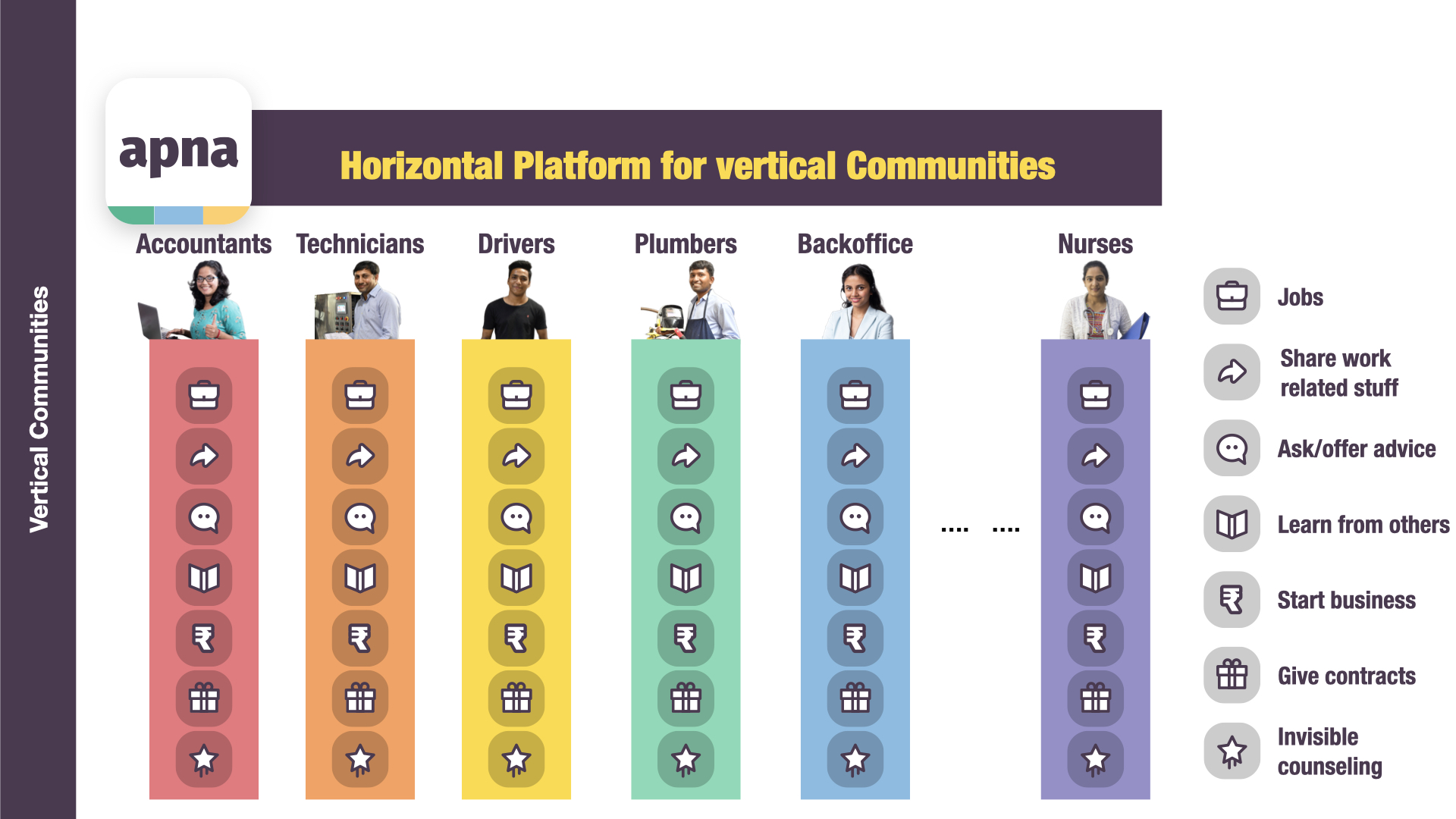
An Apple alum thinks he can help. Through his app startup Apna, Nirmit Parikh is helping India’s workers learn new skills, connect with one another, and find jobs.

Parikh’s app is already changing lives. Javed, who could barely speak a few words in English before, recently posted a video on Apna app where he talked about his new job — processing raisins — in English.

In less than one year of its existence, Apna app — available on Android — has amassed over 1.2 million users.

The startup announced on Tuesday it has raised $8 million in its Series A financing round led by Lightspeed India and Sequoia Capital India. Greenoaks Capital and Rocketship VC also participated in the round.

In an interview with TechCrunch last week, Parikh said that these workers lack an organized community. “They are daily-wage workers. They rely on their friends to find jobs. This makes the prospects of them finding a job very difficult,” he said.

Apna app comprises of vertical communities for skilled professionals like carpenters, painters, field sales agents and many others.

“The most powerful thing for me about Apna is its communities — I’ve seen people help each other start a business, learn a new language or find a gig! Communities harbinger trust and make the model infinitely scalable,” said Vaibhav Agrawal, a Partner at Lightspeed India, in a statement.

The other issue they struggle with is their skillset. “An electrician would end up working decades doing the same job. If only they had access to upskilling courses — and just knew how beneficial it could be to them — they would stand to broaden their scope of work and significantly increase their earnings,” said Parikh.

Apna is addressing this gap in multiple ways. In addition to establishing a community, and rolling out upskilling courses, the startup allows users — most of whom are first time internet users — easily generate a virtual business card. The startup then shares these profiles with potential employers.

In the last one month, Parikh said Apna has facilitated more than 1 million job interviews — up more than 3X month-on-month. During the same period, more than 3 million professional conversations have occurred on the platform.

Parikh said he plans to use the fresh capital to expand its offerings, and help users launch their own businesses. He also plans to expand Apna outside of India.

There are over 250 million blue and grey collar workers in India and providing them meaningful employment opportunities is one of the biggest challenges in our country, said Harshjit Sethi, Principal at Sequoia Capital India, in a statement.

“With internet usage in this demographic growing rapidly, further catalysed by the Jio effect, apps such as Apna can play a meaningful role in democratizing access to employment and skilling. Apna has built a unique product where users quickly come together in professional communities, an unmet need so far,” he added.

A handful of other players are also looking for ways to help. Last month, Google rolled out a feature in its search engine in India that allows users to create their virtual business card. The Android-maker also launched its jobs app Kormo in the country.


This one is unusual: Laird Superfood, a five-year-old, 100-person, Sisters, Ore.-based startup that was cofounded by famed surfer Laird Hamilton and which makes plant-based packaged beverage products, filed today to raise up to $40 million in an IPO.

We’d reported on this company early last year in large part because it had attracted backing from WeWork, the co-working company that famously made a number of bets that were very afield from its business (including a maker of wave pools) before suffering a major meltdown last fall.

In fact, according to Crunchbase, WeWork Labs provided Laird Superfood with a whopping $32 million — the bulk of the $51 million it has raised altogether, per Crunchbase. (WeWork founder Adam Neumann has said that he surfed with Hamilton in Hawaii.)

At that time, WeWork’s investment was the strangest thing about the business, a largely direct-to-consumer business that makes “superfood” coffee creamers, beverage supplements that include “performance mushrooms,” Peruvian coffee beans, and an assortment of other things, like teas and hot chocolate.

This IPO may be even more curious. Founded by Hamilton and another surfer, Paul Hodge, the company is very young to be going public by today’s standards (biotech startups notwithstanding). The company booked $19 million in sales for the 12 months ended June 30, but it lost $9 million over that same period and at the rate it is spending money, including on sales and marketing, it will see a net loss of $10 million this year.

Management says it has $13.1 million in cash on hand and investments. It would have more if it hadn’t spent $7.5 million buying back Series A-1 preferred shares in November 2019 that were purchased for twice that price. (The investor that sold its shares was also relieved of its commitment to fund another $10 million. It’s easy to imagine this was WeWork, but we don’t know this.) Because of that outlay, the company actually probably did pretty well last year; it just can’t state it that way.

Still, we’re a little intrigued by this one. The only outside shareholder that owns more than 5% of Laird Superfood is Danone Manifesto Ventures, the corporate venture arm of the global food and beverage company. It owns 13.4% of the company. Why wouldn’t Danone, which looks to have invested $10 million in the business in April, just buy out Laird Superfood outright?

It could be that there’s much more than meets the eye here (or is reflected in its S-1). We’re certainly not opposed to companies trying to go public much sooner than has been in the case in recent years. We’re just wondering if this food company is completely baked.

Either way, the decision to go public is certainly becoming an increasingly common one, given how hot the market has been despite the pandemic. According to Renaissance Capital, 27 companies joined the IPO pipeline last week alone.

Hamilton owns 13.2% of the startup. Hodge meanwhile owns 6.4%. Canaccord Genuity and Craig-Hallum Capital Group are the joint bookrunners on the deal. No pricing terms were included in the filing.


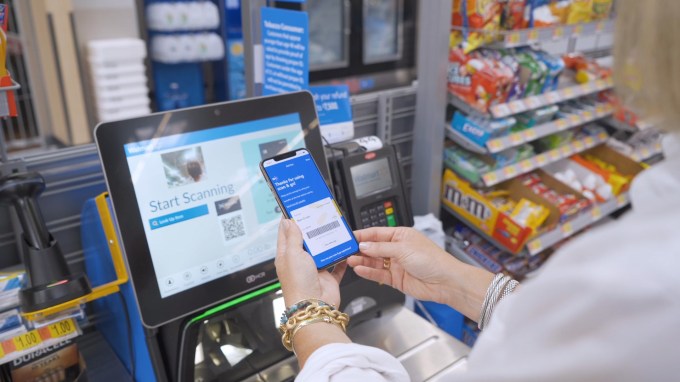
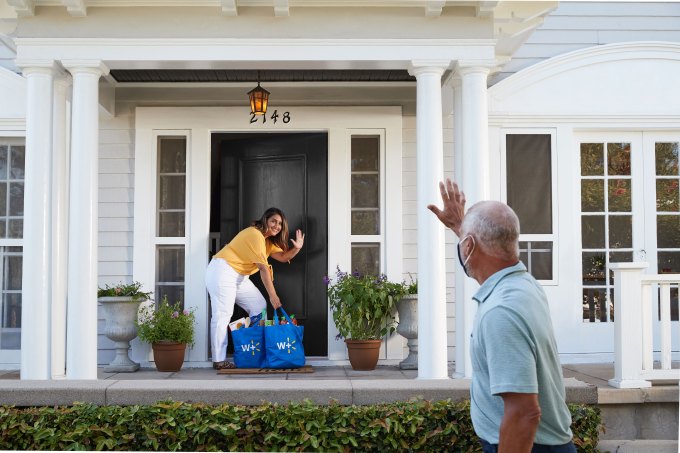
Walmart today officially unveiled its new membership service and Amazon Prime rival, which it’s calling “Walmart+.” The $98 per year service will combine free, unlimited same-day delivery on groceries and thousands of other items, with additional benefits, like fuel discounts and access to a new Scan & Go service, similar to Walmart-owned Sam’s Club, that will allow members to check out at Walmart stores without having to wait in line.

The service will be available starting on September 15, 2020 nationwide, reaching over 4,700 Walmart stores, including 2,700 stores that offer delivery. Members can choose to pay the $98 per year after a 15-day free-trial period, or they can pay $12.95 on a month-to-month basis.

At launch, the new program promises more than 160,000 items for same-day delivery with no per-delivery fee on orders totaling $35 or more. This is the same value proposition that Walmart’s existing “Delivery Unlimited” program offers today. With the launch of Walmart+, “Delivery Unlimited” members will be moved to the rebranded and expanded service.

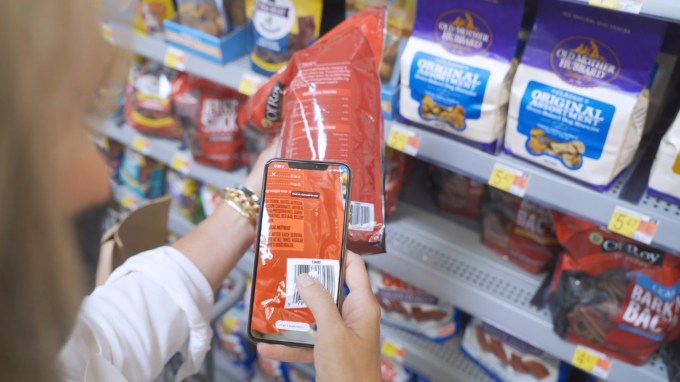
In addition to delivery savings, the new Walmart+ membership will include fuel discounts of up to 5 cents per gallon on any fuel type at nearly 2,000 Walmart, Murphy USA and Murphy Express stations nationwide. Walmart+ members will enable the discounts by using the Walmart mobile app, either by scanning a QR code or entering a PIN at the pump. Further down the road, the program will expand to include Sam’s Club fuel stations as well.

Image Credits: Walmart

The Scan & Go membership perk, meanwhile, lets Walmart+ members pay without having to wait in checkout lines — a nice perk to have amid a pandemic, where time in store means time exposed to potential carriers of the novel coronavirus. Using the Walmart app, customers scan scan items as they shop, then pay for them using Walmart Pay for a touch-free checkout experience.

Walmart two years ago had tested cashierless Scan & Go technology in its stores, but killed the program due to shopper theft. Arguably, fewer people will use Scan & Go because it’s a paid service, which could help store staff better combat the earlier problems.

Image Credits: Walmart

As with “Delivery Unlimited,” the Walmart+ orders are picked by in-store staff then handed off to partners like Postmates, DoorDash, Roadie and Point Pickup for delivery. Not owning the end-to-end experience can cause issues for consumers, however — especially because a poor delivery experience can damage Walmart’s reputation, or because customer service issues can’t be always dealt with directly when a middleman is involved. Walmart has also seen partners come and go, as delivery services ended their relationship with Walmart over the costs involved.

Walmart claims its new program is not a Prime rival. But it could encourage some number of Prime members to make a switch.

“We’re not launching Walmart+ with the intent to compete with anything else. We’re launching it with the needs of customers in mind,” explained Walmart Chief Customer Officer Janey Whiteside.

“Of course, I hope that brings in more customers and makes them more loyal, but when you’re as big as Walmart is — and serving as many people as we are — this is about really doubling down with the customers that we have and getting more share of wallet and more share of mind,” Whiteside added.

Prime is a much more expansive program. For comparison, Prime offers tens of millions of products for two-day delivery, over 10 million for one-day delivery and over 3 million for same-day delivery on orders of $35 or more. Walmart+ is focused more specifically on same-day delivery, as Walmart.com already offers free one-day or two-day shipping on orders of $35 or more without requiring a membership fee.

Prime today also offers a huge array of other perks — like access to free music, video, audiobooks, Kindle books and more. Walmart+ does not.

Still, for many customers, the value in Prime is rooted in its promise of speedy delivery. But at the same time, Amazon has tested the limits of its customer loyalty by steadily raising Prime’s subscription price over the years to now $119 when paid annually, or $12.99 per month. Walmart+ undercuts Prime at $98 per year or $12.95 per month while largely catering to the online grocery shopper — a target market that has rapidly grown during the pandemic. Walmart recently reported the pandemic helped drive its own e-commerce sales, fueled  by online grocery, up 97% in the past quarter.

Image Credits: Walmart

Meanwhile, Amazon’s grocery strategy since its 2017 purchase of Whole Foods has yet to be streamlined. Amazon today continues to offer two different online grocery services, Amazon Fresh and Whole Foods, with a varying array of pickup and delivery options, potentially leading to consumer confusion.

That said, the pandemic has led to massive sales increases for Amazon and Walmart, along with other essential retailers like Target, with all involved reporting stellar earnings in recent quarters.

Walmart’s plans for a new subscription program had previously been reported and a placeholder website has also been live for some time. In August, Walmart CEO Doug McMillon told investors on the company’s earnings call that it was readying the launch a membership program that would be centered around delivery. He noted also at the time how Walmart’s existing “Delivery Unlimited” subscription, launched last year, would serve a “great base of an offer” for the broader program, but didn’t offer a launch time frame.

Earlier reports said the service would include other perks, like access to more grocery time slots, promotional deals and eventually a Walmart+ credit card. The retailer declined to speak to its plans, only saying that Walmart+ benefits would expand over time.

“As is the case with any great membership offering, these benefits are not intended to be static. We will continue to leverage our assets and scale to bring solutions at unprecedented value, all while holding true to the everyday low prices that customers know they can always expect from Walmart,” Whiteside said. “In the future, we will be leveraging our wide-ranging strengths to add additional benefits for members in a range of both services and offerings,” she added.


Much was made during the Republican Convention of the lack of a party platform. The media characterized this as a capitulation to the Cult of Trump phenomenon, but the questioned begged was: so what? If you’re running as a candidate to disrupt the status quo…. But beneath the media framing, an important question emerges. What exactly is the platform we need to emerge from the toxic situation we find ourselves in?

For months, if not years, the technology industry has been working on a new platform to succeed the previous one. Mobile would seem to be that fundamental shift from the desktop world of Windows and PCs. The twin dominance of powerful phones by Google and Apple has created a new language of notifications and streaming video perfectly timed for the devastating pandemic. Our devices are now the front lines for managing the struggle to stay alive for our loved ones, the economy, and our future.

Zoom is of course the poster child for all that it enables, and certainly what it doesn’t. The notion of work from home is more likely a question of what is home and what’s the difference with work? The routines of life are congealing around the interactions with phone, watch, iPad, laptop, and TV. When I wake up, the first dive is for the notification stream built up overnight from overseas and then the East Coast. The rhythm varies from day to day: intense on Monday as the weekend cobwebs dissipate, more issue oriented through the middle of the week, and finally a thank-god-it’s Friday feel. Email, text messages, media updates, and work calendar reminders.

And then there’s the outline of the new platform — live streaming notifications from what some call citizen media, or the influencer network, or the loyal opposition. That last one refers to the decline in trust of the mainstream media. Maybe it’s just me, but the cable model of host-driven cyclical repetition of the headlines, talking heads, and medical ads adds up to a trip first to the mute button and eventually the off switch. Which plugs me right back into the notification stream and a new contract with us based on whether we click on the link or even allow the notification in the first place.

And these new voices are networks of one or a few, broadcasting on a global reach pastiche of cloud services that begin with the ubiquity of Zoom and its click and you’re there ease of on boarding. Then there are the key networks of record as it were: Facebook Live, Twitter/Periscope, YouTube, and maybe LinkedIn if you’re Brent Leary and got an early invite. There’s a whole bunch of streaming accelerators like Restream and StreamYard and Just Streams (I made that up) to use software and a dash of hardware to do what it took many thousands of dollars and cables just a few years ago. Right now it’s early days, but soon you’ll be seeing something that looks like the media it’s replacing as the OG buys in.

Don’t believe me? Just look at how streaming has disrupted the television industry. Or the music business. Or the reemergence of podcasting and newsletters. Or how messaging is growing rapidly as a preferred digital commerce and marketing channel. The pandemic has certainly had a devastating effect with the loss of theaters, events, and travel that drive so much of our economy and the emotional underpinning of our lives. But as we learn to respect the power of the virus to force this digital wave of transformation, we fuel the winners that emerge from a new hybrid blend of evolution and adaptation.

Technology has often been seen as impersonal and cold to the touch. But now we should be making friends with robots for touchless shopping, At the beginning of this Gillmor Gang session, Frank Radice seemed stunned by the administration’s takeover of the symbols of our Washington monuments for political purposes. By the end, he seemed more hopeful of a different result. We have more ways now of making our voices heard, broadcasting our own names in fireworks above and beyond the fake news and suppression. Our platform: suppress the virus, not the vote.

__________________

The Gillmor Gang — Frank Radice, Michael Markman, Keith Teare, Denis Pombriant, Brent Leary, and Steve Gillmor. Recorded live Friday, August 28, 2020.

Produced and directed by Tina Chase Gillmor @tinagillmor

@fradice, @mickeleh, @denispombriant, @kteare, @brentleary, @stevegillmor, @gillmorgang

For more, subscribe to the Gillmor Gang Newsletter and join the notification feed here on Telegram.

The Gillmor Gang on Facebook
…and here’s our sister show G3 on Facebook


As COVID-19 lockdowns forced billions indoors, wildlife came out to play in many parts of the world. Sightings have been reported of coyotes roaming through San Francisco, dolphins frolicking along Istanbul’s shores, and wild goats wandering the streets of a North Wales town.

And researchers have been watching. One group of experts recently coined the term “anthropause” to describe the global slowdown of human activity during the pandemic and noted the conditions could produce critical insights into human-wildlife interactions.

“Coordinated global wildlife research during the anthropause will make contributions that go well beyond informing conservation science — it will challenge humanity to reconsider our future on Earth,” wrote the team of researchers led by Christian Rutz, 2019–2020 Grass Fellow at the Radcliffe Institute for Advanced Study, in a recent article published in Nature Ecology & Evolution. The paper amounts to a call to study humankind’s impact on wildlife using data collected during the pandemic, and suggests such research could yield “opportunities to reinvent the way we live our lives, and to forge a mutually beneficial coexistence with other species.”

Rutz, a biology professor at the University of St. Andrews and a leading expert on animal tool behavior and crows, co-launched the global research initiative this spring during a Radcliffe fellowship. Shortly after returning to his home in Scotland in March (several months earlier than planned due to the pandemic) Rutz and several fellow biologists began discussing via email how they could take advantage of the pause in human movement to study its effects on avian, marine, and terrestrial wildlife.

Christian Rutz.

Christian Rutz said scientists have long studied human-wildlife interactions but have struggled to understand whether animals have been most affected by human infrastructure.

Courtesy of Christian Rutz

As the president of the International Bio-Logging Society, a group of wildlife biologists from around the world who track animal movements and activity patterns using tiny attachable electronic tags (so-called “bio-loggers”), Rutz knew he and his colleagues had a unique chance to gather key data, so they made an appeal to the society’s roughly 1,000 international members.

“We went into lockdown, but all the while these little tracking devices kept recording data for a large number of animals,” he said. “We realized that there was an opportunity to use these tracking data from before, during, and after lockdown to gain unprecedented insights into human-wildlife interactions.”

In their article, Rutz’s team defined their plan, urged relevant authorities to allow scientists to continue their research during lockdown, and encouraged leaders of local animal tracking projects and owners of high-quality human mobility data to join their global collaboration.

Soon they had more than 300 responses from colleagues tracking everything from small garden birds to massive whales. “The last numbers I’ve seen indicate that we’ve been offered data for 180 species across 279 populations from all around the globe,” Rutz said. “This provides an opportunity to go beyond anecdotal observations and to look at broader patterns across species, ecosystems, and geographic regions.”

Images have flooded social media in recent weeks offering glimpses of how animals are responding to having fewer humans around. Dolphins have been seen swimming in Italy’s Gulf of Trieste; pumas on the streets of Santiago, Chile; and jackals in parks in Tel Aviv, Israel, in broad daylight. But other animals appear to be facing serious threats due to the lockdowns. According to reports, monkeys and seagulls that survive on scraps of human food in some parts of the world are going hungry, and the temporary shutdown of wildlife reserves has heightened the poaching threat to endangered animals such as rhinoceroses and elephants.

Rutz said scientists have long studied human-wildlife interactions but have struggled to understand whether animals have been most affected by human infrastructure, such as buildings and roads, the physical presence of humans in their midst, or a combination of both. The anthropause has given scientists the chance “to get precisely at that question because, for the most tragic reasons, humans were briefly taken out of the equation,” said Rutz.

The current closure of large parts of society has returned the world to levels of human mobility observed only a few decades ago, added Rutz, allowing researchers to study how even small shifts in human behavior might have a dramatic beneficial impact on species around the globe.

Galapagos giant tortoise with solar GPS tag

A Galapagos giant tortoise with a solar GPS tag. Tracking wildlife during the COVID-19 lockdown has given researchers new insights on animal movements.

Photo by Christian Ziegler ©

Hawkmoth with transmitter.
Martin Wikelski with straw-colored fruit bat.

Tracking a hawk moth and a straw-colored fruit bat.

Photos by Christian Ziegler ©

“Nobody is asking for humans to stay in a state of permanent lockdown,” said Rutz. “Humans will go about their lives. They will want to travel, and they should travel. But we anticipate that there will be opportunities to make relatively minor changes that have significant impact to, for example, how we lay out and operate our transport networks — roads on land and vessel routes at sea. If we find through our replicated analyses, across different species and regions, that a particular way of arranging traffic routes is really bad for animals, we can make concrete proposals for improvements.”

The research could also have dramatic implications for a world battling a deadly virus that likely originated in bats before spreading to people. Rutz thinks the project could help shed light on the transmission of viruses from animals to humans.

“I definitely think that the more we understand about the movements and activity patterns of wild animals, especially across species and habitats, the more informed models will be that describe the potential spread of diseases,” said Rutz. “Our project gets at the heart of what happens at that human wildlife interface, which is, of course, key to understanding how diseases may jump from animals to humans.”

Although the global impact of COVID-19 is unprecedented in modern times, the Chernobyl Nuclear Power Plant disaster and its effects on the surrounding wildlife hint at the kind of results Rutz and his team might find. For years, scientists studied wild animal populations from the exclusion zone, the approximately 1,600-square-mile area around the plant in northern Ukraine that was permanently evacuated of its more than 100,000 residents after one of the plant’s reactors melted down in April 1986. In a 2015 study, researchers reported finding an “an abundant mammal community after nearly three decades of chronic radiation exposures” and suggested that prior to the accident, “mammal population densities were likely depressed due to hunting, forestry and agriculture.”

“This is a research opportunity that has come about through the most tragic circumstances due to COVID-19,” said Rutz. “But we feel, as a research community, that it is an opportunity we cannot afford to miss. We will be able to learn some important lessons going forward, not just for wildlife conservation, but also for planning our own future on this increasingly crowded planet.”


MKRdezign

Contact Form

Name

Email *

Message *

Powered by Blogger.
Javascript DisablePlease Enable Javascript To See All Widget