Latest Post

In 1934, physicist Eugene Wigner made a theoretical prediction based on quantum mechanics that for decades years went unseen.

The theory suggested how a metal that normally conducts electricity could turn into a nonconducting insulator when the density of electrons is reduced. Wigner theorized that when electrons in metals are brought to ultracold temperatures, these electrons would be frozen in their tracks and form a rigid, non-electricity conducting structure — a crystal — instead of zipping around at thousands of kilometers per second and creating an electric current. Since he discovered it, the structure was coined a Wigner crystal and was observed for the first time in 1979.

What’s remained stubbornly elusive to physicists, however, has been the melting of the crystal state into a liquid in response to quantum fluctuations. At least, it was: Now, almost 90 years later, a team of physicists co-led by Hongkun Park and Eugene Demler in the Faculty of Arts and Sciences has finally experimentally documented this transition.

The work is described in a new study published in the journal Nature and marks a big step toward creating a system for studying these kinds of transitions between states of matter at the quantum level, a long-sought-after goal in the field.

“This is right at the border of matter of changing from partially quantum material to partially classical material and has many unusual and interesting phenomena and properties,” said Demler, a senior author on the paper. “The crystals themselves have been seen, but this, sort of, pristine transition — when quantum mechanics and classical interactions are competing with each other — has not been seen. It has taken years.”

Led by Park and Demler, the research team focused on observing Wigner crystals and their phase transitions in the study. In chemistry, physics, and thermodynamics, phase transitions happen when a substance changes from a solid, liquid, or gas to a different state. When quantum fluctuations near absolute zero temperature drive these transitions, they are called quantum-phase transitions. These quantum transitions are thought to play an important role in many quantum systems.

In the case of a Wigner crystal, the crystal-to-liquid transition rises from a competition between the classical and quantum aspects of the electrons — the former dominating in the solid phase, in which electrons are “particle-like,” and the latter dominating in the liquid, in which electrons are “wave-like.” For a single electron, quantum mechanics tells us that the particle and wave nature are complementary.

“It is striking that, in a system of many interacting electrons, these different behaviors manifest in distinct phases of matter,” said Park. “For these reasons, the nature of the electron solid-liquid transition has drawn tremendous theoretical and experimental interest.”

The Harvard scientists report using a novel experimental technique developed by You Zhou, Jiho Sung, and Elise Brutschea — researchers from the Park Research Group and lead authors on the paper — to observe this solid-to-liquid transition in atomically thin semiconductor bilayers. In general, Wigner crystallization requires very low electron density, making its experimental realization a major challenge. By constructing two interacting electron layers from two atomically thin semiconductors, the researchers created a situation in which the crystallization stabilized at higher densities.

To see the transition, the researchers used a method called exciton spectroscopy. This uses light to excite an electron in the system and bind it to the electron vacancy, or hole, it leaves behind, forming a hydrogen-like electron-hole pair known as an exciton. This pair interacts with the other electrons in the material and modifies the other electrons so they can be seen.

The findings from the paper were largely accidental and came as a surprise, according to the researchers. The Park group initially set out in a different direction and were puzzled when they noticed the electrons in their material displayed insulating behavior. They consulted with theorists from Demler’s lab and soon realized what they had.

The researchers plan to use their new method to continue to investigate other quantum phase transitions.

“We now have an experimental platform where all these [different quantum phase transition] predictions can now be tested,” Demler said.

This is your opportunity to get a glimpse of the future of iOS, iPadOS and watchOS. Apple just released the first public beta of iOS 15, iPadOS 15 and watchOS 8. Those releases are the next major versions of the operating systems for the iPhone, iPad and Apple Watch. Unlike developer betas, everyone can download these betas — you don’t need a $99 developer account. But don’t forget, it’s a beta.

The company still plans to release the final version of iOS 15, iPadOS 15 and watchOS 8 this fall. But Apple is going to release betas every few weeks over the summer. It’s a good way to fix as many bugs as possible and gather data from a large group of users.

As always, Apple’s public betas closely follow the release cycle of developer betas. Apple also released the second developer beta of iOS and iPadOS 15 today. So it sounds like the first public beta is more or less the same build as the second developer build.

But remember, you shouldn’t install a beta on your primary iPhone or iPad. The issue is not just bugs — some apps and features won’t work at all. In some rare cases, beta software can also brick your device and make it unusable. You may even lose data on iCloud. Proceed with extreme caution.

But if you have an iPad, iPhone or Apple Watch you don’t need, here’s how to download it. Head over to Apple’s beta website from the device you want to use for the beta and download the configuration profile — do that from your iPhone for the watchOS beta. It’s a tiny file that tells your device to update to public betas like it’s a normal software update.

Once it’s installed, reboot your device, then head over to the Settings (or Watch) app. You should see an update. In September, your device should automatically update to the final version of iOS 15, iPadOS 15 or watchOS 8 and you’ll be able to delete the configuration profile.

The biggest change of iOS 15 is a new Focus mode. In addition to “Do not disturb,” you can configure various modes — you can choose apps and people you want notifications from and change your focus depending on what you’re doing. For instance, you can create a Work mode, a Sleep mode, a Workout mode, etc.

There are many new features across the board, such as a new Weather app, updated maps in Apple Maps, an improved version of FaceTime with SharePlay and more. Safari also has a brand new look.


The UK’s more expansive, post-Brexit role in digital regulation continues to be felt today via a policy change by Google which has announced that it will, in the near future, only run ads for financial products and services when the advertiser in question has been verified by the financial watchdog, the FCA.

The Google Ads Financial Products and Services policy will be updated from August 30, per Google, which specifies that it will start enforcing the new policy from September 6 — meaning that purveyors of online financial scams who’ve been relying on its ad network to net their next victim still have more than two months to harvest unsuspecting clicks before the party is over (well, in the UK, anyway).

Google’s decision to allow only regulator authorized financial entities to run ads for financial products & services follows warnings from the Financial Conduct Authority that it may take legal action if Google continued to accept unscreened financial ads, as the Guardian reported earlier.

The FCA told a parliamentary committee this month that it’s able to contemplate taking such action as a result of no longer being bound by European Union rules on financial adverts, which do not extend to online platforms, per the newspaper’s report.

Until gaining the power to go after Google itself, the FCA appears to have been trying to combat the scourge of online financial fraud by paying Google large amounts of UK taxpayer money to fight scams with anti-scam warnings.

According to the Register, the FCA paid Google more than £600,000 (~$830k) in 2020 and 2021 to run ‘anti-scam’ ads — with the regulator essentially engaged in a bidding war with scammers to pour enough money into Google’s coffers so that regulator warnings about financial scams might appear higher than the scams themselves.

The full-facepalm situation was presumably highly lucrative for Google. But the threat of legal action appears to have triggered a policy rethink.

Writing in its blog post, Ronan Harris, a VP and MD for Google UK & Ireland, said: “Financial services advertisers will be required to demonstrate that they are authorised by the UK Financial Conduct Authority or qualify for one of the limited exemptions described in the UK Financial Services verification page.”

“This new update builds on significant work in partnership with the FCA over the last 18 months to help tackle this issue,” he added. “Today’s announcement reflects significant progress in delivering a safer experience for users, publishers and advertisers. While we understand that this policy update will impact a range of advertisers in the financial services space, our utmost priority is to keep users safe on our platforms — particularly in an area so disproportionately targeted by fraudsters.”

The company’s blog also claims that it has pledged $5M in advertising credits to support financial fraud public awareness campaigns in the UK. So not $5M in actual money then.

Per the Register, Google did offer to refund the FCA’s anti-scam ad spend — but, again, with advertising credits.

The UK parliament’s Treasury Committee was keen to know whether the tech giant would be refunding the spend in cash. But the FCA’s director of enforcement and market insight, Mark Steward, was unable to confirm what it would do, according to the Register’s report of the committee hearing.

We’ve reached out to the FCA for comment on Google’s policy change, and with questions about the refund situation, and will update this report with any response.

In recent years the financial watchdog has also been concerned about financial scam ads running on social media platforms.

Back in 2018, legal action by a well-known UK consumer advice personality, Martin Lewis — who filed a defamation suit against Facebook — led the social media giant to add a ‘report scam ad’ button in the market as of July 2019.

However research by consumer group, Which?, earlier this year, suggested that neither Facebook nor Google had entirely purged financial scam ads — even when they’d been reported.

Per the BBC, Which?’s survey found that Google had failed to remove around a third (34%) of the scam adverts reported to it vs Facebook failing to remove well over a fifth (26%).

It’s almost like the incentives for online ad giants to act against lucrative online scam ads simply aren’t pressing enough…

More recently, Lewis has been pushing for scam ads to be included in the scope of the UK’s Online Safety Bill.

The sweeping piece of digital regulation aims to tackle a plethora of so-called ‘online harms’ by focusing on regulating user generated content. However Lewis makes the point that a scammer merely needs to pay an ad platform to promote their fraudulent content for it to escape the scope of the planned rules, telling the Good Morning Britain TV program today that the situation is “ludicrous” and “needs to change”.

It’s certainly a confusing carve-out, as we reported at the time the bill was presented. Nor is it the only confusing component of the planned legislation. However on the financial fraud point the government may believe the FCA has the necessary powers to tackle the problem.

We’ve contacted the Department for Digital, Media, Culture and Sport for comment.


It is no secret that healthcare in Nigeria and most parts of Africa is not easily available and a lot of work needs to be done in that regard. However, there are instances where accessibility is taken for granted. Take for instance Nigeria where a majority of the population with some form of healthcare access would rather treat diseases than prevent them in the first place.

As a result, people get to find out about life-threatening diseases, especially non-communicable ones (NCDs), much later in their lives. Access to diagnostics and preventive care is key to addressing this situation, and Nigerian-based diagnostic startup MDaaS Global is keen on making these services readily accessible. Today, the startup also announcing the launch of its product SentinelX, has closed a seed extension round of $2.3 million to scale across Nigeria.

MDaaS, an abbreviation for medical devices-as-a-service, started back in 2016. It operates a network of tech-enabled diagnostic centers across Nigeria. Two years ago, it raised a million-dollar seed round. And in addition to the other investments secured over the last five years, the healthtech startup has raised a total of $3.7 million.

The investors in the round include lead Newtown Partners, who invested via its Imperial Venture Fund, CRI Foundation, and return investors FINCA Ventures, Techstars, and Future Africa. 

The idea for MDaaS came when co-founder and CEO Oluwasoga Oni was tasked alongside his classmates at an MIT class to develop an idea that could impact a billion lives. Coming from a medical background, he chose the one he could relate to.

“I wanted to solve the problem close to me and my dad in my early years. He had a 30-bed hospital and struggled so hard to find medical equipment that was good for him and also at a good rate,” he said to TechCrunch.

Oni started MDaaS with Opeyemi Ologun, Genevieve Barnard Oni, and Joseph McCord. With their connections in the U.S., the founders began connecting secondary medical equipment marketplace in the U.S. to Nigeria. They would import equipment, provide service support, and deploy to hospitals via rent, lease, or outright sale.

The founders did this for a while until they realized that the core problem wasn’t providing equipment pieces; it was a matter of necessity. The money doctors spent on the pieces of equipment was more than the earnings from patients. Therefore it just didn’t make financial sense for doctors to own the equipment.

MDaaS decided to revert to an aggregation model where they would look at a clinically underserved area, build a centralized diagnostic center, and aggregate demand from small, medium-sized hospitals within that community. They launched the first center in the Nigerian southwestern city of Ibadan. The startup subsequently got into Techstars and has since added six other centers across other cities in Nigeria.

MDaaS

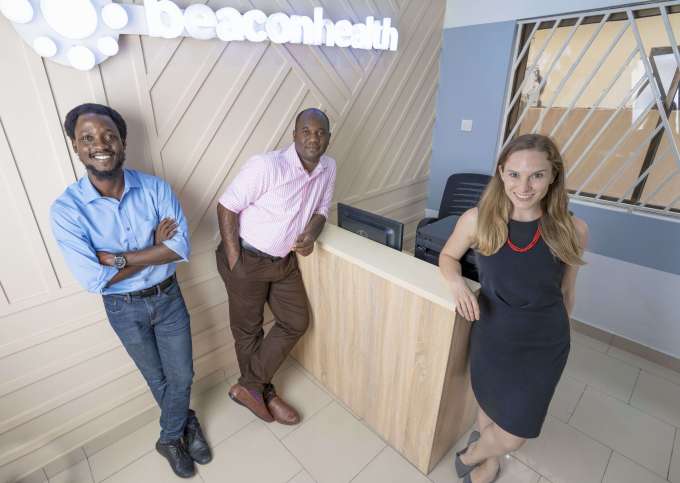
MDaaS co-founders (L-R) Oluwasoga Oni, Opeyemi Ologun and Genevieve Oni

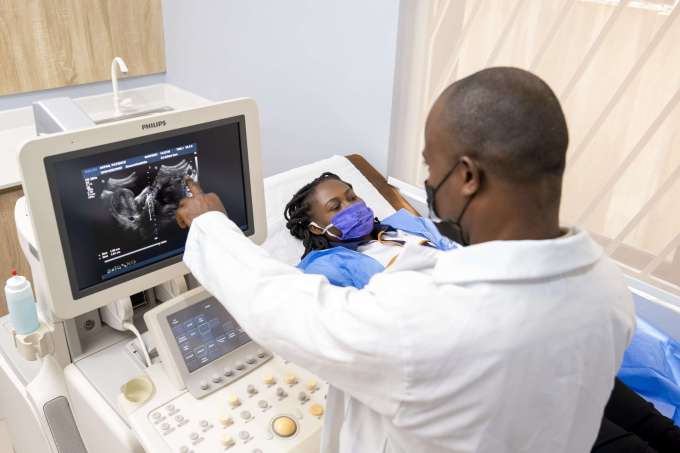
MDaaS diagnostic centers offer a wide range of services. First, there are imaging services such as digital x-ray and ultrasound, cardiac services such as ECG and echo. Then the lab services ranging from chemistry analysis and immunoassay to hematology.

So how did SentinelX come about? Oni tells me that it was during the pandemic last year. As MDaaS helped out with testing for COVID in patients, it was also taking time to screen for underlying health conditions.

“We didn’t really find a lot of people that had COVID, but what we found was that a lot of people had underlying conditions like high blood pressure and high cholesterol that they didn’t know about. So we were really shocked about that.”

In the past two decades, NCDs have risen dramatically in sub-Saharan Africa. They are driven by a growing incidence of cardiovascular risk factors like unhealthy diets, reduced physical activity, hypertension, and diabetes. Statistics point out that by 2030, NCDs are set to become the leading cause of mortality on the continent. 

So far, MDaaS has done a reasonably good job with its diagnostic centers. To date, the healthcare startup has provided diagnostic services to over 40,000 patients in underserved communities. It has also performed over 80,000 diagnostics tests across cardiology, radiology, neurology, laboratory, and general health checks. Over 750 clinicians use its referral network, and it has locked partnerships with more than 500 health facilities and 10 HMO networks.

Therefore, building SentinelX on the infrastructure already put in place serves as an opportunity to provide more customer-centric products for its users. The platform acts as a personalized care program where patients pay a one-time fee of N35k (~$70) and access a doctor all year round.

At the moment, users can run through a series of tests ranging from 60 or 70 biomarkers to assess individual risk for a wide range of diseases, including cancers, diabetes, kidney disease, and heart diseases. Clinical and family history and demographic data are also taken into consideration as part of the comprehensive analysis. Meanwhile, MDaaS creates a care plan unique to customers should they have health concerns after screening.

Image Credits: MDaaS

SentinelX is currently in private beta. However, the plan is to go live in September 2021. One would argue that $70 for a year might be cheap for this kind of service, Oni concurs but says it’s all about the long game for MDaaS.

“What we’re trying to solve is non-consumption. Most people in Nigeria don’t go for annual screening, which is something meant to be routinely done. Instead, what we tend to have in Nigeria is that people wait till they get sick before going for checkups. By that time, it costs so much money to solve the problem,” Oni echoes on the lackadaisical effort some Nigerians place on their health. 

Through SentinelX, MDaaS is trying to get as many people as possible to cheaply pre-screen themselves for one year then pay for full value the next year after seeing the benefits of regular checkups. The service is one of many MDaaS can deploy on top of its diagnostic infrastructure built over the years. But getting to this point meant the startup had to scale through the capital-intensive hurdle associated with infrastructural plays. Moreover, defining what price to charge patients has even become more challenging due to the economic recession that has frequently plagued Nigeria.

“We have had to get very creative in the way we build things because we target low to middle-income patients. As a result, we’ve needed to customize our diagnostic infrastructure, especially as it relates to costs for the people we serve,” Oni added.

The economic recession has also affected one of MDaaS’ most priced assets: doctors. Brain drain is a major challenge facing the Nigerian health system right now. It has led to a dramatic reduction in the number of Nigerian doctors who leave for a better quality of life and pay, with some reports estimating that over 2,000 doctors leave annually.

“When you hear about it in the news, it seems like a theoretical thing. But for us, it is real because we have staff leaving to go abroad,” the CEO remarked. MDaaS tries to approach the situation by training younger doctors and deploying them to its centers. Still, there’s some commitment play as both parties agree on a period of time the doctor would work with the company.  

Per application of funds, MDaaS wants to scale its physical footprint across Nigeria by adding six more diagnostic centers this year. According to Oni, the healthtech startup wants to become one of Nigeria’s three largest diagnostic centers. The CEO also said MDaaS would consider a pan-African expansion to similar countries like Nigeria, although he gave no timeline. But by 2025, the company aims to operate 100 centers across the continent and serve a million patients per year. 

Speaking on the news, the managing partner at Newtown Partners, Llew Claasen, said, “Most consumers in sub-Saharan Africa receive suboptimal medical care because of infrastructure gaps, low physician density, delays in diagnostics, and a lack of health data visibility. We think the physical diagnostic infrastructure that MDaaS is building out, coupled with the means to collect data and deliver value-added software services, has the potential to completely change the way that physicians, clinicians, and pharmacists do their jobs and lead to better health outcomes for a huge number of previously underserved consumers.” 


London-based insurtech hyperexponential (“hx”) – which has a mathematical modeling software for the commercial insurance sector – has closed an $18m funding round led by growth capital fund Highland Europe.

Hxsays it helps companies build, deploy and update their insurance pricing models faster, via a SaaS platform called Renew which is aimed at actuaries, data-scientists and underwriters.

Amrit Santhirasenan, hx’s CEO and co-founder, said: “The insurance industry is experiencing unprecedented growth, with data and technology being critical strategic drivers. Our software provides the tools that new entrants to the sector need in order to get to market with best-in-class analytics, and the functionality that incumbent insurers require in order to transform.”

Launched in 2017 by Santhirasenan and co-founder Michael Johnson, both software engineers and qualified actuaries, it now services a client base in charge of $50bn worth of premium.

Laurence Garrett, Partner at Highland Europe, said: “We believe hx offers a unique combination of actuarial expertise and software engineering knowhow that delivers exactly the tools that commercial insurers need as their marketplace continues to evolve and transform. This is a sector that is changing very rapidly and hx has already demonstrated considerable growth; we want to help them bring their cloud-based tools and innovation to even more insurers and insurtech companies.”


IDnow, a German-based identity verification startup is acquiring ARIADNEXT, a French equivalent, specializing in remote identity verification and digital identity creation. A price was not released by either party but TechCrunch understands from sources that the deal was approximately $59 million / €50 million. Sources say IDnow is looking to do similar acquisitions.

IDnow says the combined entity will be able to provide a comprehensive identity verification platform, ranging from AI-driven to human-assisted technology and from online to point-of-sale verification options. IDnow offers its services into the UK, French and German, Spain, Poland, Romania, and other international markets, and says it expects to increase revenue 3x in 2021 versus 2019.

The startup also says the pandemic has meant usage of its products has gone up 200% more compared to last year as companies switch to digital processes.

Andreas Bodczek, CEO of IDnow said in a statement: “This combination with ARIADNEXT is an important step towards our vision of building the pan-European leader for identity verification-as-a-service solutions. With ARIADNEXT, in addition to our recent acquisition of identity Trust Management AG, IDnow can provide our customers with an even broader suite of products through a single platform with a seamless user experience.”

Guillaume Despagne, President of ARIADNEXT, said: “We are looking forward to joining a team of IDnow’s caliber, combining our experience and skills to work towards our shared vision of providing a pan-European secure and future-proof solution to customers.

IDnow will retain ARIADNEXT’s locations in Rennes, Paris, Madrid, Bucharest, Iasi, and Warsaw, as well as its over 125 employees. The acquisition is subject to regulatory approvals.

The acquisition means IDNow is now on a par with the other large player in Europe, OnFido. TechCrunch understands the company has done €50m+ revenue this year expect to over-perform its €100m revenue target for 2023.


Ably is a Pub/Sub messaging platform that companies can use to develop realtime features in their products. The company just raised a $70 million Series B funding round co-led by Insight Partners and Dawn Capital.

Every day, you use various apps that push and fetch data in realtime. When you send a message in your favorite chat app, when you edit a document collaboratively, when you start a video call or when you look at financial data, you expect to send and receive stuff in a fraction of a second. It should feel instantaneous otherwise it feels broken.

A popular system that lets you create realtime features is called Pub/Sub, as in publish-subscribe. As the name suggests, with that model, users publish and receive data through the same channel. Users who want to receive data in realtime establish a realtime connection saying that they want to receive new messages that are routed through that channel.

Whenever someone publishes a new message, the message is routed to subscribers as quickly as possible — ideally, the message arrives in a fraction of a second. Push notifications on your smartphone follow more or less the same logic, except that they eventually go through Google’s and Apple’s push notification services.

There are several realtime platform-as-a-service providers out there, including services developed by Amazon Web Services and Google Cloud. And yet, Ably thinks it has the best technology platform out there and can build a large, standalone realtime API-based startup.

Existing investors Triple Point, Digital Horizon, Forward Partners and MMC also participated in today’s funding round.

“We thought realtime data would underpin experiences instead of enhance them,” co-founder and CEO Matthew O’Riordan told me. Ably customers currently contact the startup at different pain points. They may be using different services for their realtime features. Or maybe it doesn’t scale properly.

A good example of that is CRM, sales and marketing startup HubSpot. “They had realtime features across all their products and they were struggling specifically with the chat feature,” O’Riordan said. HubSpot looked at Ably to solve that problem in particular. And they’re now using Ably for all their products, from analytics to live chat and updates.

Ably has built a global network of data centers so that it can route messages as efficiently as possible. Just like content delivery network (CDN) companies try to minimize latency, Ably routes messages based on latency.

The startup also promises redundancy and reliability with a self-healing network. If a data center goes down, your realtime features still operate as usual. You can also store messages in a traditional message queue in case a user is offline and you want to deliver a batch of messages later when they come back online.

Clients include virtual event company Hopin, Bloomberg, Verizon and Tennis Australia (Verizon is also TechCrunch’s parent company). There are also some big customers in the social media space but Ably can’t disclose the names of all its customers. They pay depending on usage, such as the number messages, concurrent connections and channels.

Overall, Ably reaches 250 million devices per month. It currently has 65 employees. With today’s funding round, it expects to hire another 125 employees by the end of 2022.

The company’s vision is straightforward. It wants to build an infrastructure company that becomes an essential part of the services that you use every day. Ably could become the realtime network that delivers messages from point A to point B as quickly and as reliably as possible.


MKRdezign

Contact Form

Name

Email *

Message *

Powered by Blogger.
Javascript DisablePlease Enable Javascript To See All Widget