Latest Post

The push to prepare American cities and towns for greater climate resilience has become more urgent in recent years as scientific evidence of warming mounts and extreme weather events grow more common. Officials in many states, including Massachusetts and New York, are enacting new rules requiring developers and property owners to change or reduce the type or amount of energy used in their buildings, to incorporate certain construction materials and technology while excluding others, and to plan for rising seas and stormwater runoff.

These rules are adding extra costs to projects and sometimes require using relatively unproven technologies. And the rapidly shifting scientific, regulatory, and technological landscapes mean that even the most forward-thinking projects can soon be rendered obsolete, which is what happened with One Vanderbilt, a skyscraper near Grand Central Station. The project, intended to be an environmental showpiece, faced potential retrofitting of its innovative green heating-power system by the time it opened in 2021 because of newly adopted city climate regulations.

Holly Samuelson, M.Des. ’09, D.Des. ’13, is an associate professor of architecture at the Harvard Graduate School of Design who focuses on architectural technology and how issues related to building design impact human and environmental health. She spoke to the Gazette about how the field is responding to all the rapid changes. The interview has been edited for clarity and length.

Q&A

Holly Samuelson

GAZETTE: There has been growing recognition that the effects of climate change are happening sooner and could be more extreme than anticipated. Has that changed the way projects are planned, designed, and built?

SAMUELSON: I’ve seen increasing focus, investment, and expertise related to climate change. I think we’re going to see the pace accelerate going forward. I’m particularly interested in the new laws on existing buildings. In New York City, that’s local law 97. In Boston, that’s BERDO 2.0 [Building Emissions Reduction and Disclosure Ordinance] and will be BEUDO 2.0 [Building Energy Use and Disclosure Ordinance] in Cambridge. These are among the first wave of laws targeting existing buildings.

In Boston, BERDO 2.0 will require existing buildings of a certain size to be net zero greenhouse gas emissions by 2050. That’s causing a stir because for the first time, existing buildings can’t simply remain energy hogs with no penalty. And for new buildings, it’s changing decisions. Design teams and owners are realizing that their new buildings will become existing buildings and be regulated by these laws.

GAZETTE: What aspects of climate change are consuming the most attention?

SAMUELSON: Much of the focus has been and is on operational energy performance or bringing down the energy use of buildings. Two things are happening rapidly. First, there’s an increase in interest in lifecycle carbon emissions, meaning that you think about the greenhouse gas emissions that came from not only operating the building, but also from manufacturing and constructing [it], from extraction to demolition, etc.

Traditionally, buildings were such energy hogs when they were running that we could kind of ignore the carbon emissions that went into building the buildings because they were such a small slice of the pie. But now we’re shrinking the rest of the pie in terms of operational emissions, and we’re greening our grids, so the relative importance of the embodied emissions is growing.

Another trend we’re going to see — we’re not there yet — is considering the timing of energy use in buildings and how it impacts greenhouse gas emissions. If we really are going to green our grids, we’re probably going to see more and more intermittent renewables, like wind and solar, which produce power at certain times. There are different ways of aligning supply and demand. One way is to adjust the timing of our demand in buildings. So, we’re starting to think more and more about that.

GAZETTE: Given the increased cost to design and build for climate change and sustainability, and the risk associated with adopting new technologies that don’t have a lot of data behind them yet, are developers and property owners thinking twice about the ambition of their plans?

SAMUELSON: Well, it can be expensive to not design for resilience. We’ve seen on the news people dying from indoor conditions during heat events, power outages, cold spells, hurricanes, etc. And on the commercial building side, we know that a business taken offline can be very expensive.

Although technology is changing, many of the strategies to make our buildings more resilient and to shrink their carbon footprints are well-known and well-tested. For example, using better window systems, often using less glass area so that more wall area can be well-insulated, using proper window shading. The importance of these fundamental strategies is increasing.

When designing for climate resilience, I think of basic strategies like moving expensive equipment from basements to higher floors if you’re in a floodplain, designing for hurricane-resistant envelopes, or putting in operable windows and insulation to mitigate against heat and cold extremes and power outages. These are not unknown technologies.

If you’re trying to do a cost-benefit analysis, it’s difficult to know the probability that some extreme event is going to hit your building. And you’re right: We have a problem with long-term data because things are changing so quickly that, in some cases, the long-term data may not be adequate anymore. So, while there can be uncertainty about the future, in some ways, our path is becoming clearer.

GAZETTE: One Vanderbilt incorporated costly, cutting-edge energy technology, and made specific choices around resiliency. By the time the building opened in 2021, new city regulations rendered the technology outdated. Is this kind of thing happening frequently?

SAMUELSON: One Vanderbilt — that’s an interesting example. They put in a system that burns “natural” gas on site to make both heat and electricity simultaneously, which is generally more efficient than burning gas at the building for heat while also burning fossil fuel at the power plant, wasting most of the heat, and then bringing the electricity to the building. According to the Energy Information Administration, on average in the U.S. in 2019, more than 60 percent of energy was lost going from the power plant to the building. So, One Vanderbilt’s system was considered a step forward from the prevailing technology at the time.

What happened since the planning of One Vanderbilt is the New York City law regulating certain existing buildings, with carbon caps becoming much more stringent over time. According to the EPA power profiler, in 2021 the city’s electricity was generated from about 90 percent gas, just under 9 percent nuclear, and most of the rest from fossil fuels, with the expectation of future decarbonization. At the same time, if you heat the building with a heat pump, which is the trend we’re moving toward today, each unit of electricity can “pump” more than one unit of heat into the building. But once a building has gas infrastructure, it’s going to be expensive to replace that with electric systems later.

Another thing about that building is that less glass would use less energy since glass is the worst thermal performer in the envelope. That was likely known at the time and probably other priorities prevailed. So, while we can’t know the future of building regulations, maybe that’s a lesson to all of us: There’s a trend toward more stringent regulations. So, we may need to calibrate our priorities.

GAZETTE: You mentioned that the rapidly changing regulatory environment is exciting and a positive development, but does it make it more challenging to design and plan projects because you’re making decisions based on existing conditions and but also perhaps want to anticipate what may be coming so you’re not caught flat-footed if something changes in the middle of a project?

SAMUELSON: In Boston, I’ve heard of new building projects where their future anticipated BERDO 2.0 requirements have tipped the balance in favor of electrifying the building, for example, because they know that by 2050, they will have to be at net zero, so they want to be poised to take advantage of the greening of the grid. Whereas, if you put in a gas system, you’re somewhat locked into using that, and it’s not going to get cleaner as the grid changes.

These kinds of laws have been spreading to other cities. So, if another major metropolitan area in the U.S. does not yet have these kinds of laws, and I were an architect or a developer in those cities, I would have in mind that there’s a good possibility that these will come, and we should be prepared for them.

I think you make the best decisions possible with the information that’s available. No one has a crystal ball. That’s how Harvard as a university can help, because we’re able to look farther ahead than what design teams have the capability to spend time on right now, and we can say, “Here’s what we think is coming, and here’s what we think is going to be important if we look farther down the road.” So, the best we can do is to arm decision-makers with the best information possible about the anticipated future.


Dhananjay Goel remembers how water had to be rationed in his grandmother’s city in north India after extreme weather events, which became more intense and regular amid worsening climate change. He decided that access to clean drinking water should be a universal human right, which eventually led to him founding DetoXyFi, a start-up based on a sustainable water filtration system made from waste wood.

The candidate for dual master’s degrees at Harvard Kennedy School and the Wharton School of Business at the University of Pennsylvania was one of many young emerging leaders who made presentations at the Harvard Climate Leadership Summit on Monday. The event, part of the University’s inaugural Climate Action Week, was sponsored by the new Salata Institute for Climate and Sustainability. It brought together students from across Schools and concentrations with private and public sector leaders to share ideas on concrete, real-world solutions.

“I can imagine my grandmother right here in this room when I think about the work that needs to be done,” Goel said in a presentation. “I can think of myself when I think about the work that needs to be done.”

The daylong event featured keynote addresses, along with workshops and Q&A’s culminating in a Climate Innovation Lab during which several students pitched ideas to a panel of senior climate leaders. Proposals included tools to help developers build structures more sustainably, a communications strategy for bringing young women into climate activism, strategies for businesses to invest in mitigation, and a plea to embrace beauty as part of potential solutions.

The day kicked off with a keynote address from Gina McCarthy, former White House national climate adviser and EPA administrator, who told the audience that imagination would be required to make lasting change.

“I still go to bed every night at 69 years old, wondering what I’m going to do when I grow up,” she said. “It’s exciting. So don’t let anyone stop you.”

Her remarks were followed by comments from Carlos Monje, under secretary for the U.S. Department of Transportation, and Jennifer Sara, global director for Climate Change at World Bank Group, who said we need all hands on deck to address the current emergency.

Other speakers included Barbara Humpton, CEO of Siemens Corp.; Greg Degen, chief of staff for the Deputy Secretary of the U.S. Department of Energy; Laurie Schoeman, White House senior climate adviser; Tony Chan, chief financial and operating officer of the Bezos Earth Fund; and Sharon Lavigne, environmental justice activist and recipient of the Goldman Environmental Prize.

Topics ran the gamut from addressing climate justice to transportation, clean energy, and creating consequential public policy. One thread that ran through the day was a call to action for all the students — from those interested in being the next CEO of a Fortune 500 company to others who may find their way into local government or advocacy work.

“The reason we wanted to create this event was to provide a platform that connects students across all of Harvard’s diverse undergraduate and graduate campuses as well as a few adjacent universities to create collaboration and facilitate connection. Because as we all are aware, climate change is such a vast and complex issue,” said Karan Takhar, a dual M.P.P.-M.B.A. candidate at the Kennedy School and Wharton and one of the event organizers. “It will require working together with people who might not necessarily be from our same discipline.”

A goal of the Salata Institute, created in June with a $200 million gift from Melanie and Jean Eric Salata, is to foster an interdisciplinary approach to finding solutions to complex climate problems. Climate Action Week featured more than a dozen events led by 14 Harvard Schools, centers, and institutes across the University’s Cambridge and Boston campuses.

In conjunction with the summit, several other events took place Monday, including the Harvard T.H. Chan School of Public Health’s Symposium on Climate, Health, and Equity; a talk on food sustainability at the Harvard Radcliffe Institute; a reception and panel on climate justice at the Law School; and a discussion of green space and climate justice at the Division for Continuing Education.

Other events set for later this week include a conversation between the U.S. Special Presidential Envoy for Climate John Kerry and Harvard University President Larry Bacow and the Center for International Development’s GEM23 conference on Wednesday. For a full list of events, speakers, and how to register, visit salatainstitute.harvard.edu/hcaw/.


In a study published in Nature Microbiology, Harvard researchers found evidence that viruses infecting microbes in the deep sea interact with a far more diverse set of hosts than previously thought. The findings could aid in better understanding of viruses and in engineering new therapies.

The discovery followed a 2021 expedition in the Guaymas Basin, Mexico, where lead author Ph.D. candidate Yunha Hwang and senior author Professor Peter Girguis, both of the Department of Organismic and Evolutionary Biology, had collected bacteria and archaea samples from deep-sea hydrothermal vent microbial mats.

While both are microbial, bacteria and archaea are about as different from each other as bacteria are from people. So Hwang and Girguis were surprised to find that they carry immunity against the same viruses. At hydrothermal vents, where the samples were taken, the two microorganisms form aggregates that can harness energy from methane, a symbiotic relationship necessary for survival. Could immunity have been transferred through these encounters, asked the researchers?

“We were baffled when we saw the results,” said Hwang, “because whether they’re symbiotic or not, infection machinery is thought to be very complicated and host-specific. If archaea and bacteria are so different, how can one virus infect both?”

That question led the researchers to think about all the ways in which viruses can interact with microbes beyond infection.

“It’s very unlikely the same virus can infect both bacteria and archaea,” Hwang said. “Instead, we propose that either one partner gained and retained immunity after a noninfectious encounter with a virus, and/or immunity was horizontally transferred between symbiotic partners.”

The researchers sequenced DNA from the samples using CRISPR spacers, which encode the microbe’s immunological memory, confirming results with a newer technique called Hi-C (High Throughput Chromosome Conformation Capture) sequencing. “The CRISPR spacer analysis and Hi-C data showed a striking pattern that viruses genomically interact with very distantly related sets of microbes, particularly those that are in symbiosis with each other,” said Hwang. “[This] means there is an advantage in symbiotic partners collaborating that exists also in their immunity. We have seen this within populations of bacteria, but we haven’t seen it across distantly related species.

“This is quite a poignant finding in that it reveals how interconnected the natural environment is.”

The findings have led Hwang and Girguis to propose different models of host-virus interactions with ecological and evolutionary implications that go beyond infection. Viral interactions with microbes that are not the virus’s primary hosts may actually be prevalent in nature, particularly where microbes exist in a symbiotic relationship.

“Yunha is very clever to have designed an experiment that takes advantage of vent microbial mats to better understand the role of viruses in habitats where microbial densities are crazy high,” said Girguis. “She’s also very thoughtful in looking for patterns in the genomes of both archaea and bacteria. The CRISPR spacer and Hi-C data showed us that the bacteria interacted, in some way or another, with the same virus as the archaea, which is totally wild.”

The polyvalent nature of host-virus interactions in natural environments, and the diverse modes of interaction beyond infection, present important considerations as researchers work toward using viruses for biotechnological and medical applications, such as virus therapy in natural environments like the gut.

“These host-virus interactions in natural environments show immunity can cross large phylogenetic distances, resulting in inter-populations that can build greater viral resilience across populations,” said Hwang.


For the first time, molecules dating to the Stone Age have been revived in the lab.

This breakthrough was made possible only after scientists achieved another first — they successfully reconstructed the genomes of ancient microorganisms up to 100,000 years old, said Christina Warinner, associate professor of anthropology at Harvard and a senior author on the new study. “That’s 90,000 years older than the next nearest reconstructed genome.”

Warinner, who is also a group leader with the Max Planck Institute for Evolutionary Anthropology, worked with an interdisciplinary team of researchers to achieve this feat. The group’s findings and genome-reconstruction techniques are outlined in a paper published Thursday in Science.

An expert in biomolecular archaeology, Warinner has pioneered the study of ancient tooth tartar, the only part of the human body that fossilizes during life. A form of calcified dental plaque, tartar contains the same minerals as the human skeleton, with similar survival potential for archaeological discovery. “And because it’s on a person’s teeth, we can very clearly associate it with that person and their life,” Warinner said.

Still, scraping ancient teeth — “We use the same tools as in a dentist’s office — you can call us very belated dental hygienists,” Warinner said — yields only fragments of highly degraded genetic material. “A typical bacterial genome is 3 million base pairs long, but time fragments the ancient DNA we recover to an average length of only about 30 to 50 base pairs,” Warinner explained. “In other words, each ancient bacterial genome is like a 60,000-piece jigsaw puzzle, and each piece of tooth tartar contains millions of genomes.”

Tooth.
A form of calcified dental plaque, tartar contains the same minerals as the human skeleton, with similar survival potential for archaeological discovery, preserving DNA over millennia.

Until now, scientists have sought to understand these genetic scraps by matching them with databases of reference genomes, always taken from present-day species. The technique has been used with success, Warinner noted, though limitations were clear from the start. “You can never find new species or potentially extinct species that way,” she said, “because you’re limited to comparing it to something that is already known.”

About three years ago, Warinner and her team joined forces with experts in chemical and synthetic biology for a “moonshot” project — to reconstruct the genomes of Pleistocene-era bacteria and use the blueprints to revive their long-lost bacterial metabolites, with hopes of one day discovering biochemicals with therapeutic potential.

For this, the group received a grant from Switzerland-based Werner Siemens Foundation for the purpose of bolstering collaboration across the social and natural sciences. “We originally set out with a goal of developing this technology within 10 years, but we have already reached our most important milestone in three,” said Warinner, who added that the pandemic spurred a critical focus on computational problem-solving.

The researchers started with an existing genetic technique called de novo assembly, which allows a genome to be digitally pieced back together from sequenced DNA fragments. “It requires that you have a lot of data because you basically overlap the fragments and try to build up the whole genome from these pieces,” Warinner said. “It was thought this would be impossible for ancient DNA because our fragments were simply too small and too damaged.”

Warinner and her co-authors systematically tested and optimized the technique until they reached a breakthrough on ultrashort DNA fragments. They applied de novo assembly to DNA harvested from the dental tartar of 12 Neanderthals (dating from 40,000 to 102,000 years ago) and 34 humans (150 to 30,000 years old).

This allowed researchers to reconstruct several hundred distinct genomes, the majority of which were found to be oral bacteria. “In addition to the usual suspects, we were also able to reconstruct some genomes that weren’t known before,” Warinner said. “So, this has led to the discovery of new oral species.”

Reconstructed genomes were of particularly high quality for two species of bacteria found in Pleistocene-era tartar. These genomes became the focus of further investigation because they contained a special sequence of genes — known as biosynthetic gene clusters — that encode enzymes capable of producing a vast array of chemicals. “This is how bacteria make really complicated and useful chemicals,” Warinner explained. “Almost all of our antimicrobials and a lot of our drug treatments ultimately derive from such bacterial biosynthetic gene clusters.”

After reconstructing the gene sequences, the team synthesized and transferred the genetic material into living bacteria, which proceeded to produce the biochemicals encoded by the ancient genes. “This is a confirmation that our assemblies are correct,” Warinner said, “because if there were errors, it would not have worked at all.”

Next up, the triumphant research team plans to use their technique to keep exploring the chemical diversity of the Pleistocene, with hopes of eventually discovering species that produce new therapeutic molecules — perhaps even an antibiotic. “Now we can scale up this process,” Warinner said. “Suddenly, we can massively expand our understanding of the biochemical past.”


When a star swallows a planet, does it belch? Leave crumbs? Get bigger? No one could say for sure because no one had witnessed it — until now.

Researchers from the Harvard & Smithsonian Ç€ Center for Astrophysics, the Massachusetts Institute of Technology, the California Institute of Technology, and other institutions report in a study published today in Nature the first-ever sighting of a star engulfing — and obliterating — a planet.

“The majority of them will eventually suffer this fate,” said Morgan MacLeod, speaking of the thousands of planets, including Earth, orbiting other stars. Before stars die, these luminous creatures start to bloat, bulging up to a million times their original size and consuming everything within reach. Luckily, our own sun is stable — for now. But eventually, it too will balloon out, first gulping down Mercury, then Venus, and then Earth.

“If it’s any consolation, this will happen in about 5 billion years,” said MacLeod, a postdoctoral fellow of theoretical astrophysics at the CFA and one of the authors of the study.

Morgan MacLeod.

“This is really a central part of the story of the coevolution of stars and planets,” said Morgan MacLeod, a postdoctoral fellow of theoretical astrophysics at the CFA and one of the study's authors.

Stephanie Mitchell/Harvard Staff Photographer

Scientists have long understood that stars were probably engulfing neighboring planets as they evolved but had thus far only witnessed the before and after. Now, they can say with much greater certainty that this is likely a regular occurrence, happening maybe even a couple of times a year in our solar system. And their observations could help explain when and how this consumption happens, how these meals impact stars, and what this could mean for the future of our own solar system.

“It’s a bit poetic that this is going to be the final fate of the Earth,” said Kishalay De, a postdoctoral researcher in MIT’s Kavli Institute for Astrophysics and Space Research and first author of the study.

In 2020, De was looking through data from the Zwicky Transient Facility — a Caltech-owned observatory in California — when he saw something that didn’t quite make sense. He was looking for signs of stellar eruptions — or novae — often caused when two orbiting stars rip chunks of mass from each other, causing bursts of light about 1,000 times brighter than the stars themselves. But one stellar firework De discovered was much dimmer, only 100 times brighter.

“And that’s when we realized it was nothing like a nova at all,” De said.

Mansi Kasliwal.
Kishalay De.

Mansi Kasliwal of Caltech and Kishalay De of MIT attend a virtual press conference with Harvard's MacLeod.

Photos by Kris Snibbe/Harvard Staff Photographer

De suspected that he was witnessing a star absorbing a planet. And he had some evidence to back that up: Afterwards the star was surrounded by a cloud of dust — fragments of something rocky, not gaseous — as well as a cold gas. Novae expel hot gas, not cold.

So, to confirm the planet-eating star theory (which De admitted to doubting at first), he reached out to MacLeod, who specializes in designing computational models that can simulate stellar collisions in the safety of cyberspace. After reconstructing the crash, MacLeod found that everything — from brightness to energy emitted and mass expelled — was nowhere close to where it should be for two colliding stars. The energy alone was about 1,000 times smaller.

During the next couple of years, the team worked to rule out every other possibility. “There are plenty of other things in the sky that go boom,” De said. And that required cross-checking their observations with new data from the Keck Observatory in Hawaii, the Palomar Observatory, and NASA’s infrared space telescope, NEOWISE.

The NEOWISE data provided a big clue. With infrared, the team could get a better look at colder materials, including the dust expelled. And that data removed the last doubts: These were the crumbs of a star eating its planet.

“This is really a central part of the story of the co-evolution of stars and planets,” MacLeod said.

Stars evolve over millions of years. In their senescence, they swell into red giants, which takes tens of thousands of years. “All of a sudden it goes wrong in a matter of minutes,” said MacLeod. Once their hungry star’s waistline edged close enough to the nearby planet, which was so close it orbited its host in less than a day, the planet was pulled in faster and faster, succumbing in a matter of days.

“I like to think of it as a big gulp,” said Mansi Kasliwal, a professor of astronomy at Caltech, who was part of the study.

Calculations revealed the star likely consumed a gas giant about the size of Jupiter. That planet was big enough to cause a bright, if not nova-quality, flash. But our own solar system might go down with little fanfare. When our sun gobbles up the closest small planets, that mini meal will cause almost no perturbation, MacLeod said. Our sun will barely burp.

Unlike most humans who gaze up at the stars, MacLeod, who fell for astronomy when he looked through his dad’s birding scope and spied Jupiter’s stripes, doesn’t see space as a static place. “There are all sorts of things that are changing all the time,” he said. The problem for astronomers is choosing which fireworks to explore.

A few years after the original spark, the team checked back on their planet-eating star, which has contracted to its original size. “Almost like the star ate the planet and forgot about it,” said De. But he and MacLeod can still learn more from this first-ever observation. De hopes to learn more about the consumed planet and see whether that planet polluted the star. MacLeod plans to use this fresh experimental data to develop more accurate models of gas dynamics. Those models could help scientists hunt down more planet-eating stars (which De and MacLeod absolutely plan to do, too) and explore questions like: What happens when a rocky planet is swallowed?

But De has loftier questions in mind, like, where do we come from? And where are we going? Now, at least, he has an answer to the second: “This is all gone in a flash when the sun decides to evolve.”


Harvard microbiologist Richard Losick is still teaching at age 80 and did so Saturday, telling an audience of well over 100 at Harvard’s Northwest Building the story of DNA’s discovery — the real story — one of insights ahead of their time, of recognition denied and buried by incorrect dogma, and of credit eventually going to another.

The tale was compelling enough itself, bearing lessons not just about the science of life that Losick has loved and passed on to others for decades, but also about the unpredictability of science — like any enterprise — once humans get involved in it.

The bonus for the crowd, though, was the revered scientist telling it. The Maria Moors Cabot Professor of Biology has been at Harvard for 55 years, arriving as a junior fellow in 1968. On Saturday the microbial community came together for the Harvard Microbial Sciences Initiative’s 20th annual Microbial Sciences Symposium, a daylong affair that was capped by the presentation to Losick of the first MSI Distinguished Achievement Award.

Using the bacterium Bacillus subtilis as a model, Losick has investigated some of life’s most basic processes, from DNA expression to how cells communicate, from protein activity to bacterial colonies and biofilms. In addition to his scientific work, Losick is known for his dedication to undergraduate teaching. As a Howard Hughes Medical Institute Professor, Losick is actively engaged in reforming undergraduate science education, making it more interdisciplinary and hands-on.

Niels Bradshaw, assistant professor of biochemistry at Brandeis University, was a postdoc with Losick, and called him “my science hero, my mentor, my friend, and now my collaborator.”

“Rich has been many of those things to many people in this room, some much longer than me,” Bradshaw said. “He’s also had a singularly important impact on life sciences research for longer than I’ve been alive.”

The event itself brought almost 300 students, faculty, and researchers from Harvard and beyond to the Northwest Building for talks about everything from using artificial intelligence to fight pathogens to bacterial metabolism and physiology to host and predator impacts on pathogens to evolutionary and historical insights into microbiology.

The program also included several “Science Art Features” that highlighted the beauty of the microbial world, and a talk and demonstration on chocolate fermentation.

“In terms of audience, my work is aimed at everyone,” said artist Rogan Brown via video, referring to his elaborate paper sculptures of microbial colonies. “People can respond to it on a purely aesthetic level, or they can delve deeper into the ideas behind the sculpture. Also, it is my goal to show that beauty can be found in the most unlikely places, and it is both art and science that shine a light into those places.”

Peter Girguis, professor of organismic and evolutionary biology and one of the event’s organizers, said part of its aim was to communicate science in as many ways as possible, whether through the feast for the eyes presented by visual artists, for the mind through scientific talks, or directly to the stomach with a dose of chocolate.

In his award address, Losick told the story of a team, led by Oswald Avery, that in 1943 purified what they believed was the “transforming principle” that carried the information that allowed cells of one type to change into another.

He outlined Avery’s work, carried out at the Rockefeller Institute in New York City, which involved two different strains of the bacteria that causes pneumonia. One was virulent and formed smooth-looking colonies on plates of nutrient agar. The second, nonvirulent, formed rough-looking colonies.

By purifying molecules that they believed to be the “transforming principle,” they were able to change batches of nonvirulent into virulent strains. They determined that the “transforming principle” was DNA, a molecule that was already known to science, but whose foundational role in carrying genetic information was not.

Instead of gaining praise for the work, Avery came under fire. The prevailing hypothesis about how genetic information was carried in the cell was that it was done by proteins, which are more complex molecules than DNA.

One who held that theory was Alfred Mirsky, also at the Rockefeller Institute. Mirsky insisted that Avery’s samples were contaminated with traces of protein that explained their functionality. Despite efforts by Avery’s team, which included Colin MacLeod and Maclyn McCarty, to produce ever-purer DNA samples, Mirsky kept up the drumbeat for years. Avery, who was nominated for the Nobel Prize several times, wound up seeing the prize go to Alfred Hershey and Martha Chase for experiments conducted eight years later, in 1952, that confirmed DNA as the body’s genetic material.

In explaining how Avery wound up being ignored, Losick attributed part of it to the strength of the prevailing dogma that genetic material had to be a protein, in part because DNA, with just four repeating bases, was thought not to be complex enough.

He also pointed to Mirsky’s efforts to discredit Avery, aided by Avery’s low-key personality. In addition, he said, Nobel winner Hershey was part of a well-known group of biologists who explored bacterial genetics, called the “Phage Group,” because of their use of bacteriophages, a type of virus that infects bacteria.

“To me, the Phage Group and nucleic acid biochemists lived in different intellectual worlds. And the discovery of Avery was simply ahead of its time and largely went unappreciated. Nevertheless and looking back, we can say it represents one of the greatest of all discoveries in the biological sciences in the last century,” Losick said. “Today we celebrate the 20th anniversary of Microbial Sciences Initiative. … Let’s also celebrate the 80th anniversary of Oswald Avery’s transformative discovery in 1943 and — if you’ll permit me — of vastly less significance, yours truly is celebrating my 80th year on this planet. I was born the same year as the Avery, McCarty, MacLeod experiment, but to be honest was too young to appreciate it.”


Time and again, science finds that poverty is hard on developing brains.

“Higher levels of anxiety and depression are well-established among kids growing up in families with lower income,” said Harvard psychology Professor Katie A. McLaughlin. “Over the past decade or so, we’ve learned there are also well-replicated differences in brain development as a function of a family’s socioeconomic status.”

But a robust social safety net may buffer young minds from these effects, according to a new paper in Nature Communications by McLaughlin and her colleagues. Benefits like cash assistance and access to Medicaid seem to be especially beneficial for children in states with a high cost of living.

The researchers relied on the Adolescent Brain Cognitive Development (ABCD) Study, which follows more than 11,000 youth in 17 states. ABCD collects troves of parent-reported behavioral health data and uses neuroimaging to track brain development. “Historically, it’s quite rare to have what we call multisite neuroimaging studies, where you’re collecting data from people at lots of different locations,” McLaughlin said.

A previous study led by Mark L. Hatzenbuehler, the John L. Loeb Associate Professor of the Social Sciences, used ABCD data to find associations between brain structure and the prevalence of stigmas including racism, sexism, and anti-immigration attitudes in various states.

“These are really the first studies that are able to examine how broader aspects of the social and economic environment impact brain development,” said McLaughlin, noting that Hatzenbuehler is a co-author of the new paper. “We think they open an entirely new set of research questions that we’re calling ‘contextual cognitive neuroscience.’”

David Weissman.

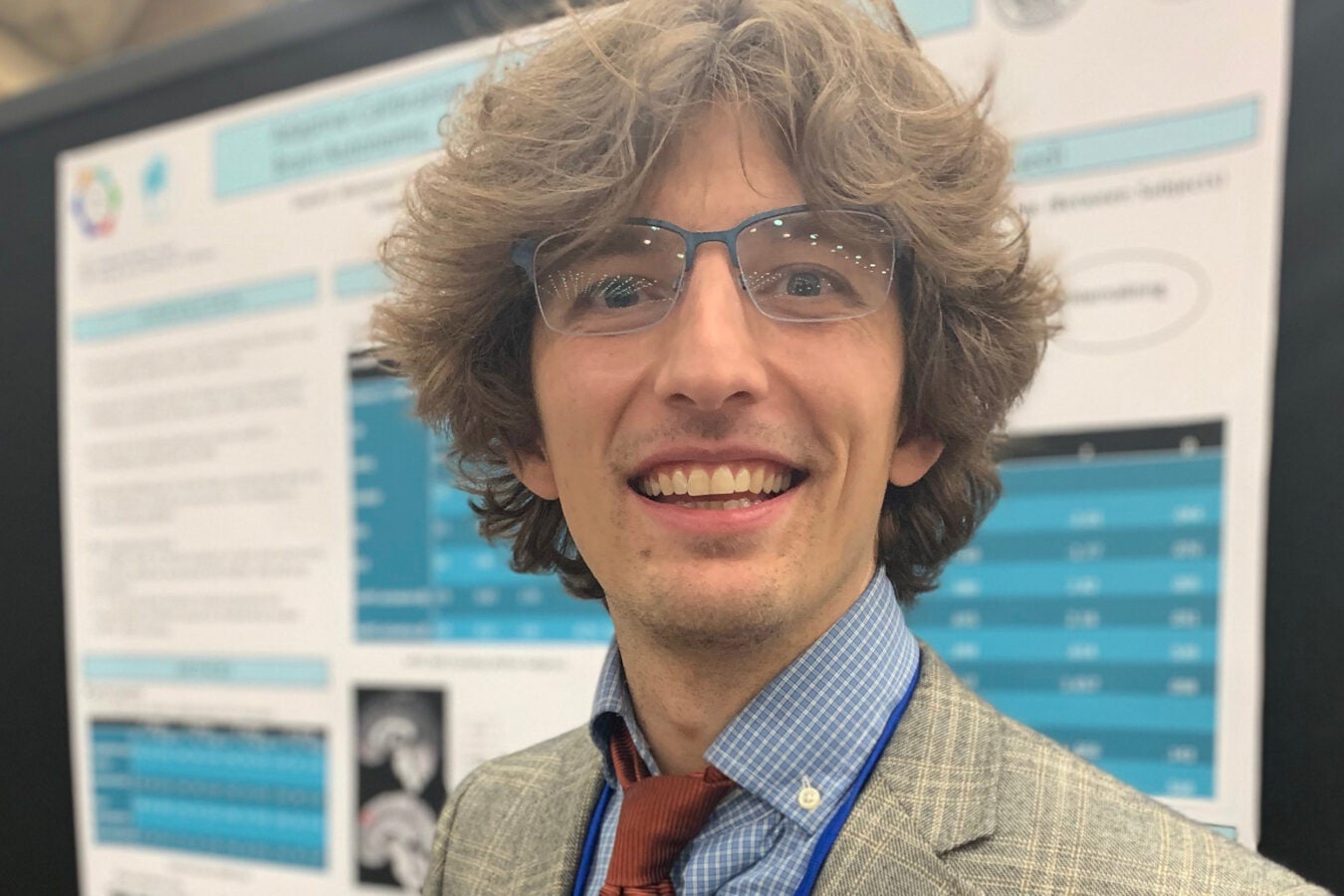
David Weissman is the study's lead author and a postdoctoral fellow in McLaughlin’s Stress & Development Lab.

Photo courtesy of Davis Weissman

Past research has established that children growing up in low-income households “tend to have smaller volume of the hippocampus,” said David Weissman, lead author on the new paper and a postdoctoral fellow in McLaughlin’s Stress & Development Lab. The hippocampus is central to memory and learning, Weissman added, but it’s also sensitive to chronic stress. Animal studies show that consistently elevated stress hormones such as cortisol can reduce the formation of synapses (or connections between neurons) in this region of the brain.

It matters because a smaller hippocampus is a predictor of lower academic achievement, McLaughlin said. “There’s also fairly consistent evidence that kids with smaller hippocampal volume may be more vulnerable to developing mental health problems, especially during adolescence.”

Consistent with prior research, Weissman and his team found lower hippocampal volume in 10-and 11-year-old ABCD participants from low-income families. Also documented in this population were higher rates of mental health challenges, including anxiety and depression.

The biggest disparities between children from low- and high-income families were found in states with a high cost of living.

“But interestingly, we see this is not an inevitable outcome,” McLaughlin said. In fact, generous social spending appears to reduce the gap between children from high- and low-income families in expensive states like California and New York. “What we see is that the disparity is similar to that of much less expensive states,” McLaughlin said. “The magnitude of disparities in brain structure is reduced by about a third, while mental health disparities are cut almost in half.”

Researchers looked at the impacts of three government programs: state and federal Earned Income Tax Credit, Temporary Assistance for Needy Families, and Medicaid expansion under the Affordable Care Act. The generosity of the programs varies by state, which is easy to track, thanks to abundant public data.

As Weissman emphasized, researchers were even able to pinpoint ABCD families who qualify for public assistance. They also identified participants from households with incomes just above the eligibility cutoff. “We found the impact of anti-poverty programs was specific to those who actually benefited,” he said.

A supplemental test found a reduction of disparities in states with a higher minimum wage. “We use these specific policies to test our research questions,” McLaughlin noted, “but we really think they’re just indicators of a much broader set of social safety net policies that cover many domains of life.”

Going forward, Weissman hopes to leverage ABCD data for what he calls “natural experiments.” That is, he wants to follow the rollout of new anti-poverty policies.

As an example, McLaughlin pointed to the various U.S. cities — including Los Angeles and several others in California — piloting universal basic income programs. If one of the ABCD states implemented a policy like that, she said, “It would allow us to examine whether there’s a reduction in socioeconomic disparities in children’s brain structure and mental health.”


MKRdezign

Contact Form

Name

Email *

Message *

Powered by Blogger.
Javascript DisablePlease Enable Javascript To See All Widget