Latest Post

Researchers at MIT’s Computer Science and Artificial Intelligence Laboratory have created a system that can reproduce paintings from a single photo, allowing museums and art lovers to snap their favorite pictures and print new copies complete with paint textures.

Called RePaint, the project uses machine learning to recreate the exact colors of each painting and then prints it using a high-end 3D printer that can output thousands of colors using half-toning.

The researchers, however, found a better way to capture a fuller spectrum of Degas and Dali. They used a special technique they developed called “color-contoning”, which involves using a 3-D printer and 10 different transparent inks stacked in very thin layers, much like the wafers and chocolate in a Kit-Kat bar. They combined their method with a decades-old technique called “halftoning”, where an image is created by tons of little ink dots, rather than continuous tones. Combining these, the team says, better captured the nuances of the colors.

“If you just reproduce the color of a painting as it looks in the gallery, it might look different in your home,” said researcher Changil Kim. “Our system works under any lighting condition, which shows a far greater color reproduction capability than almost any other previous work.”

Sadly the prints are only about as big as a business card. The system also can’t yet support matte finishes and detailed surface textures but the team is working on improving the algorithms and the 3D printing tech so you’ll finally be able to recreate that picture of dogs playing poker in 3D plastic.
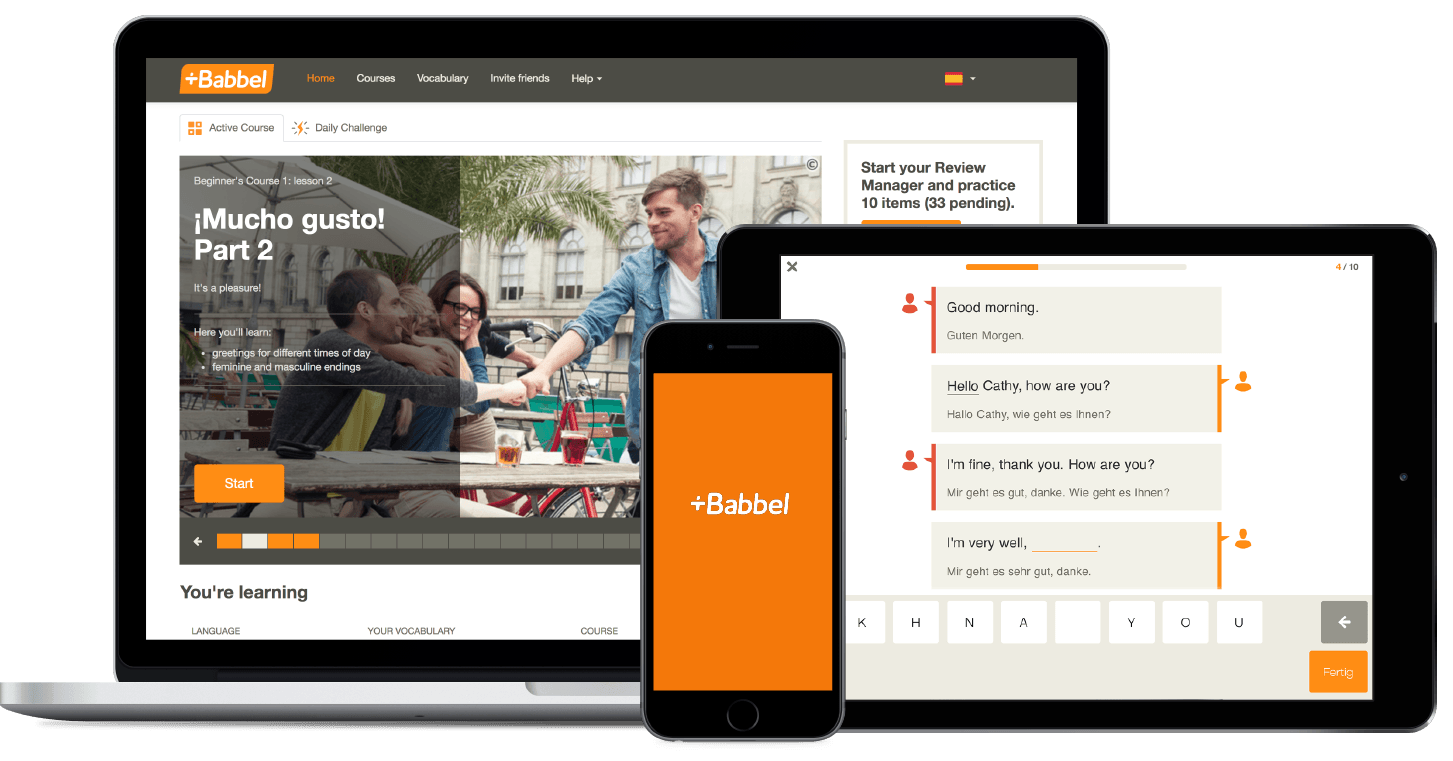

In the world of online language learning, there are basically two heavyweights: Duolingo and Babbel. Duolingo is betting on a freemium model and a strong focus on using algorithms to help you learn better, while Berlin-based Babbel is a paid service that employs hundreds of teachers. As Babbel co-founder and CEO Markus Witte announced at TechCrunch Disrupt Berlin today, his company is now moving into a new area of language learning with the launch of a language travel marketplace. The company also today announced that it now has over 1 million paying users in the United States.

This new service, which is scheduled to go live next year, is the result of the previously undisclosed acquisition of a Lingo Ventura, a Berlin-based startup that partners with international language schools and local providers to offer a language travel booking platform. As Witte told me ahead of today’s announcement, Lingo Ventura already had connections with 200 language schools in 30 countries. The company never quite managed to make a dent in this market, which has traditionally been quite fragmented.

Witte believes that Babbel, thanks to its existing user base, will be able to turn this into a profitable business, though. “There is a lot of potential here because the current market is not very transparent,” Witte told me. “In Europe, our brand is so well-known now that we are the first stop for learning languages.” And that brand awareness will surely help drive interest in this new platform. The person who uses the company’s app has, after all, already shown interest in learning languages and a willingness to pay for that.

While language travel is quite popular in Europe, it remains a bit of a foreign concept in the United States and few people specifically travel abroad to learn a language. This isn’t a small market, though. In Germany alone, market revenue was about €220 million in 2017, and the various companies that play in this space booked about 150,000 travel bookings last year.

Unsurprisingly, Babbel will first focus its marketing efforts for its yet-to-be-named travel marketplace (I think Babbel Travel is a safe bet) on Europe. The platform, however, is global, and Babbel isn’t going to stop anybody from booking through its platform, of course.

As far as the U.S. language travel market is concerned, though, Babbel expects that it’ll be able to pull in some customers there, too. “It’s not zero,” the company’s U.S. CEO Julie Hansen told me when I asked her about that market. “I think in due course, we’ll discover if there’s a place for us. In a way, you can serve a market better that is so fragmented and ill-defined.” North America in general has generated quite a bit of growth for Babbel recently, especially since it appointed Hansen as a CEO there, though it remains to be seen if travel will become a major revenue source for the company there.

No matter in which geography it will operate, though, Babbel will work with partners, and not run its own programs. “That was a strategic decision on our part,” said Witte. “We want to work with partners, and if we make acquisitions, those are almost always about building bridges to our partners.”


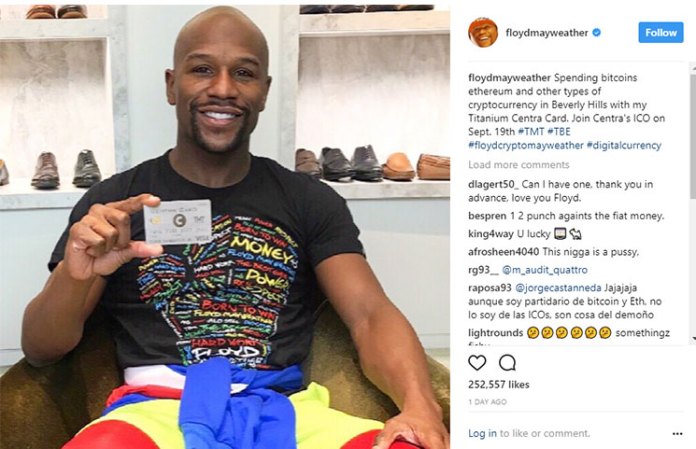
Floyd Mayweather Jr. and DJ Khaled have agreed to “pay disgorgement, penalties and interest” for failing to disclose promotional payments from three ICOs including Centra Tech. Mayweather received $100,000 from Centra Tech while Khaled got $50,000 from the failed ICO. The SEC cited Khaled and Mayweather’s social media feeds, noting they touted securities for pay without disclosing their affiliation with the companies.

Mayweather, you’ll recall, appeared on Instagram with a whole lot of cash while Khaled called Centra Tech a “Game changer.”

“You can call me Floyd Crypto Mayweather from now on,” wrote Mayweather. Sadly, the SEC ruled he is no longer allowed to use the nom de guerre “Crypto” anymore.

Without admitting or denying the findings, Mayweather and Khaled agreed to pay disgorgement, penalties and interest. Mayweather agreed to pay $300,000 in disgorgement, a $300,000 penalty, and $14,775 in prejudgment interest. Khaled agreed to pay $50,000 in disgorgement, a $100,000 penalty, and $2,725 in prejudgment interest. In addition, Mayweather agreed not to promote any securities, digital or otherwise, for three years, and Khaled agreed to a similar ban for two years. Mayweather also agreed to continue to cooperate with the investigation.

“These cases highlight the importance of full disclosure to investors,” said Stephanie Avakian of the SEC. “With no disclosure about the payments, Mayweather and Khaled’s ICO promotions may have appeared to be unbiased, rather than paid endorsements.”

The SEC indicted Centra Tech’s founders, Raymond Trapani, Sohrab Sharma, and Robert Farkas, for fraud.


Disrupt Berlin generally kicked ass yesterday, and things are only going to get better from here.

Welcome, friends, to Disrupt Berlin Day 2. We have a great show in store for you, including Julie Hansen and Markus Witte from Babbel, the full cast of Accel Philipe Botteri, Sonali De Rycker, Luciana Lixandru, and Harry Nelis. Plus, we’ll hear from Threads founder and CEO Sophie Hill, as well as Starling’s Anne Boden.

But that’s not all…

The Startup Battlefield finals are going down today. Five startups — Imago AI, Kalepso, Legacy, Polyteia, and Spike — will battle it out one last time for $50,000 USD, the Disrupt Cup and eternal glory.

You can catch the whole thing live right here so sit back, relax, and enjoy the show.


In a regulatory filing today, SoftBank Group said it has set an indicative price of 1,500 yen ($13.22) per share for the initial public offering of its domestic telecoms unit next month. This means the offering is potentially worth 2.4 trillion yen (about $21.16 billion), making it one of the largest IPOs ever. The price is the same as the tentative one SoftBank disclosed in a previous filing earlier this month.

The IPO is set for Dec. 19 on the Tokyo Stock Exchange and its final price will be determined on Dec. 10. The record for the largest IPO is currently held by Alibaba Group, which raised a total of $25 billion in 2014. If there is enough demand for SoftBank Group’s shares, a overallotment can potentially increase its offering’s total by 240.6 billion yen (or about $2.12 billion), bringing it closer to the amount Alibaba raised.

One interesting aspect of this initial public offering is SoftBank Group’s efforts to reach retail investors. For example, brokerages have run television ads for the offering in Japan.

SoftBank’s brand recognition may appeal to individual investors, but at the same time it may also have to answer questions about how investments by its Vision Fund are performing, as well as the $100 billion fund’s reliance on Saudi Arabia in the aftermath of the murder of journalist Jamal Khashoggi.

Its biggest backer, Saudi Arabia’s Public Investment Fund (PIF) put $45 billion in the Vision Fund and may put the same amount into the second Vision Fund. The PIF is led by Crown Prince Mohammed bin Salman, who has been implicated by the Central Intelligence Agency and Turkish officials the planning of Khashoggi’s death.


Sorry folks. If you wanted to buy a ticket to Startup Battlefield Africa 2018 you’re out of luck. We’re sold out. However, you could be one of the lucky few to score a free ticket to our day-long startup-pitch extravaganza in Lagos, Nigeria on 11 December. We have a limited number of tickets available, so apply for your free ticket here — before they’re all gone.

Don’t miss 15 of the continent’s top early-stage startup founders as they launch their companies on a global stage in front of a live, enthusiastic audience. Choosing the Startup Battlefield competitors from hundreds of applications was no easy feat — a testament to the depth and creativity of the region’s growing startup scene.

A quick reminder of how Startup Battlefield works. The 15 teams compete in three preliminary rounds — five startups per round. They get only six minutes to pitch and present a live demo to a panel of expert technologists and VC investors. After each pitch, the judges have six minutes to grill the team with tough questions. That’s when all the free pitch-coaching they received from TechCrunch editors will come in handy.

If you’re curious about the judges, here are just a few of the many experts we’ve tapped to pick the Startup Battlefield champion.

  • Dr. Eleni Gabre-Madhin, founder and chief executive of blueMoon, Ethiopia’s first youth agribusiness/agritech incubator and seed investor
  • Erik Hersman, CEO of BRCK, a rugged wireless Wi-Fi device designed and engineered in Kenya for use throughout the emerging markets
  • Sangu Delle, co-founder and managing director of Africa Health Holdings, based in West Africa and focused on “building Africa’s healthcare future”

And if you’re curious about the stakes, the winning founders receive the Battlefield Cup, US$25,000 in no-equity cash plus a trip for two and the opportunity to compete in Startup Battlefield at a TechCrunch Disrupt in 2019.

While the Startup Battlefield is the crown jewel, it’s by no means the only event of the day. We’ve scheduled an impressive agenda filled with presentations from the region’s leading experts discussing a range of topics. For example, Kola Aina, CEO and founder of Lagos-based Ventures Platform, will be on hand to discuss venture capital investing. And Flutterwave’s IIyinoluwa Aboyeji will share his take on blockchain.

The competitors are busy preparing for battle, the speakers are ready to dive deep on their respective topics. You’re the remaining piece of the puzzle. Apply now for a free ticket to Startup Battlefield Africa 2018 and join us on 11 December in Lagos, Nigeria to celebrate these exceptional African startups.


Despite strong reviews and a fan petition, Netflix said today that it is cancelling “Daredevil” after three seasons. This is the latest Marvel series, after “Luke Cage” and “Iron Fist,” that Netflix has cancelled recently, and is a sign that Marvel TV and Netflix’s multi-series agreement, signed in 2013, may be hitting some bumps.

Centered around a blind lawyer-turned-superhero in New York City, played by Charlie Cox, “Daredevil” was the first series released as part of the Marvel-Netflix deal in 2015. This leaves “Jessica Jones” and “The Punisher” as the two remaining Marvel series on Netflix.

Netflix said in a statement sent to Deadline, which first broke the news, that “we are tremendously proud of the show’s last and final season and although it’s painful for the fans, we feel it best to close this chapter on a high note. We are thankful to our partners at Marvel, showrunner Erik Oleson, the show’s writers, stellar crew, and incredible cast including Charlie Cox as Daredevil himself, and we’re grateful to the fans who have supported the show over the years.”

The streaming service added that the three seasons will remain on Netflix for years, while “the Daredevil will live on in future projects for Marvel,” leaving open the possibility that the character might appear in “Jessica Jones” or “The Punisher.” Another possibility is the series moving to Disney’s upcoming streaming service, Disney+, expected to launch late next year (the Walt Disney Company owns Marvel Entertainment).

The abrupt cancellations of three Marvel series over the last new months may point to hiccups in the partnership between Netflix and Marvel TV. Potential conflicts between the two include the cost of producing Marvel-Netflix shows, the success of Netflix’s own original content, and disagreements about the length of seasons. The Marvel seasons had 13 episodes each, but newer Netflix shows are only 10 episodes per season.


MKRdezign

Contact Form

Name

Email *

Message *

Powered by Blogger.
Javascript DisablePlease Enable Javascript To See All Widget