Latest Post

It’s the slowest week of the year for gadget news. Christmas is in the rearview, and it’s a few days until the new year. After that, it’s a straight shot to CES and then MWC. Meantime, best we’ve got going for us are a handful of rumors, including a peek at what Google’s next budget might could potentially possibly conceivably look like.

Per renders from OnLeaks and 91Mobiles, a vision of the Pixel  4A has appeared — or, a render, rather. The handset will no doubt be an important one for Google. After all, the 3A (pictured at top) helped the company recover from some lackluster sales last year. A couple of pieces jump out at first glance. The display appears to finally buck the company’s longtime notch dependency, in favor of a hole punch camera on the front.

Perhaps even more compelling, the device seems to hold the torch for the headphone jack. In 2020, that could well be a standout feature even among mid-range handsets. As the company eloquently put it around the time of the 3A’s release, “a lot of people have headphones.”

Other notable features on the forthcoming devices include the addition of the squircle phone bump on the rear, a design element borrowed from the Pixel 4. Likely the handset will stick to a single camera, instead of adopting the flagship’s truly excellent dual-camera set up. Even so, Google’s been able to accomplish some solid imaging technology with just the one sensor, courtesy of clever ML software.

The display, too, will be slightly larger than its predecessor, bumping up one or two tenths of an inch. The handset is reportedly dropping around May, probably just in time for I/O 2020.


VMware is closing the year with a significant new component in its arsenal. Today it announced it has closed the $2.7 billion Pivotal acquisition it originally announced in August.

The acquisition gives VMware another component in its march to transform from a pure virtual machine company into a cloud native vendor that can manage infrastructure wherever it lives. It fits alongside other recent deals like buying Heptio and Bitnami, two other deals that closed this year.

They hope this all fits neatly into VMware Tanzu, which is designed to bring Kubernetes containers and VMware virtual machines together in a single management platform.

“VMware Tanzu is built upon our recognized infrastructure products and further expanded with the technologies that Pivotal, Heptio, Bitnami and many other VMware teams bring to this new portfolio of products and services,” Ray O’Farrell, executive vice president and general manager of the Modern Application Platforms Business Unit at VMware, wrote in a blog post announcing the deal had closed.

Craig McLuckie, who came over in the Heptio deal, and is now VP of R&D at VMware, told TechCrunch in November at KubeCon, that while the deal hadn’t closed at that point, he saw a future where Pivotal could help at a professional services level, as well.

“In the future when Pivotal is a part of this story, they won’t be just delivering technology, but also deep expertise to support application transformation initiatives,” he said.

Up until the closing, the company had been publicly traded on the New York Stock Exchange, but as of today Pivotal becomes a wholly-owned subsidiary of VMware. It’s important to note that this transaction didn’t happen in a vacuum where two random companies came together.

In fact, VMware and Pivotal were part of the consortium of companies that Dell purchased when it acquired EMC in 2015 for $67 billion. While both were part of EMC and then Dell, each one operated separately and independently. At the time of the sale to Dell, Pivotal was considered a key piece, one that could stand strongly on its own.

Pivotal and VMware had another strong connection. Pivotal was originally created by a combination of EMC, VMware and GE (which owned a 10% stake for a time) to give these large organizations a separate company to undertake transformation initiatives.

It raised a hefty $1.7 billion before going public in 2018. A big chunk of that came in one heady day in 2016 when it announced $650 million in funding led by Ford’s $180 million investment.

The future looked bright at that point, but life as a public company was rough and after a catastrophic June earnings report, things began to fall apart. The stock dropped 42 percent in one day. As I wrote in an analysis of the deal:

The stock price plunged from a high of $21.44 on May 30th to a low of $8.30 on August 14th. The company’s market cap plunged in that same time period falling from $5.828 billion on May 30th to $2.257 billion on August 14th. That’s when VMware admitted it was thinking about buying the struggling company.

VMware came to the rescue and offered $15.00 a share, a substantial premium above that August low point. As of today, it’s part of VMware.


Satellite industry giant Maxar is selling MDA, its subsidiary focused on space robotics, for $1 billion CAD (around $765.23 million USD), Reuter reports. The purchasing entity is a consortium of companies led by private investment firm Northern Private Capital, which will acquire the entirety of MDA’s Canadian operations, which is responsible for the development of the Canadarm and Canadarm2 robotic manipulators used on the Space Shuttle and the International Space Station respectively.

Maxar’s goal in selling the business is to help alleviate some of its considerable debt, which stood at $3.1 billion as of this past September. The company was already known to be seeking potential buyers for MDA, so it’s not much of a surprise. MDA will continue to operate as its own company under the terms of the new ownership, which should mean that its current plans and contracts will continue.

MDA is working on a number of projects for various clients, including developing wildfire monitoring satellites, navigation antennas for use on other company’s satellites and to develop Canadarm3, the next version of its robotic appendage, for use on the NASA Lunar Gateway that will be a research and staging station orbiting the Moon as part of the U.S. space agency’s Artemis mission series.


The holidays might be a time of slowed activity for most companies in the tech sector, but for SpaceX, it was a time to ramp production efforts on the latest Starship prototype – “Starship SN1” as it’s called, according to SpaceX CEO Elon Musk. This flight design prototype of Starship is under construction at SpaceX’s Boca Chica, Texas development facility, and Musk was in attendance over the weekend overseeing its build and assembly.

Musk shared video of the SpaceX team working on producing the curved dome that will sit atop the completed Starship SN1 (likely stands for ‘serial number 1,’ a move to a more iterative naming system and away from the “Mark” nomenclature used for the original prototype), a part he called “the most difficult” in terms of the main components of the new spacecraft. He added that each new SN version of the rocket SpaceX builds will have minor improvements “at least” through the first twenty or so versions, so it’s clear they expect to iterate and test these quickly.

As for when it might actually fly, Musk said that he hopes this Starship will take off sometime around “2 to 3 months” from now, which is still within range of the projections for a first Starship high-altitude test flight given by the CEO earlier this year at the unveiling of the Starship Mk1 prototype. That prototype was originally positioned as the one that would fly for the high-altitude test, but it blew its top during testing in November and Musk said they’d be moving on to a new design rather than try to repair or rebuild the Mk1.

Musk also shared new details about the construction process for Starship, including that SpaceX will move its build process for future spacecraft to an enclosed building starting with Starship “SN2” in January – though mostly to block out the winds experienced in Boca Chica, since Musk says that welding for stainless steel (the primary material for the Starship fuselage) is much less sensitive to dust and debris than aluminum.

In another tweet, Musk detailed another change from SpaceX’s previous operating model in developing Starship: The future spacecraft’s development is being focused at Boca Chica currently, he said, while SpaceX’s Cape Canaveral teams are “focused on Falcon/Dragon.” Up until now, SpaceX has been operating two separate teams working in parallel on Starship prototypes at both sites. Musk didn’t detail what will become of Starship Mk2, the other earlier prototype that was currently in development at Cape Canaveral in Florida.

Musk also shared updates about his tunneling company The Boring Co. (they hope to open their Vegas tunnel to drivers in 2020), Starlink (could be available to customers in the Caribbean either in 2020 or 2021) and chocolate chip muffins.


2019 brought more global attention to Africa’s tech scene than perhaps any previous year.

A high profile IPO, visits by both Jacks (Ma and Dorsey), and big Chinese startup investment energized that.

The last 12 months served as a grande finale to 10 years that saw triple digit increases in startup formation and VC on the continent.

Here’s an overview of the 2019 market events that captured attention and capped off a decade of rapid growth in African tech.

IPOs

The story of the year is the April IPO on the NYSE of Pan-African e-commerce company Jumia. This was the first listing of a VC backed tech company operating in Africa on a major global exchange —  which brought its own unpredictability.

Founded in 2012, Jumia pioneered much of its infrastructure to sell goods to consumers online in Africa.

With Nigeria as its base market, the Rocket Internet backed company created accompanying delivery and payments services and went on to expand online verticals into 14 Africa countries (though it recently exited a few). Jumia now sells everything from mobile-phones to diapers and offers online services such as food-delivery and classifieds.

Seven years after its operational launch, Jumia’s stock debut kicked off with fanfare in 2019, only to be followed by volatility.

The online retailer gained investor confidence out of the gate, more than doubling its $14.95 opening share price post IPO.

That lasted until May, when Jumia’s stock came under attack from short-seller Andrew Left,  whose firm Citron Research issued a report accusing the company of fraud. The American activist investor’s case was bolstered, in part, by a debate that played out across Africa’s tech ecosystem on Jumia’s legitimacy as an African startup, given its (primarily) European senior management.

The entire affair was further complicated during Jumia’s second quarter earnings call when the company disclosed a fraud perpetrated by some of its employees and sales agents. Jumia’s CEO Sacha Poignonnec emphasized the matter was closed, financially marginal and not the same as Andrew Left’s short-sell claims.

Whatever the balance, Jumia’s 2019 ups and downs cast a cloud over its stock with investors. Since the company’s third-quarter earnings-call, Jumia’s NYSE share-price has lingered at around $6 — less than half of its original $14.95 opening, and roughly 80% lower than its high.

Even with Jumia’s post-IPO rocky road, the continent’s leading e-commerce company still has heap of capital and is on pace to generate over $100 million in revenues in 2019 (albeit with big losses).

The company plans reduce costs by generating more revenue from higher-margin internet services, such as payments and classifieds.

There’s a fairly simple equation for Jumia to rebuild shareholder confidence in 2020: avoid scandals, increase revenues over losses. And now that the company’s publicly traded — with financial reporting requirements — there’ll be four earnings calls a year to evaluate Jumia’s progress. 

Jumia may not be the continent’s standout IPO for much longer. Events in 2019 point to Interswitch becoming the second African digital company to list on a global exchange in 2020.  The Nigerian fintech firm confirmed to TechCrunch in November it had reached a billion-dollar unicorn valuation, after a (reported) $200 million investment by Visa. 

Founded in 2002 by Mitchell Elegbe, Interswitch created much of the initial infrastructure to digitize Nigeria’s (then) predominantly cash-based economy. Interswitch has been teasing a public listing since 2016, but delayed it for various reasons. With the company’s billion-dollar valuation in 2019, that pause is likely to end.

“An [Interswitch] IPO is still very much in the cards; likely sometime in the first half of 2020,” a source with knowledge of the situation told TechCrunch. 

China-Africa goes digital

2019 was the year when Chinese actors pivoted to African tech. China is known for its strategic relationship with Africa based (largely) on trade and infrastructure. Over the last 10 years, the country has been less engaged in the continent’s digital-scene.
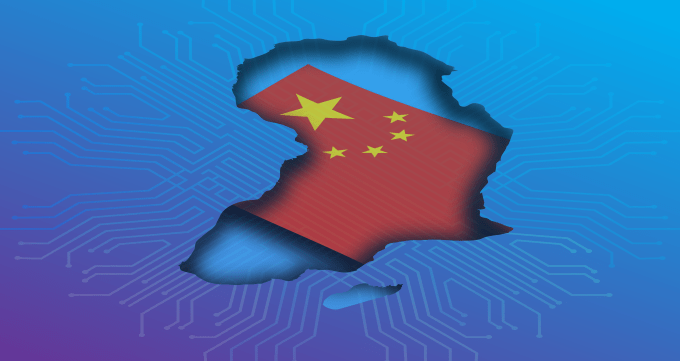
china africa techThat was until a torrent of investment and partnerships this past year.

July saw Chinese-owned Opera raise $50 million in venture spending to support its growing West African digital commercial network, which includes browser, payments and ride-hail services.

In August, San Francisco and Lagos-based fintech startup Flutterwave partnered with Chinese e-commerce company Alibaba’s Alipay to offer digital payments between Africa and China.

In September, China’s Transsion  — the largest smartphone seller in Africa — listed in an IPO on Shanghai’s new STAR Market. The company raised ≈ $394 million, some of which it is directing toward venture funding and operational expansion in Africa.

The last quarter of 2019 brought a November surprise from China in African tech. Over 15 Chinese investors placed over $240 million in three rounds. Transsion backed consumer payments startup PalmPay raised a $40 million seed, stating its goal to become “Africa’s largest financial services platform.”

Chinese investors also backed Opera-owned OPay’s $120 million raise and East-African trucking logistics company Lori Systems’ (reported) $30 million Series B.

In the new year, TechCrunch will continue to cover the business arc of this surge in Chinese tech investment in Africa. There’ll surely be a number of fresh macro news-points to develop, given the debate (and critique) of China’s role in Africa.

Nigeria and fintech

On debate, the case could be made that 2019 was the year when Nigeria become Africa’s unofficial capital for fintech investment and digital finance startups.

Kenya has held this title hereto, with the local success and global acclaim of its M-Pesa mobile-money product. But more founders and VCs are opting for Nigeria as the epicenter for digital finance growth on the continent.

A rough tally of 2019 TechCrunch coverage — including previously mentioned rounds — pegs fintech related investment in the West African country at around $400 million over the last 12 months. That’s equivalent to roughly one-third of all startup VC raised for the entire continent in 2018, according to Partech stats.

From OPay to PalmPay to Visa — startups, big finance companies and investors are making Nigeria home-base for their digital finance operations and outward expansion in Africa.

The founder of early-stage payment startup ChipperCash, Ham Serunjogi, explained the imperative to operate in the West African country. “Nigeria is the largest economy and most populous country in Africa. Its fintech industry is one of the most advanced in Africa, up there with Kenya  and South Africa,” he told TechCrunch in May.

When all the 2019 VC numbers are counted, it will be worth matching up Nigeria to Kenya to see how the countries compared for fintech specific investment over the last year.

Acquisitions

Tech acquisitions continue to be somewhat rare in Africa, but there were several to note in 2019. Two of the continent’s powerhouse tech incubators joined forces in September, when Nigerian innovation center and seed-fund CcHub acquired Nairobi based iHub, for an undisclosed amount.

CChub ihub Acquisition

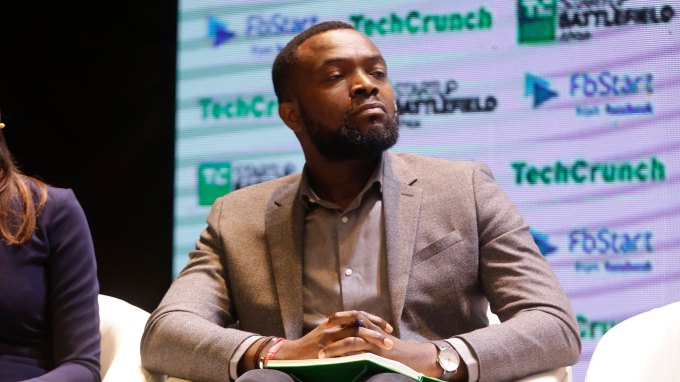
The acquisition brought together Africa’s most powerful tech hubs by membership networks, volume of programs, startups incubated and global visibility. It also elevated CcHub’s Bosun Tijani standing across Africa’s tech ecosystem, as the CEO of the new joint-entity, which also has a VC arm.

CcHub CEO Bosun Tijani1

CcHub/iHub CEO Bosun Tijani

In other acquisition activity, French television company Canal+ acquired the ROK film studio from Nigerian VOD company IROKOtv, for an undisclosed amount. The deal put ROK founder and producer Mary Njoku in charge of a new organization with larger scope and resources.

Many outside Africa aren’t aware that Nigeria’s Nollywood is the Hollywood of the continent and one of the largest film industries (by production volume) in the world. Canal+ told TechCrunch it looks to bring Mary and the Nollywood production ethos to produce content in French speaking African countries.

Other notable 2019 African tech takeovers included Kenyan internet company BRCK’s acquisition of internet provider Surf, Nigerian digital-lending startup OneFi’s Amplify buy and Merck KGaa’s purchase of Kenya-based online healthtech company ConnectMed.

Moto ride-hail mania

In 2019, Africa’s motorcycle ride-hail market — worth an estimated $4 billion — saw a flurry of investment and expansion by startups looking to scale on-demand taxi services. Uber and Bolt got into the motorcycle taxi business in Africa in 2018.

Ampersand Africa e motorcycle

Ampersand in Rwanda

A number of local and foreign startups have continued to grow in key countries, such as Nigeria, Uganda and Kenya.

A battle for funding and market-share emerged in Nigeria in 2019, between key moto ride-hail startups Max.ng, Gokada, and Opera owned ORide.

The on-demand motorcycle market in Africa has attracted foreign investment and moved toward EV development. In May, MAX.ng raised a $7 million Series A round with participation from Yamaha and is using a portion to pilot renewable energy powered e-motorcycles in Africa.

In August, the government of Rwanda announced a national policy to phase out gas-motorcycle taxis altogether in favor of e-motos, in partnership with early-stage EV startup Ampersand.

New funds

The year 2019 saw several new funding initiatives for Africa’s startups. Senegalese VC investor Marieme Diop helped spearhead Dakar Network Angels, a seed-fund for startups in French-speaking Africa — or 24 of the continent’s 54 countries.

Africinvest teamed up with Cathay Innovation to announce the Cathay Africinvest Innovation Fund, a $100+ million capital pool aimed at Series A to C-stage startup investments in fintech, logistics, AI, agtech and edutech.

Accion Venture Lab launched a $24 million fintech fund open to African startups.

And Naspers offered more details on who can pitch to its 1.4 billion rand (≈$100 million) Naspers Foundry fund and made its first investment in online cleaning services company SweepSouth.

Closed up shop

Like any tech ecosystem, not every startup in Africa killed it or even continued to tread water in 2019. Two e-commerce companies — DealDey in Nigeria and Afrimarket in Ivory Coast — closed up digital shop.

Southern Africa’s Econet Media shut down its Kwese TV digital entertainment business in August.

And South Africa based, Pan-African focused cryptocurrency payment startup Wala ceased operations in June. Founder Tricia Martinez named the continent’s poor infrastructure as one of the culprits to shutting down. A possible signal to the startup’s demise could have been its 2017 ICO, where Wala netted only 4% of its $30 million token-offering.

Africa’s startups go global

2019 saw more startups expand products and business models developed in Africa to new markets abroad. In March, Flexclub — a South African venture that matches investors and drivers to cars for ride-hailing services — announced its expansion to Mexico in a partnership with Uber.

In May, ExtraCrunch profiled three African founded fintech startups — Flutterwave, Migo and ChipperCash — developing their business models strategically in Africa toward plans to offer their products in other regions.

By December, Migo (formerly branded Mines) had announced its expansion to Brazil on a $20 million Series B raise.

2020 and beyond

As we look to what could come in the new year and decade for African tech, it’s telling to look back. Ten years ago, there were a lot of “if” questions on whether the continent’s ecosystem could produce certain events: billion dollar startup valuations, IPOs on major exchanges, global expansion, investment from the world’s top VCs.

All those questionable events of the past have become reality in African tech, even if some of them are still in low abundance.

There’s no crystal ball for any innovation ecosystem — not the least Africa’s — but there are several things I’ll be on the lookout for in 2020 and beyond.

Two In the near term, start with what Twitter/Square CEO Jack Dorsey may do around Bitcoin and cryptocurrency on his return to Africa (lookout for an upcoming TechCrunch feature on this).

I’ll also follow the next-phase of e-commerce in Africa, which could pit Jumia more competitively against DHL’s Africa eShop, Opera and China’s Alibaba (which hasn’t yet entered Africa in full).

On a longer-term basis, a development to follow is how the continent’s first wave of millionaire and billionaire tech-founders could disrupt dynamics around politics, power, and philanthropy in Africa —  hopefully for the better.

More notable 2019 Africa-related coverage @TechCrunch


Grab and Singtel, one of the largest telecoms in Singapore, announced today that they are applying for a digital full bank license together. If approved, the license will allow them to offer simple credit and investment products, before progressing to a full-functioning bank if they meet the Monetary Authority of Singapore’s (MAS) criteria.

Grab will hold a 60% stake in the consortium, with Singtel holding the other 40%. A joint statement said the companies are “committed to contributing to the financial services sector with a differentiated offering that addresses the unmet and underserved needs of consumer and enterprise segments in Singapore,” including SMEs that need access to credit. Securing working capital is a major pain point across Southeast Asia, with several startup and financial institutions working on new tools to gauge creditworthiness and manage loans.

Grab launched in 2012 as a ride-sharing company, but now bills itself as “Southeast Asia’s leading super app,” with app that provides a wide array of service, including transportation, logistics, food delivery, ticket and hotel booking and financial services, through one portal.

It entered financial services in 2016 with the introduction of GrabPay Wallet, a digital wallet, before launching Grab Financial Group in 2019. Grab Financial Group’s services include online payments, lending and insurance products that it says reaches 100 million users across Southeast Asia.

In a press statement, Grab Financial Group senior managing director Reuben Lai said the consortium’s plan is to “build a truly customer-centric digital bank that will deliver a variety of banking and financial services that are accessible, transparent and affordable.”

MAS announced in June that it will issue up to two digital full bank licenses and three digital wholesale bank licenses, as part of a bid to to liberalize Singapore’s banking sector.


Indian tech startups have never had it so good.

Local tech startups in the nation raised $14.5 billion in 2019, beating their previous best of $10.5 billion last year, according to research firm Tracxn.

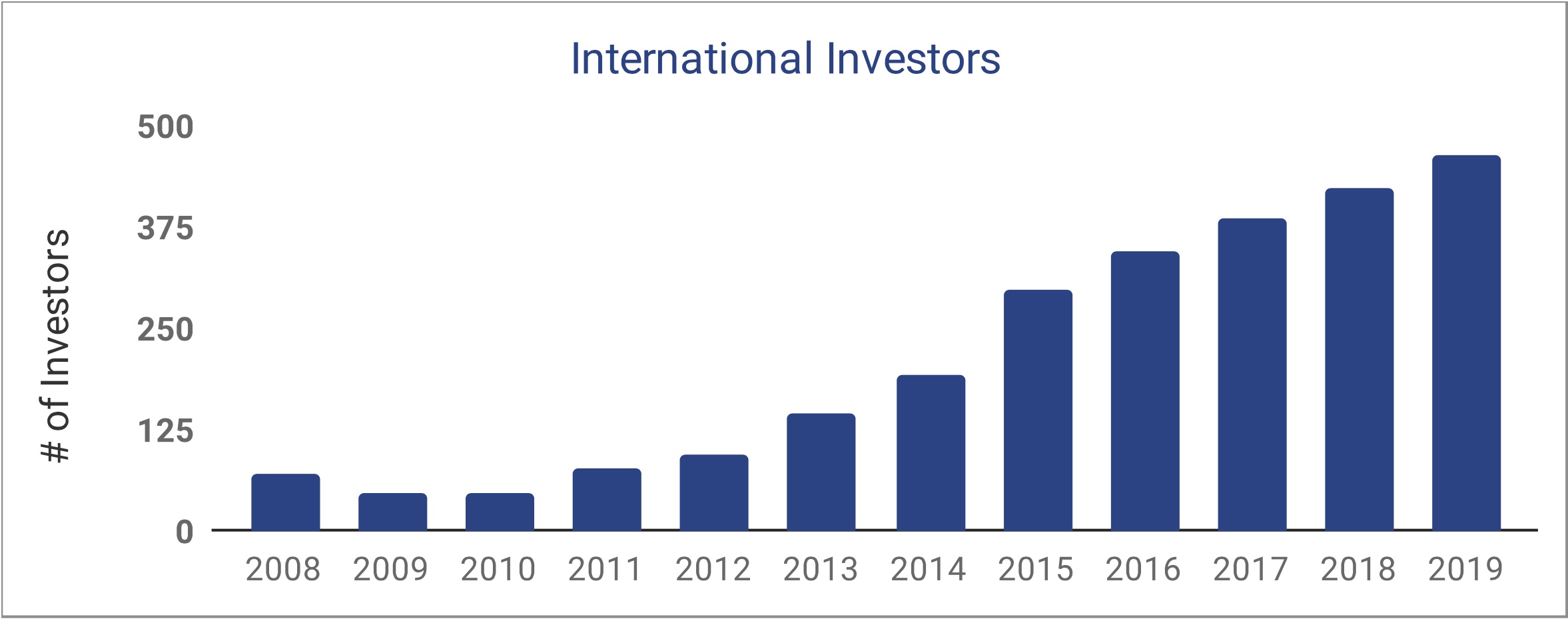
Tech startups in India this year participated in 1,185 financing rounds — 459 of those were Series A or later rounds — from 817 investors.

Early stage startups — those participating in angel or pre-Series A financing round — raised $6.9 billion this year, easily surpassing last year’s $3.3 billion figure, according to a report by venture debt firm InnoVen Capital.

According to InnoVen’s report, early stage startups that have typically struggled to attract investors saw a 22% year-over-year increase in the number of financing deals they took part in this year. Cumulatively, at $2.6 million, their valuation also increased by 15% from last year.

Also in 2019, 128 startups in India got acquired, four got publicly listed, and nine became unicorns. This year, Indian tech startups also attracted a record number of international investors, according to Tracxn.

This year’s fundraise further moves the nation’s burgeoning startup space on a path of steady growth.

Since 2016, when tech startups accumulated just $4.3 billion — down from $7.9 billion the year before — flow of capital has increased significantly in the ecosystem. In 2017, Indian startups raised $10.4 billion, per Tracxn.

“The decade has seen an impressive 25x growth from a tiny $550 million in 2010 to $14.5 billion in 2019 in terms of the total funding raised by the startups,” said Tracxn.

What’s equally promising about Indian startups is the challenges they are beginning to tackle today, said Dev Khare, a partner at VC fund Lightspeed Venture Partners, in a recent interview to TechCrunch.

In 2014 and 2015, startups were largely focused on building e-commerce solutions and replicating ideas that worked in Western markets. But today, they are tackling a wide-range of categories and opportunities and building some solutions that have not been attempted in any other market, he said.

Tracxn’s analysis found that lodging startups raised about $1.7 billion this year — thanks to Oyo alone bagging $1.5 billion, followed by logistics startups such as Elastic Run, Delhivery, and Ecom Express that secured $641 million.

176 horizontal marketplaces, more than 150 education learning apps, over 120 trucking marketplaces, 82 ride-hailing services, 42 insurance platforms, 33 used car listing providers, and 13 startups that are helping businesses and individuals access working capital secured funding this year.

The investors

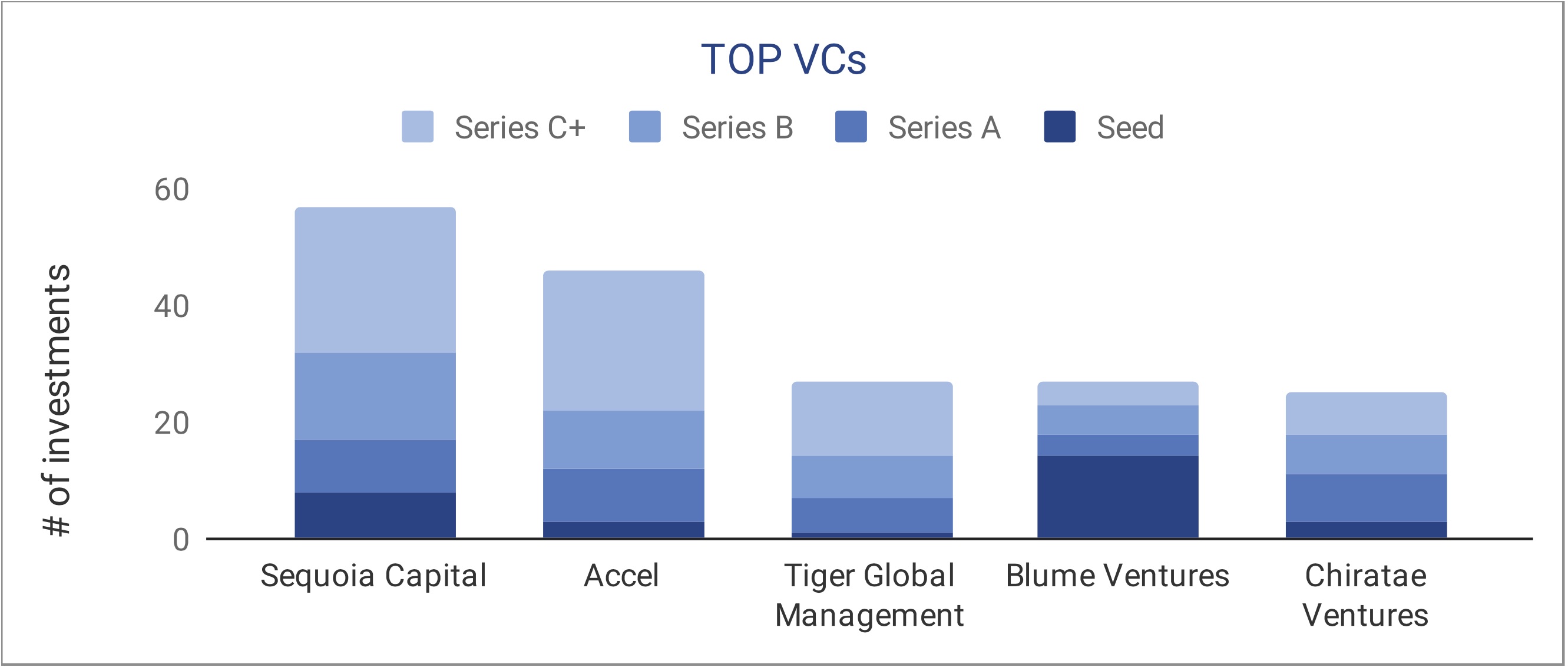
Sequoia Capital, with more than 50 investments — or co-investments — was the most active venture capital fund for Indian tech startups this year. (Rajan Anandan, former executive in charge of Google’s business in India and Southeast Asia, joined Sequoia Capital India as a managing director in April.) Accel, Tiger Global Management, Blume Ventures, and Chiratae Ventures were the other top four VCs.

Steadview Capital, with nine investments in startups including ride-hailing service Ola, education app Unacademy, and fintech startup BharatPe, led the way among private equity funds. General Atlantic, which invested in NoBroker and recently turned profitable edtech startup Byju’s, invested in four startups. FMO, Sabre Partners India, and CDC Group each invested in three startups.

Venture Catalysts, with over 40 investments including in HomeCapital and Blowhorn, was the top accelerator or incubator in India this year. Y Combinator, with over 25 investments, Sequoia Capital’s Surge, Axilor Ventures, and Techstars were also very active this year.

Indian tech startups also attracted a number of direct investments from top corporates and banks this year. Goldman Sachs, which earlier this month invested in fintech startup ZestMoney, overall made eight investments this year. Among others, Facebook made its first investment in an Indian startup — social-commerce firm Meesho and Twitter led a $100 million financing round in local social networking app ShareChat.


MKRdezign

Contact Form

Name

Email *

Message *

Powered by Blogger.
Javascript DisablePlease Enable Javascript To See All Widget