Latest Post

The open source Hyperledger Foundation announced the release of Hyperledger Fabric 2.0 today, the first such project to reach a 2.0 release.

It’s a notable milestone. The blockchain as a business tool has certainly had a rocky road over the last few years, but there is still plenty to like about smart contracts that have automated compliance checks built in. Hyperledger Fabric 2.0 has lots of new features with that in mind.

The biggest updates involve forcing agreement among the parties before any new data can be added to the ledger, known as decentralized governance of the smart contracts. In practice, it means that the system will prevent any entity from writing to the ledger until there is consensus among the parties involved in the transaction, a basic blockchain tenet.

This is a requirement because the beauty and the curse of the distributed ledger is that it is an immutable record. Once you have written something in the ledger, it becomes very difficult to change it without the agreement of all those involved in the contract. You want to make sure you get it right before you commit something to the ledger.

Along those same lines, developers can build in automated checks along the way. As they say, this ensures the parties can “validate additional information before endorsing a transaction proposal.”

Brian Behlendorf, Executive Director at Hyperledger and a big advocate of open source distributed ledger technology, says this is a big milestone for the project and the organization as it looks to help organizations adopt distributed ledger technology.

“Fabric 2.0 is a new generation framework developed by and for the enterprises that are building distributed ledger capabilities into the core of their businesses. This new release reflects both the development and deployment experience of the Fabric community and confirms the arrival of the production era for enterprise blockchain,” Behlendorf said in a statement.

That remains to be seen. The rise of blockchain in business has moved at a slow pace, but this release shows that the open source community is still committed to building enterprise-grade distributed ledger technology. Today’s announcement is another step in that direction.


Medloop, which allows patients to manage healthcare needs and providers, has secured €6 million from Kamet Ventures and AXA.

The cash will be used to enhance its product offering and continue expansion across Germany and the UK. Medloop is also developing an evidence-based medical rule engine embedded on the Electronic Medical Record (EMR) of patients.

Medloop offers patients what it calls “intuitive” self-service features in an app that enables them to navigate their own healthcare including online appointment bookings, electronic medical results, prescription refills, as well as chatting in-app with healthcare providers.

Founded in 2018 by Berlin-based entrepreneur Shishir Singhee, some medical practices in Germany use the Medloop doctor system to run their entire practice, using it to give an overview of their patient population.

Singhee, said: “Healthcare today has become increasingly impersonalized as ever-growing patient registers have made it challenging for doctors to treat patients in a bespoke way. Medloop strives to bridge this critical gap, by employing technology to empower patients and help doctors deliver proactive and holistic care.“

Stephane Guinet, CEO of Kamet Ventures, said: “It is no secret how overstretched doctors are in terms of the time and care they can offer each patient. Medloop’s offering is a novel solution to this challenge and we are very excited to be part of Medloop’s growth story given how critical its offering is to the UK market and beyond.”

Medloop achieved compatibility with EMIS last summer, enabling its entry into the UK market.

In Germany, its main competitors are the incumbents that were built in the early 90s such as Medatix and Medistar. In the UK it is up against patient management tools such as QMasters.


Millennials are tired of being drunk, but are locked into a culture that puts alcohol at the center of professional events and outside-of-work gatherings. Twenty-somethings in New York and San Francisco don’t want to spend $17 on a gin and tonic at a compulsory happy hour. That’s why Haus, a new direct-to-consumer aperitif startup, is debuting its membership program.

Co-founders Helena Price Hambrecht and Woody Hambrecht, who are married, have also secured $4.5 million in seed funding to fuel their bid for a more laid back and less alcohol-centric way to party, starting with a 15 percent ABV (alcohol by volume) citrus and flower-flavored aperitif. For comparison, most hard liquors are between 35 and 45 percent alcohol. Wine averages at 11.6 percent. 

Members in New York City, San Francisco, Seattle, Portland and Denver can now sign up for a monthly shipment of either six bottles per month for $144, two bottles per month for $63 or one bottle per month for $35. Unlike most wine clubs, it’s free to join. 

The genesis for Haus was the founders’ idea to create a transparent alcohol brand, or a “Glossier for alcohol,” notes Helena, a Silicon Valley branding veteran. Woody, an experienced winemaker, identified a loophole that allows distributors to ship alcohol direct-to-consumer if the product is made mostly from grapes and is under 24% alcohol. Not only could a beverage be distributed straight to buyers, but it can be done with transparency, including ingredients and nutrition facts. This will allow Haus to collect user data that big alcohol companies just don’t have.

“Antiquated liquor laws have stunted innovation in the spirits space since prohibition, despite the fact that today’s drinkers are desperate for something different,” says Price Hambrecht. “Selling directly to the drinker means we can build relationships with our customers, iterate quickly based on their feedback and ultimately create the products they want.” So, Haus was born. 

Co-founders and co-CEOs Helena Price Hambrecht and Woody Hambrecht.

Haus saw fundraising as a chance to grow not only an early community of stakeholders, but customers. Helena equates their fundraising process to more of a crowdfunding approach than a traditional VC round, with over 10 funds and 100 individual investors contributing. Raising capital meant crowdsourcing a community of people who believed in what they were building and were willing to seed it into their own networks. Some angeles included Casey Neistat, former CEO and Chairman of Campari Gerry Ruvo, Away co-founder Jen Rubio, Superhuman founder Rahul Vohra, and Yelp co-founder Russell Simmons.

Contributing funds include Combine, Haystack Ventures, Homebrew, Shrug Capital, Resolute Venture Partners, Coatue, Dream Machine and Work Life Ventures among others. 

Subscriptions work when customers form habits. Haus plans to retain its community around its trendy party beverage with discounts and events, bolstered by editorial content in the future. What the founders are really pitching, however, is a lifestyle change.

In “The Art of the Gathering,” Priya Parker argues that in our modern society, we’ve lost our ability to finesse purposeful events. We end up gathering in ways that don’t actually serve us, and we aren’t connecting in the ways we ought to. Whether it’s a boring dinner party that isn’t focused on the guests, or a dreaded happy hour after a long work day. 

It has yet to be determined if aperitifs could win over wine and liquor lovers at a macro scale. But Haus thinks that with a trendy product and hyper-engaged community, they can leverage this loophole to change the way we gather. Starting with how we drink.


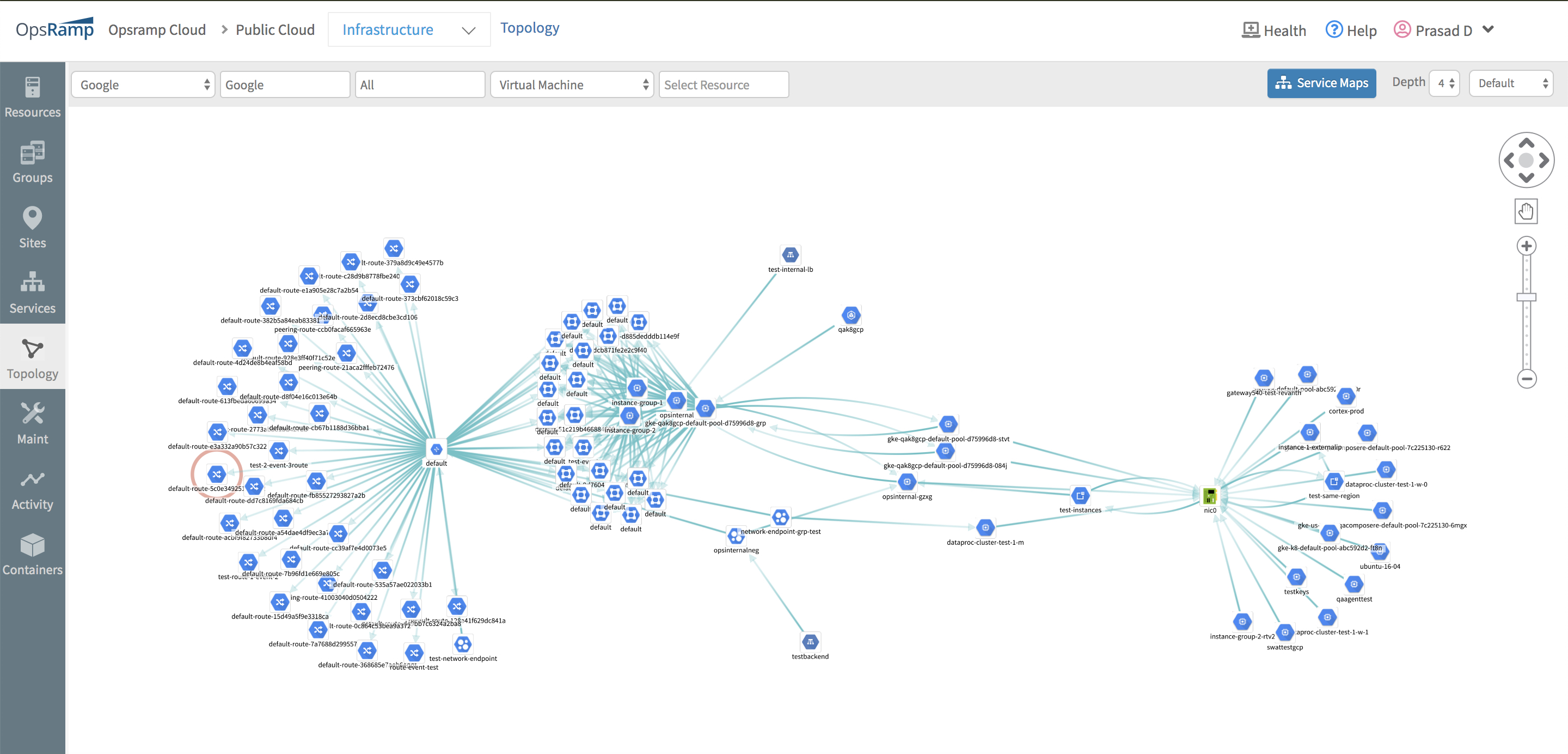
OpsRamp, a service that helps IT teams discover, monitor, manage and — maybe most importantly — automate their hybrid environments, today announced that it has closed a $37.5 million funding round led by Morgan Stanley Expansion Capital, with participation from existing investor Sapphire Ventures and new investor Hewlett Packard Enterprise.

OpsRamp last raised funding in 2017, when Sapphire led its $20 million Series A round.

At the core of OpsRamp’s services is its AIOps platform. Using machine learning and other techniques, this service aims to help IT teams manage increasingly complex infrastructure deployments, provide intelligent alerting, and eventually automate more of their tasks. The company’s overall product portfolio also includes tools for cloud monitoring and incident management.

The company says its annual recurrent revenue increased by 300 percent in 2019 (though we obviously don’t know what number it started 2019 with). In total, OpsRamp says it now has 1,400 customers on its platform and alliances with AWS, ServiceNow, Google Cloud Platform and Microsoft Azure.

OpsRamp co-founder and CEO Varma Kunaparaju

According to OpsRamp co-founder and CEO Varma Kunaparaju, most of the company’s customers are mid to large enterprises. “These IT teams have large, complex, hybrid IT environments and need help to simplify and consolidate an incredibly fragmented, distributed and overwhelming technology and infrastructure stack,” he said. “The company is also seeing success in the ability of our partners to help us reach global enterprises and Fortune 5000 customers.”

Kunaparaju told me that the company plans to use the new funding to expand its go-to-market efforts and product offerings. “The company will be using the money in a few different areas, including expanding our go-to-market motion and new pursuits in EMEA and APAC, in addition to expanding our North American presence,” he said. “We’ll also be doubling-down on product development on a variety of fronts.”

Given that hybrid clouds only increase the workload for IT organizations and introduce additional tools, it’s maybe no surprise that investors are now interested in companies that offer services that rein in this complexity. If anything, we’ll likely see more deals like this one in the coming months.

“As more of our customers transition to hybrid infrastructure, we find the OpsRamp platform to be a differentiated IT operations management offering that aligns well with the core strategies of HPE,” said Paul Glaser, Vice President and Head of Hewlett Packard Pathfinder. “With OpsRamp’s product vision and customer traction, we felt it was the right time to invest in the growth and scale of their business.”


The worlds of virtual and augmented reality have yet to land on the applications and hardware to truly spark mass-market, consumer interest in the space, but meanwhile a startup building mixed reality services for business users has raised a round of funding, underscoring the opportunity in enterprise.

Spatial, which has developed a “holographic” collaboration platform that people use to speak and work together in virtual rooms through the use of strikingly effective avatars — think: a supercharged, virtual reality version of Zoom or a Google Hangout — is today announcing that it has raised $14 million, a Series A that it will be using to continue building out the functionality of its application and its interoperability with a wider range of hardware, as well as to start looking at how it can turn its tech into a platform that could be used by others, for example by way of an SDK.

The funding is being led by WhiteStar Capital, iNovia and Kakao Ventures, with participation from Baidu and individual investors, Instagram cofounder Mike Krieger and Zynga’s Mark Pincus, also participating. Together with Spatial’s last round, $8 million in October 2018, the company has now raised $22 million. It’s not disclosing valuation at this stage, Anand Agarawala, the CEO who co-founded the company with Jinha Lee (CPO), said in an interview.

Other investors include Expa, Lerer Hippeau, Leaders Fund, Samsung NEXT and Andy Hertzfeld (of Macintosh fame).

Spatial’s funding comes at a time when VR and AR startups have certainly seen their share of funding (Magic Leap alone has raised over $3 billion), high valuations, some extremely notable exits, and definitely the release of a number of head sets and apps — but at the end of the day, it’s estimated that there were only 6 million VR headsets sold last year, speaking to how the space has remained niche at best.

Niche in consumer, however, can speak to major opportunity in enterprise, and that is where Spatial is operating, with technology that it has built to be interoperable with any headset or AR glasses — currently including Microsoft HoloLens, Oculus Quest, Magic Leap One, Qualcomm XR2 or an Android/iPhone mobile device — or even a basic PC, if that’s all a person has to use, to let companies build out what might best be described as videoconferencing on steroids: placing people into virtual rooms where they can speak to each other, or look at and manipulate holographic models together, and more.

Spatial itself has seen its business take off in the last year, Agarawala said, with inbound interest from 25% of the Fortune 1,000 bracket of businesses, and its first publicly-named customers, which include very non-tech names like Mattel, Purina/Nestle and BNP Paribas. That in itself is also a sign of how immersive, three-dimensional media is possibly, finally approaching a breakout moment.

That will also be buffered by a raft of new hardware, Agarawala said. He declined to say which companies are likely to roll out new devices but as a developer of key services that spur purchasing, Spatial gets a heads-up (no pun intended) on what is coming around the corner, and Agarawala said the picture is bright and that we might finally be exiting what he described as a “VR winter”.

“It feels like the industry is accelerating this year,” he said. “The industry is firing up 5G and that will also be a big push.” He also pointed out the development over at Amazon, where last month the company announced AWS Wavelength for ultra-low latency 5G computing at the edge, something that will have a direct impact on using and building the next generation of AR and VR headgear.

Given its position with developers, if Amazon is getting into the mix, you know something is up, he added.

The idea of taking what Spatial has built to produce its own applications for customers, and turning that into a platform that others could use, too, is something that the company had always planned to do — platforms are front and centre in Agarawala’s mind, given his pedigree of years working at Google, which acquired his previous startup, BumpTop, in 2010. But that too appears to be getting bumped up, so to speak, because of the positive outlook. 

“We have always wanted to open up our platform to let others build applications on our framework, using our avatars, leveraging our cross-platform nature, finding new applications for our hand gestures,” Agarawala said. “We wanted to open that up, but we thought that it would be years out before we did, since it doesn’t make sense for an AR/VR platform to do something like that until there is actual market demand. But there has been so much heat that we might consider doing it this year.”

Krieger’s interest in Spatial comes in the context of him investing in a number of other work-focused collaboration platforms, including Loom, Figma, and Pitch, and that’s key to what makes Spatial interesting: it’s not just tapping the VR/AR space but another very interesting area that has seen a lot of growth with the rapid rise of products like Slack, and will continue to evolve.

“Spatial’s mixed-reality solution will be a key part of the future of work,” said Krieger in a statement. “They’re taking us beyond everyday tools like Zoom and Slack and pointing the way towards what conferencing & collaboration can be like if they were invented today and I’m excited to support the journey.”

Here’s a little video I did with Spatial earlier this month during CES.


Los Angeles-based mobile gaming company Scopely​ unveiled its newest game, ScrabbleGo, now available for pre-order on Android and coming to iOS later this year.

Working with Hasbro in North America and Mattel globally, the launch of Scopely’s new Scrabble game was two years in the making.

Building on the success Scopely has found with another Hasbro property — Yahtzee — Scopely first reached out to the gaming company to see if they’d be open to working with the relatively young gaming firm on a new title.

Then Scopely had to talk to Mattel and current rights-holder Electronic Arts about moving the game over to its new home.

Under the auspices of Electronic Arts, which had developed the earlier versions of Scrabble for mobile phones, hundreds of thousands of users had signed up to play the popular word game.

“We negotiated a deal and a partnership with EA,” says Scopely chief revenue officer, Tim O’Brien. “We wanted the players in the core scrabble game that EA has today and come over.”

The deal represents a new relationship between Scopely and Mattel and reflects the game development studio’s increasingly international footprint.

“We are always looking for new ways for consumers to experience the Mattel brands they know and love, and digital gaming is a key part of that strategy,” said ​Janet Hsu​, Chief Franchise Officer at Mattel. “Scrabble is a beloved and iconic game with a dedicated fan following. In partnership with Scopely, we look forward to bringing a best-in-class gameplay experience to an international audience.”  

Players from the previous versions of Scrabble for mobile will be able to move over to Scopely’s new gaming platform through the partnership with Electronic Arts — and global players can expect to see some expanded features, according to O’Brien.

The new version will include official dictionaries in localized languages that Scopely has licensed and will be incorporating into the gameplay, he said. The new game will also have new social features including regional tournaments, daily and weekly events, and player leaderboards. There’s also a matchmaking system to connect with both friends and other players on the platform of a similar skill-level. A new “dueling” feature puts time limits on how long a player can take to make a word.

“We want to build core Scrabble, but we need to build scrabble for today’s market,” says O’Brien. “We did something that worked really well with Yahtzee… and we make substantially more money on the mobile game then they do on the board game.” 

The LA-based gaming company has been on a bit of an acquisition tear since raising $200 million financing, which values the company at a whopping $1.7 billion.

Published globally by Scopely, the new ScrabbleGo game was developed in partnership with PierPlay game studio and joins a gaming portfolio that has amassed more than $1 billion in lifetime revenue. Games in the company’s portfolio include: Looney Tunes World of Mayhem and Star Trek Fleet Command, created with the recently acquired DIGIT Game Studios.


Bird is rolling out its Bird Two scooters, which the company first unveiled back in August, via Scoot in San Francisco. The scooters were expected to deploy much sooner, with Bird’s original announcement saying it would roll out the following week, but it’s better late than never, as some say. Scoot’s plan is to deploy up to 1,000 of these Bird Two scooters.

“With each new generation of electric vehicle we bring to San Francisco, fewer San Franciscans have a need to get in a car,” Scoot founder and Bird SVP of Cities Michael Keating said in a statement. “Bird Two continues this trend with industry-leading performance, range, and safety features, allowing our riders to replace even more of their car trips with micromobility.”

What’s unique about the Bird Two is its self-reporting damage sensors that notify the company of any vehicle issues. While Bird is not the first company to come up with this idea, it’s the first one to deploy an electric scooter with this type of system. Superpedestrian, which has about $64 million in funding, has been working on self-diagnosing scooters for years, but it has yet to deploy those scooters.

To help circumvent theft and vandalism, the Bird Two also comes with puncture-resistant tires, anti-theft encryption built into the operating system and a minimum of exposed screws.

Scoot, like other operators in San Francisco, were early targets of scooter theft. During the first two weeks of Scoot’s operations of shared, electric scooters in San Francisco, more than 200 scooters were either stolen or damaged beyond repair. To combat theft, Scoot added locks to its vehicles. Now, the city has made locks a requirement, but mostly to help control sidewalk congestion. With the Bird Two scooter, Scoot will have additional theft and vandalism protections.

This deployment comes shortly after Bird acquired European rival Circ, while simultaneously announcing a $75 million extension of its Series D funding round. That total round size is now $350 million.


MKRdezign

Contact Form

Name

Email *

Message *

Powered by Blogger.
Javascript DisablePlease Enable Javascript To See All Widget