Latest Post

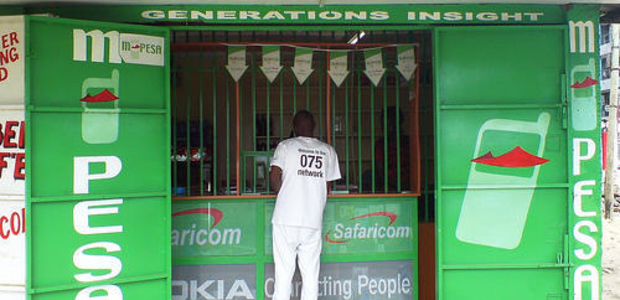
Amazon Web Services has entered a partnership with Safaricom — Kenya’s largest telco, ISP and mobile payment provider — in a collaboration that could spell competition between American cloud providers in Africa.

In a statement to TechCrunch, the East African company framed the arrangement as a “strategic agreement” whereby Safaricom will sell AWS services (primarily cloud) to its East Africa customer network.

Safaricom — whose products include the famed M-Pesa mobile money product — will also become the first Advanced Consulting Partner for the AWS partner network in East Africa.

“The APN is…the program for technology…businesses who leverage AWS to build solutions and services for customers…and sell their AWS offerings by providing valuable business, technical, and marketing support,” Safaricom said.

“We chose to partner with AWS because it offers customers the broadest and deepest cloud platform…This agreement will allow us to accelerate our efforts to enable digital transformation in Kenya,” said Safaricom CEO Michael Joseph.

“Safaricom will be able to offer AWS services to East-African customers, allowing businesses of all sizes to quickly get started on AWS cloud,” the company statement continued.
For now, the information provided by Safaricom is a bit sparse on the why and how of the partnership between the American company and East African mobile, financial and ISP provider.

TechCrunch has an inquiry into Amazon and some additional questions posed to Safaricom, toward additional coverage.

An initial what-this-all-means take on the partnership points to an emerging competition between American cloud service providers to scale in Africa by leveraging networks of local partners.

The most obvious rival to the AWS-Safaricom strategic agreement is the Microsoft-Liquid Telecom collaboration. Since 2017, MS has partnered with the Southern African digital infrastructure company to grow Microsoft’s AWS competitor product — Azure — and offer cloud services to the continent’s startups and established businesses.

MS and Liquid Telecom have focused heavily on the continent’s young tech companies. “We believe startups will be key employers in Africa’s future economy. They’re also our future customers,” Liquid Telecom’s  Head of Innovation Partnerships Oswald Jumira told TechCrunch in 2018.

Amazon hasn’t gone fully live yet with e-commerce services in Africa, but it has aggressively positioned AWS and built a regional client list that includes startups — such as fintech venture Jumo — and large organizations, such Absa and Standard Bank.

Partnering with Safaricom plugs AWS into the network of one East Africa’s most prominent digital companies.

Safaricom, led primarily by its M-Pesa mobile money product, holds remarkable dominance in Kenya, Africa’s 6th largest economy. M-Pesa has 20.5 million customers across a network of 176,000 agents and generates around one-fourth ($531 million) of Safaricom’s ≈ $2.2 billion annual revenues (2018).

Compared to other players — such as Airtel  Money and Equitel Money — M-Pesa has 80% of Kenya’s mobile money agent network, 82% of the country’s active mobile-money subscribers and transfers 80% of Kenya’s mobile-money transactions, per the latest sector statistics.

A number of Safaricom’s clients (including those it provides payments and internet services to) are companies, SMEs and startups.

Extending AWS services to them will play out next to the building of Microsoft’s $100 million Africa Development Center, with an office in Nairobi, announced last year.


After claiming that it would only sell its controversial facial recognition software to law enforcement agencies, a new report suggests that Clearview AI is less than discerning about its client base. According to BuzzFeed News, the small, secretive company looks to have shopped its technology far and wide. While Clearview counts ICE, the U.S. Attorney’s Office for the Southern District of New York and the retail giant Macy’s among its paying customers, many more private companies are testing the technology through 30-day free trials. Non-law enforcement entities that appeared on Clearview’s client list include Walmart, Eventbrite, the NBA, Coinbase, Equinox and many others.

According to the report, even if a company or organization has no formal relationship with Clearview, its individual employees might be testing the software. “In some cases… officials at a number of those places initially had no idea their employees were using the software or denied ever trying the facial recognition tool,” BuzzFeed News reports.

In one example, the NYPD denied a relationship with Clearview, even as as many as 30 officers within the department conducted 11,000 searches through the software, according to internal logs.

A week ago, Clearview’s CEO Hoan Ton-That was quoted on Fox Business stating that his company’s technology is “strictly for law enforcement” — a claim the company’s budding client list appears to contradict.

“This list, if confirmed, is a privacy, security, and civil liberties nightmare,” ACLU staff attorney Nathan Freed Wessler said of the revelations. “Government agents should not be running our faces against a shadily assembled database of billions of our photos in secret and with no safeguards against abuse.”

On top of its reputation as an invasive technology, critics argue that facial recognition tech isn’t accurate enough to be used in the high-consequence settings it’s often touted for. Facial recognition software has notoriously struggled to accurately identify non-white, non-male faces, a phenomenon that undergirds arguments that biased data has the potential to create devastating real-world consequences.

Little is known about the technology that powers Clearview’s own algorithms and accuracy beyond that the company scrapes public images from many online sources, aggregates that data and allows users to search it for matches. In light of Clearview’s reliance on photos from social networks, Facebook, YouTube and Twitter have all issued the company cease-and-desist letters for violating their terms of use.

Clearview’s small pool of early investors includes the private equity firm Kirenaga Partners and famed investor and influential tech conservative Peter Thiel. Thiel, who sits on the board of Facebook, also co-founded Palantir, a data analytics company that’s become a favorite of law enforcement.


After investing nearly $2 billion of its Innovation Fund in Latin America in 2019, Softbank announced this month that it would add an additional $1 billion into the fund to continue supporting tech startups across the region. While the Japanese investor faces the challenge of raising a second global fund after its Vision Fund, Softbank is still investing heavily in Latin America. 

One of its early Latin American investments – and the first in Colombia – Ayenda Rooms, is performing particularly well, raising $8.7 million from Kaszek Ventures this month. Ayenda is the local version of Oyo Rooms, one of Softbank’s biggest bets in India, which has looked to expand into Mexico despite a financial crunch last month. In fact, the fund recently came under scrutiny by the Wall Street Journal for funding similar delivery competitors Uber, Rappi, and Didi, suggesting a conflict of interest. 

Most recently, Softbank invested $125 million in Mexico’s lender, Alphacredit, and they reportedly plan to continue investing in that niche. The firm currently oversees over 650 companies in Latin America, largely concentrated in Brazil, Argentina, Chile, Colombia, and Mexico, and plans to invest $100-150M in seventeen firms and two VCs by the end of the year. To date, over 50% of Softbank’s investments have been into Brazil, most of which exist in the fintech sector. 

Mexican neobank Stori raises $10 million Series A

In a self-fulfilling prophecy, Mexico’s neobank market became all the more competitive this month with the addition of a new player: Stori. Within the past few months, both TechCrunch and Business Insider pointed to Mexico’s neobank market as the one to watch in Latin America as startups like Albo, Klar, and Nubank battle for market share. In February, digital bank Stori joined the conversation with a $10 million Series A from Bertelsmann Investments (BI) and Source Code Capital, along with an existing investor, Vision Plus Capital.

This round of funding, led by Chinese investors, is part of a growing trend of foreign funds waking up to the Latin American startup ecosystem, Asian VCs in particular. Tencent has invested in Brazil’s Nubank, which has since expanded to Mexico, and in Argentina’s Uala, which is considering a similar move. Softbank has investments in the largest lending and credit startups in Brazil and Mexico, as well. 

Stori will use the investment to improve its AI technology as it tries to reach over 100,000 Mexicans through its inclusive digital banking services. The neobank has raised over $17 million from investors since it was founded in 2018.

Grow Mobility pulls out of 14 cities

In January, Rappi and Lime pulled back their operations in Latin America in order to focus on technology over rapid growth. Brazil’s top mobility startup, Grow Mobility (which rose out of a merger between e-scooter companies Grin from Mexico and Yellow from Brazil) also pulled back. The startup, which provides e-scooters and bikes shares across Brazil, took bicycles out of operation and removed its scooters from 14 cities. 

Grow also restructured its operations through layoffs that affected employees across Brazil, although they did not comment on how many people were affected. Grow Mobility’s scooters will now only operate in Rio de Janeiro, Sao Paulo, and Curitiba. 

This pattern of pull-back following explosive growth has become more common among Latin America’s biggest startups, pushing these early stage companies to focus on technological solutions that boost revenue, rather than blitzscaling measures that only buy market share.

Amazon Web Services doubles down on Brazil

Amazon Web Services (AWS) announced it would invest $236 million (R$1 billion) into Sao Paulo over the next two years to strengthen its Latin American infrastructure. This effort may be a part of Amazon’s work to consolidate market share in Latin America’s increasingly competitive e-commerce market, where legacy players like MercadoLibre still dominate. This investment will enable Amazon to expand its Brazilian data centers and improve local service offerings to both private and public partners. 

Amazon also announced that it would build a new distribution center in Pernambuco in the north of Brazil to support sales across the country. Brazil accounts for almost 40% of Latin America’s e-commerce market, making the country vital to Amazon’s positioning in the region.

News and Notes: Weel, Global 66, Yuca, and Memed 

Weel, a Brazilian accounts-receivable management platform, announced an $18.4 million investment from Banco Votorantim, Brazil’s seventh-largest bank, in February 2020. This investment was Banco Votorantim’s second in the startup after a $6 million contribution in 2019. Weel will use the investment to explore expansion across Brazil, as well as exploring Chilean and Mexican markets. 

Chilean international transfer startup Global 66 received $3.25 million in February from UK investor Venrex, to continue its expansion across the region. The startup currently offers rates up to eight times better than existing transfer services, especially for the Latin American region. Global 66 recently opened new offices in Peru and plans to expand to Colombia, Argentina, and Mexico within the next two years. Within just two years of operations, Global 66 has processed transactions for over 25,000 users across 60 cities worldwide.

Yuca, a Brazilian proptech, raised $4.7 million from Monashees, ONEVC, and Creditas to help fight housing crises in Brazil’s largest cities. As Brazil’s cities sprawl – Sao Paulo is one of the largest in the world – Yuca creates central co-living spaces for young people that want to shorten their commutes. Inspired by Chinese startup, Ziroom, Yuca currently manages 18 apartments for 80 students and plans to scale to 500 apartments by the end of the year.

Brazil’s digital prescription startup, Memed, recently raised $4.5 million from DNA Capital and Redpoint eVentures to improve the local prescription system for doctors and patients alike. Today, Memed has over 80,000 registered doctors who have created over 10 million prescriptions worth more than $237 million. Memed’s 100% digital prescriptions are said to improve security and efficiency in Brazil’s complex, bureaucratic healthcare system.

While Brazil is still at the forefront of Latin America’s tech ecosystem, Mexican fintechs are edging up, especially with additional support from international investors. 2020 is off to a strong start, hinting at another potential record-breaking year for Latin American tech investment.


Like baseball, cricket relies on grass, dirt, wood, cork, spit, spin, drop and rise en route to either victory or loss. And like baseball — and just about any other sport, really — cricket coaching staffs and their players worldwide are looking for more ways to track every move.

Tracking statistics is nothing new. With each action, a player produces a stat that can be used to track improvement or struggle over a given period of time. But as players get stronger and stakes — financial and otherwise — get higher, a need for more specific data is proving necessary.

India-based SeeHow transforms sports equipment into sensors to do just that, and it does so without having to alter anything on the athlete’s body. Its sensors are baked into cricket balls and bat handles to track very specific types of data that batsmen and bowlers generate. And tracking the behavior of a bowled ball and where and how it lands on a bat all play a role in the story of cricket.

“Putting the sensor inside the ball or bat handle where the action is happening is when you can capture data fundamentally at a higher accuracy,” says Dev Chandan Behera, founder and CEO of SeeHow. “Most MEMS [micro-electro-mechanical systems] can measure up to 2,000 degrees per second, i.e about 300+ RPMs. International spinners like Shane Warne can spin the ball up to 3,000 RPMs. This is something we are able to capture.”

To obtain data, a trainer first assigns a bowler and/or a batsman in the accompanying Android app before a session. (Behera says an iOS app is due this year.) During play, each action is captured in near real time for each corresponding player.

For bowlers, the sensor tracks speed, spin, seam position or orientation, and length — where the ball lands on the pitch. For batsmen, the sensor tracks swing speed and angle, where it hits on the bat, what kind of deliveries they played, what their responses were to a particular delivery and the velocity of the ball off the bat.

This data is then streamed in real time and can be read by players and coaches alike on the app. The app retains a history of a player’s progress in order to make any necessary adjustments and to track improvements.

“In bat on ball sport or racquetball sport, you’re doing something in response to the pitcher or your opponent, and that’s something we’re able to capture into a single system,” Behera says. Because both the data from the batter and the bowler are streaming to a single system, he adds, the app is able to tell users what the reaction time is.

Behera grew up playing cricket with the intention of improving enough to ensure his rise through the ranks.

“Growing up we would use chalk, cones or a sheet of A4 paper as markers during play to assess how we bowled,” Behera says of his early years. “A coach would use a slate to mark the number of balls bowled and selection would be based on whether you had his attention in that particular window when he happened to look at you playing. You might just have a bad day and not get selected to the next level.”

After moving to Singapore, Behera continued competing in the sport, and says he was exposed to more tools and more methodical training approaches.

“We used to record videos through mobile phone cameras and compare them to videos on YouTube or show it to our seniors or coaches for tips,” he says. “However, the process was very ad hoc, and without any data and science to it, it was subjective. We never improved and made it as cricketers.”

His experience building robots, combined with his cricket playing, prompted him to consider using a ball as a way to glean data to help improve cricketers’ performances.

“It occurred to me that we could address this issue by bringing in a new perspective to the ball itself. The experience of building such complex hardware helped me gauge the challenges we needed to build a sports operating system that will enable sensors in the field of play to provide this holistic learning experience in cricket.”

Behera says SeeHow’s sensors are being used at 12 cricket academies in nine countries. First-class cricketer Abhishek Bhat is a fast bowler whose speed topped at 120km. He writes that after two weeks, he was able to push his pace into the mid 130s:

However, it wasn’t until SeeHow came into the picture that I was able to get a consistent measurement of my bowling speed, session after session and day after day. I cannot overstate the impact bowling with the smart ball has had on my bowling speed.

I had my first bowling session with the smart ball in early November and I was bowling in the mid-120s, barely getting above 130kmph. Then with some technical adjustments in a couple of weeks time, I was consistently bowling close to the 130 kmph mark. It was then that I realized that bowling fast is more than just about technique, it’s about the mindset.

SeeHow isn’t the only company trying to improve the way cricketers train.

A company called StanceBeam has developed a system that, among other things, provides session insights, the power generated from a swing, angles and directions of a swing and a 3D analysis of a batsman’s swing. It does so through a hardware extension that players attach to the ends of their bats and that relays data via an app.

Microsoft is also in the game of cricket analysis. The company partnered with star India cricketer Anil Kumble and his company Spektacom to enhance the reach of its sensor, which is designed to help better engage fans and broadcasters through the use of embedded sensors, artificial intelligence, video modeling and augmented reality. The company’s first offering is a smart sticker for bats that contains sensor tech designed to track batting behavior that is readable via an app.

As cricket starts to find an audience beyond the Commonwealth countries and continues to draw big dollars, look for tech to play a bigger role in attracting and maintaining audiences and players.

For SeeHow, cricket is just the beginning.

“Baseball is a very natural extension to cricket if you look at how the sport is played and the equipment,” Behera says. “And we have also done mixed martial arts with sensors in the gloves.”

The company has filed for five patents, one of which, Behera says, is around the construction of the ball, specifically in order to be able to hold the vibrations.

“We have mounted the sensor in the sports equipment at the core and introduced a protective material to cushion the sensor from impact and vibration,” he says. “The patent captures the construction of the ball that mounts the sensor and introduces the protective material in a novel manner to be able to capture the motion data at the core.”

As it scales, SeeHow will look to license the hardware to equipment manufacturers and become a platform company. SeeHow is funded through a friends and family round and is currently in search of seed funding.


Magma Partners has more than doubled the size of its investable capital with the close of its latest $50 million fund. The Santiago, Chile-based venture firm founded in 2013 had secured $21 million that made up the outfit’s second fund, which it raised after closing its debut fund with just $2.5 million. The firm’s largest fund to date comes as investment in Latin America has reached a record high. 

Magma has made 70 deals and its portfolio has seen three exits. General Partner Nathan Lustig tells me that Magma will continue to write $50,000 to $100,000 seed checks, and that its larger investments will range from up to $5 million to $7 million. The firm is targeting a few niches:

  • Fintech and insurtech companies in Latin America and the solutions that provide the cybersecurity, anti fraud and identity management API layers needed to support them. 
  • SaaS companies with tech and sales teams in Latin America that target a global user base.

The fund won’t touch hardware or biotech and isn’t really looking at anything outside its fintech and insurtech thesis. 

With fund three, Magma has attracted its first institutional investor. IDB Lab, the innovation laboratory of the IDB Group, has approved an investment of $4 million in the Fund. This now puts Magma on a more global radar, and depending on success of fund three could enable an even larger future fund four. 

Chilean, Colombian and Mexican family offices were the biggest cohort of contributors to the fund, along with angel investors in both Latin America and the U.S.

Magma itself is made up of fifteen people across both operations and investing, and the team is spread remotely across Santiago, Bogota, Mexico City and Guadalajara. 

Magma Media and the agency model

While a relatively young firm, Magma has been focused from the start on developing an agency model to support its founders – one that serves as both educator and, in many cases, connector. Latin America suffers from a lack of educational content around company building. That’s why Magma is launching Magma Media, an in-house, media operations unit determined to help its portfolio companies succeed. 

“If you’ve only raised a small round, hiring the wrong person could kill your startup.”

Lustig says that the Magma team is made up of former entrepreneurs, and that the goal of Magma Media is to build from the ground up the services they wish they’d had as founders. Inspired by the Andreessen Horowitz agency model, Magma also offers content marketing, sales, recruiting, and PR services to its startup founders. Regarding the importance of content marketing, he notes that “if you have a great product and a great idea but you can’t communicate what you’re doing, no one will buy it.” As for the in-house recruiter who is helping to educate founders on making the right hires, Lustig says, “If you’ve only raised a small round, hiring the wrong person could kill your startup.” These are the kind of company building tips that aren’t as widely circulated in Latin America’s comparatively nascent startup scene as they are in Silicon Valley. 

Magma has been hustling to expand a network of twenty corporations across Latin America – similar to the Andreessen agency model – that will take meetings with their portfolio, given that the lockdown of an early corporate partnership is a big win for a startup. 

The firm encourages successful Latin American startups to feed back into the ecosystem by adapting agency-like networks similar to a16z and Y Combinator, through which startups leverage a network of pre-vetted services and sign on as each other’s first customers. One Magma company, Omnibank, is already factoring out its financial loan services to a few other companies in its portfolio in efforts to emulate this network model that has seen success in the U.S. 

As for diversity and inclusion, Lustig says that 35 percent of the Magma portfolio has at least one female founder and that they hope to grow that percentage.

Asian capital is smarter capital in Latin America

Despite Lustig’s admiration for some American models of investment, he observes that “China is eating the U.S.’s lunch in Latin America,” referring to the capital flowing into the region from Asian sources. Didi entered Latin America in 2018 via its $1 billion acquisition of Brazilian ridesharing company 99. Tencent’s $180 million strategic investments into Nubank propelled the Brazilian neobank’s valuation to reach $10 billion. And of course, Tokyo-based Softbank committed $6 billion to invest in Latin American companies via its Latin American Innovation Fund, fueling Colombia’s Rappi and Brazil’s Creditas with growth stage investments that have allowed the companies to scale aggressively. 

In fact, while U.S. funds are beginning to wake up to the Latin America opportunity, Lustig believes that Asian capital in Latin America is smarter capital. Some of it has to do with pattern matching. Globally, Southeast Asia and Latin America count similar population sizes of around 640 million, and 18 out of the 25 biggest cities in the world are in either Southeast Asia or Latin America.

Congruent geographic patterns and likeness in population volume means that tech solutions achieved by startups in Southeast Asia could also function in Latin America – warranting heavier investment, especially when considering how much has been invested into Southeast Asia. Lustig estimates that Southeast Asia saw somewhere between $16 billion and $20 billion invested in 2019, and it has a lower GDP than Latin America. 

Lustig highlights online education as just one example of technology that’s more developed in Asia and that could be used to reach rural areas in Latin America that don’t have as much access. Asian e-commerce and mobile payments models are other sectors that Latin American companies can borrow from, he says, stressing that Latin America features a very social culture. It explains why Brazil is one of Facebook’s largest markets, but also, linking social to commerce is a huge opportunity that could show up and generate big returns in Latin America.  

Latin American startups should borrow success from the pioneering agency models invented by Andreessen Horowitz and Y Combinator on their home ground, while pattern matching the tech solutions that worked for startups in geographically analogous Southeast Asia and China.

Asian investors may not share the same racist and xenophobic rhetoric around Latins that exists in the United States, too, says Lustig. Though an American himself, he says believes a bias against Latins exists in the U.S. “There are still many very educated people in the U.S. who think that Colombia is Narcos on Netflix.” In his experience, he observes that Asian investors aren’t wired to think like that and are instead focused on the growth fundamentals. 

Put all the pieces together, suggests Lustig, and the opportunity becomes clear.  “One of the most exciting parts about investing in Latin America is that if you can actually solve some of these problems, yes you can generate a big return. [Y]ou might also help tens to hundreds of millions of people solve basic problems that people in the U.S. take for granted. So I think the advice for founders is to go out and try to solve the problems that they’re seeing in their day to day,” he says. 

Latin American startups should borrow success from the pioneering agency models invented by Andreessen Horowitz and Y Combinator on their home ground, while pattern matching the tech solutions that worked for startups in geographically analogous Southeast Asia and China. Magma hopes its strategy will prepare Latin American startups for the incoming mega-rounds from Asia that will enable the best companies to enter hypergrowth mode.

Meanwhile, in a note to American investors, Lustig says that the U.S. really needs to up its game in Latin America if it wants to continue to have influence.


Amazon Transcribe, the AWS-based speech-to-text service, launched a small but important new feature this morning that, if implemented correctly, can automatically hide your personally identifiable information from call transcripts.

One of the most popular use cases for Transcribe is to create a record of customer calls. Almost by default, that involves exchanging information like your name, address or a credit card number. In my experience, some call centers stop the recording when you’re about to exchange credit card numbers, for example, but that’s not always the case.

With this new feature, Transcribe can automatically identify information like a social security number, credit card number, bank account number, name, email address, phone number and mailing address and redact that. The tool automatically replaces this information with ‘[PII]’ in the transcript.

There are, of course, other tools that can remove PII from existing documents. Often, though, these are focused on data loss prevention tools and aim to keep data from leaking out of the company when you share documents with outsiders. With this new Transcribe tool, at least some of this data will never be available for sharing (unless, of course, you keep a copy of the audio).

In total, Transcribe currently supports 31 languages. Of those, it can transcribe 6 in real-time for captioning and other use cases.


Peacock, NBCU’s upcoming streaming service is expanding its unscripted lineup thanks to a new deal with A&E Networks. The licensing pact will allow NBCU to stream hundreds of hours of A&E and History’s most popular shows, including “First 48,” “Storage Wars,” “Cold Case Files,” “Pawn Stars,” “American Pickers,” “Ancient Aliens,” “Curse of Oak Island,” and “Project Blue Book.”

The new A&E shows complement a growing lineup on Peacock which now includes TV classics, next-day access to episodes, hundreds of movies, original content, late night, live sports, kids shows, news, Spanish-language content, and other unscripted series.

The company’s plan is to draw in new subscribers by aggregating content from a diverse array of brands, including NBC, Bravo, E!, NBC News, MSNBC, CNBC, and others, combined with a film library that pulls in titles from Universal Pictures, Dreamworks Animation, and Focus Features. It has also greenlit several reboots that capitalize on viewers’ nostalgia, like “Saved by the Bell,” “Punky Brewster,” “Battlestar Galactica,” and others. And it plans to live stream summer Olympic programming (assuming the games aren’t canceled.)

But this new deal with A&E further points to NBCU’s plans to position Peacock as a cable TV alternative for cord-cutters. While none of the newly licensed programs on their own would likely encourage users to subscribe, they’re that sort of B-tier content that helps make a service feel more complete. They’re the sort of shows people watch when they can’t think of anything to watch — much like one of NBCU’s bigger wins, with its deal to bring “The Office” to Peacock from Netflix.

The new service launches April 15, initially to Comcast Xfinity X1 and Flex customers before debuting nationally on July 15. Peacock will be available both as a limited, free and ad-supported service as well as a subscription service where $5 per month delivers more content, including originals. Viewers can also choose to remove ads for another $5.

“We are excited to partner with Peacock,” said Steve MacDonald, President, Global Content Licensing and International, A+E Networks, in a statement about the deal. “We of course strongly believe in the power of the A+E Networks’ library of content, and that it will prove to strengthen Peacock’s offerings.”

For networks like A&E, deals with new streamers like this are inevitable. The pay-TV audience is declining faster than anticipated. As a result, media companies are left scrambling to quickly compile their properties into a Netflix alternative. NBCU’s Peacock isn’t the only one  in this race. AT&T’s WarnerMedia is preparing to launch HBO Max this year. Disney snapped up 21st Century Fox to fill out Disney+ and its (now majority-owned) Hulu streaming service libraries. Viacom and CBS merged and now beefing up CBS All Access (or whatever it may eventually be called) with content from brands like Nickelodeon, MTV, BET, Comedy Central, Smithsonian, and Paramount.

A&E’s programming won’t be live at launch, but will arrive later this year, NBCU says.


MKRdezign

Contact Form

Name

Email *

Message *

Powered by Blogger.
Javascript DisablePlease Enable Javascript To See All Widget